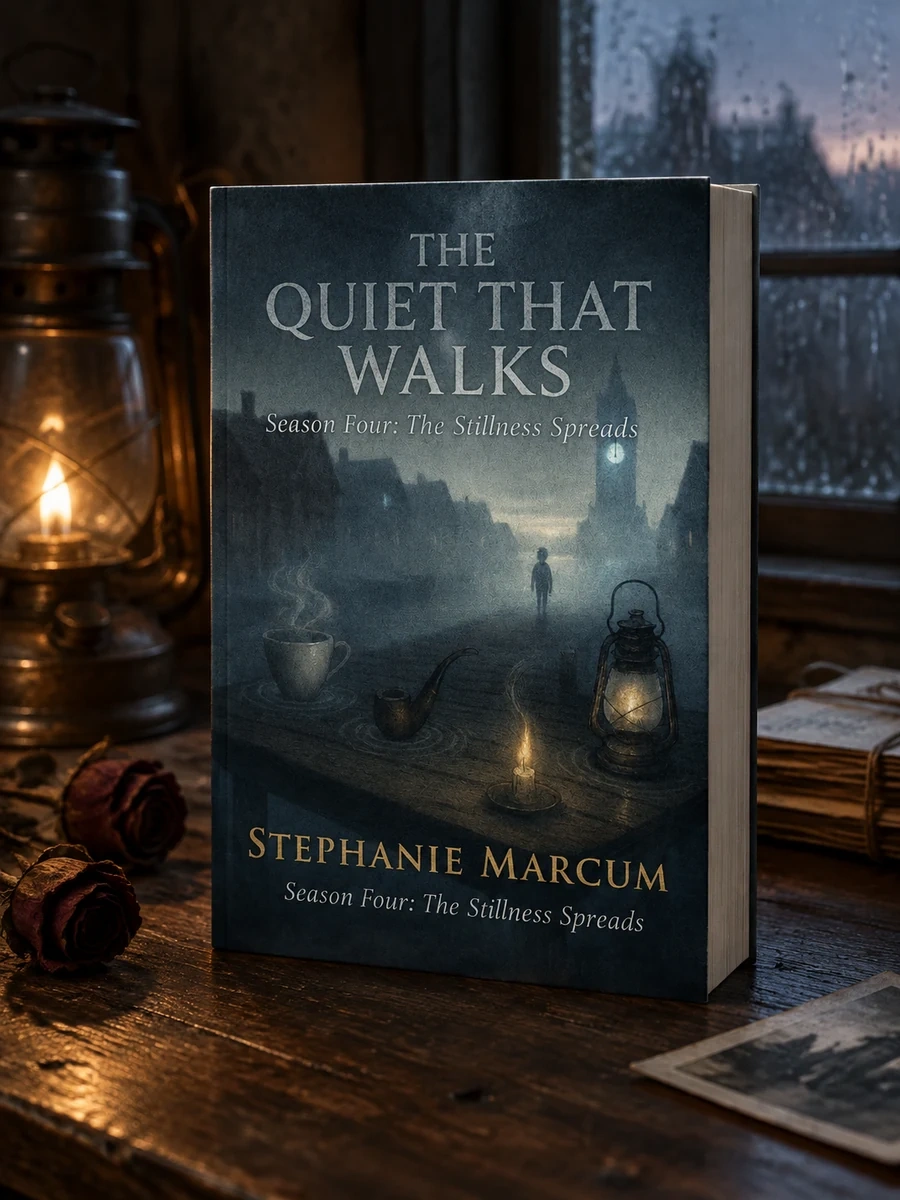
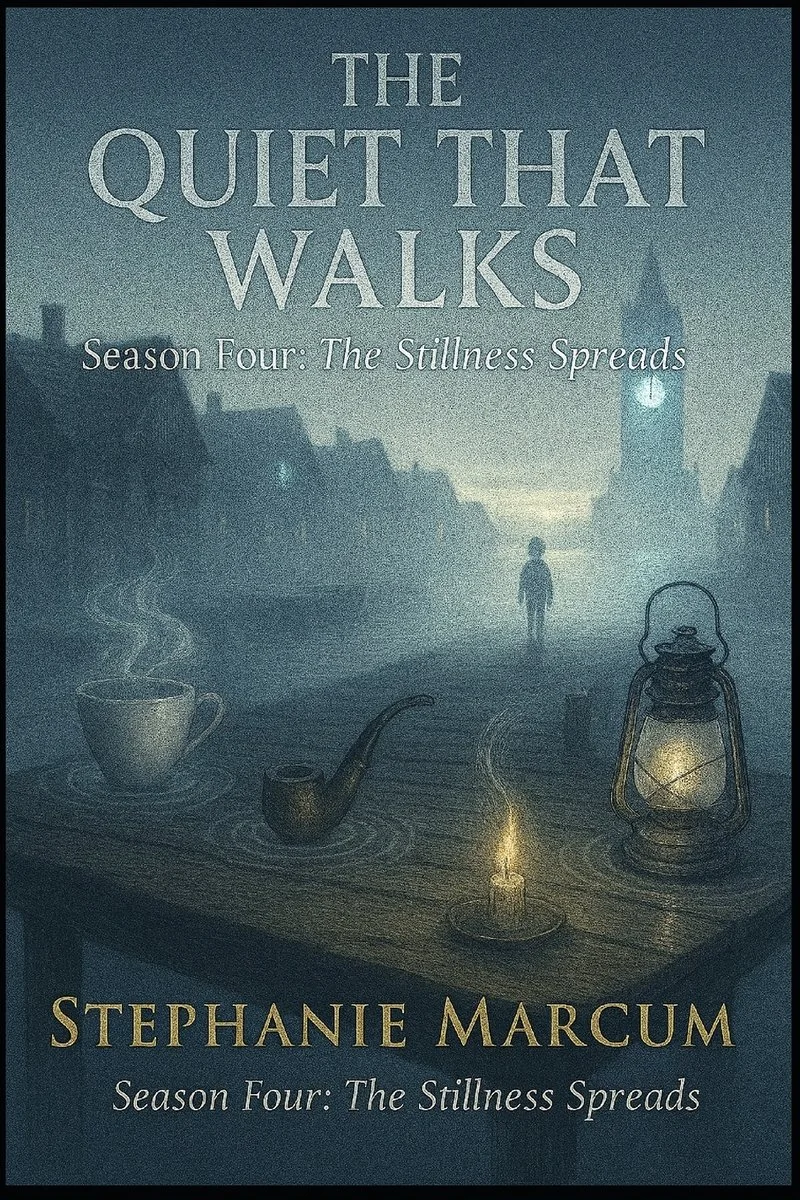
The Quiet That Walks - The Stillness Spreads
A study of Greyhaven's civic religion and the fatigue of survival.
This volume investigates the psychological landscape of Greyhaven after its encounters with the Quiet. Marcum details how the town transitions from immediate danger to a state of managed coexistence. The narrative tracks the emergence of new rituals, such as naming movements aloud, which replace older protective measures like shrines. It analyzes the concept of safety humming and the dangerous comfort of habit. The work considers how residual tones influence behavior long after the primary threat has faded. It frames the Quiet not as a monster to be defeated but as an environmental condition to be endured. The story examines the cost of this endurance on the human psyche. It suggests that vigilance can become a trap, binding people to a cycle of fear. The text focuses on the maintenance of order in the face of supernatural ambiguity.
The work is set in Greyhaven and draws on themes of gothic horror and supernatural fiction. It reflects contemporary anxieties about safety and habit. The narrative situates itself within the tradition of psychological horror, focusing on the internal lives of survivors rather than external threats.


📝 Description: The Quiet That Walks - The Stillness Spreads
💎 Our verdict on The Quiet That Walks - The Stillness Spreads
📖 Why choose it
Why this book is worth reading
This book is essential for readers who find traditional jump scares hollow and prefer horror that lingers in the mind through psychological weight and atmospheric dread. It appeals to those interested in the sociological mechanics of fear, exploring how communities construct rituals and religions around trauma to manage existential threats. The narrative offers a grounded, unsensationalized look at collective anxiety, making it suitable for readers who appreciate slow-burn tension over fast-paced action. Those who enjoy analyzing the fatigue of survival and the subtle ways vigilance becomes a trap will find value in its examination of habit and safety. It provides a deep dive into the cost of enduring ambiguity, offering a unique perspective on how people adapt to supernatural conditions without clear resolution or victory.
⭐ Reader reviews
Reader rating
Marcum delivers a meticulous study of Greyhaven’s post-traumatic existence, where survival demands constant vocal vigilance against the lingering Quiet. The strength lies in its refusal to offer easy answers, instead portraying horror as an environmental condition that reshapes civic life and personal psychology. By focusing on rituals like naming movements aloud, the text highlights the dangerous comfort of habit and the erosion of true safety. This approach suits readers who prefer atmospheric tension and sociological analysis over explicit violence or clear resolutions. It is a compelling exploration of how fear becomes institutionalized, binding inhabitants to a cycle of anxiety. The work avoids sensationalism, opting for a grounded portrayal of collective endurance that feels both eerie and deeply human in its depiction of adapted normalcy.