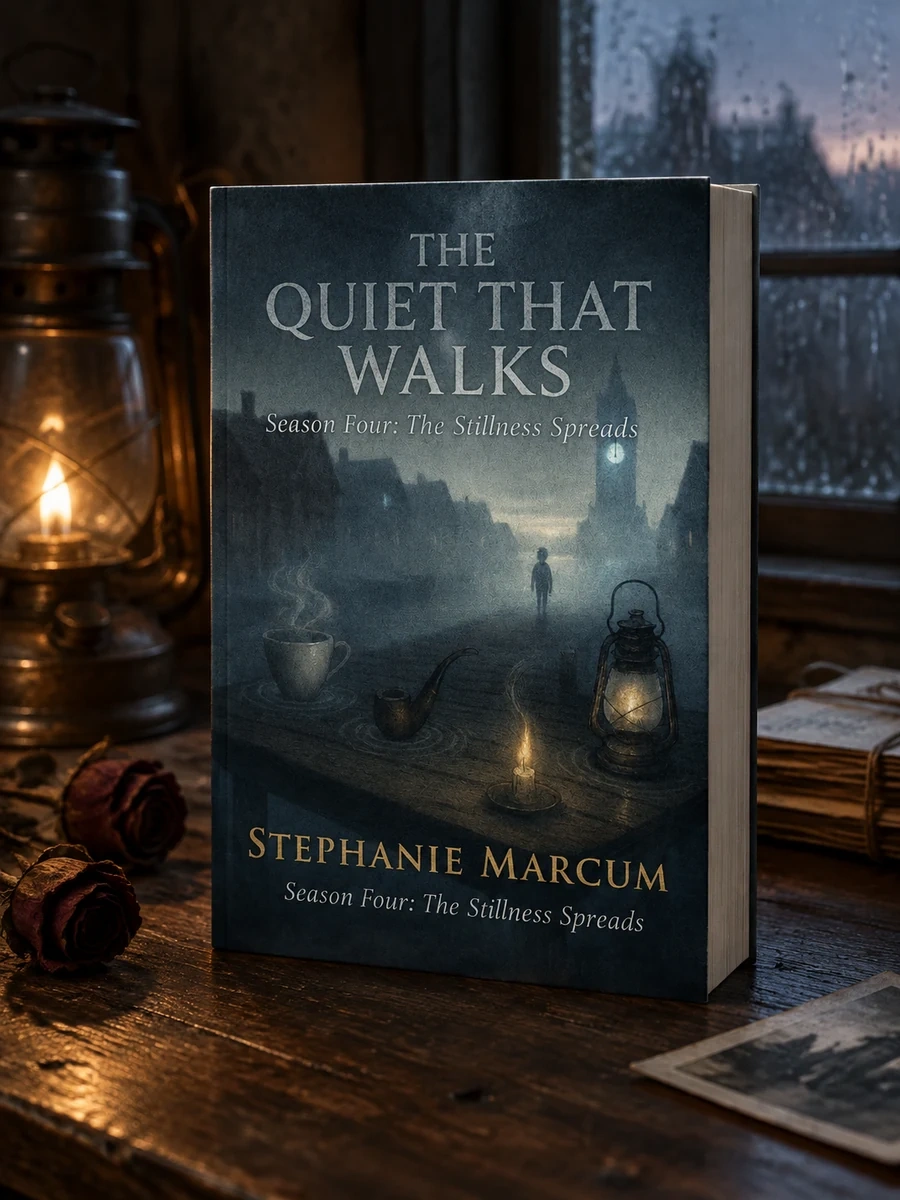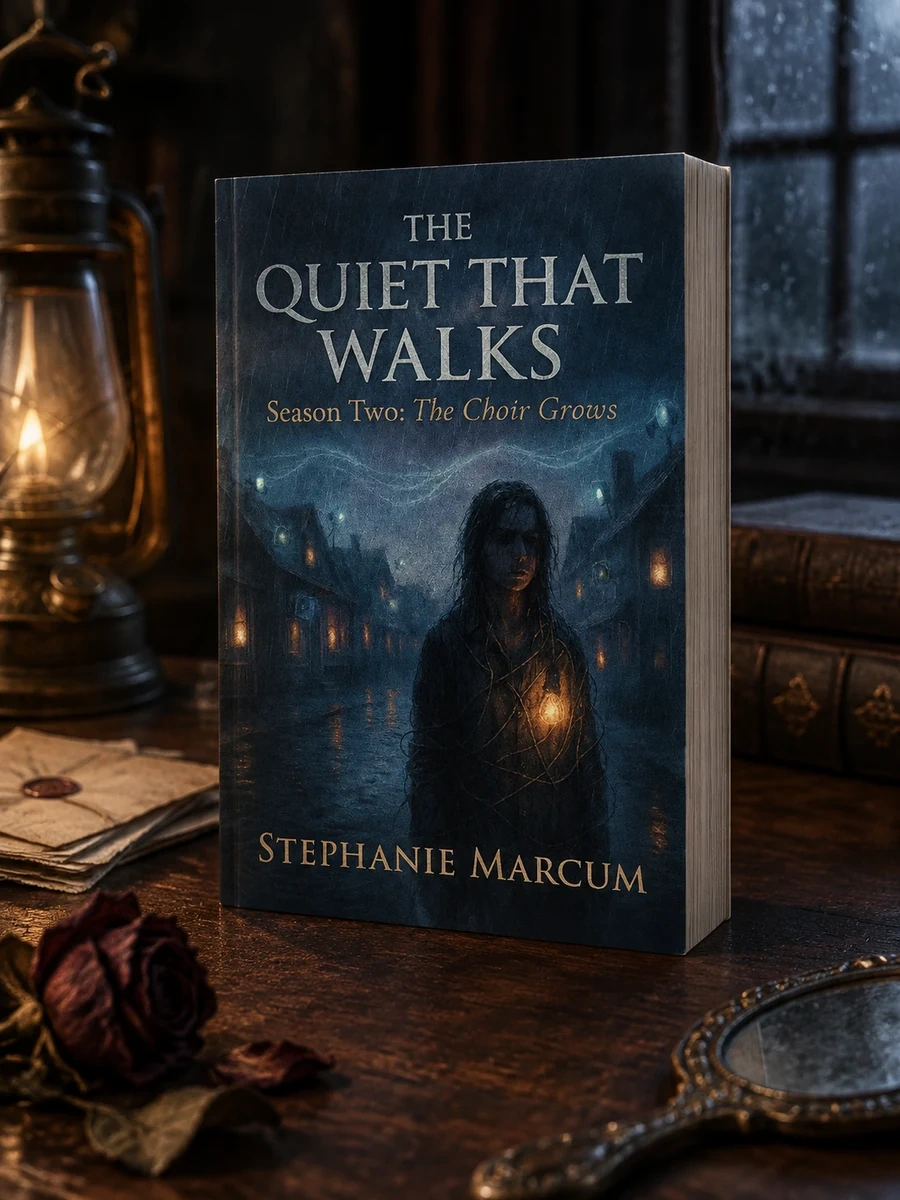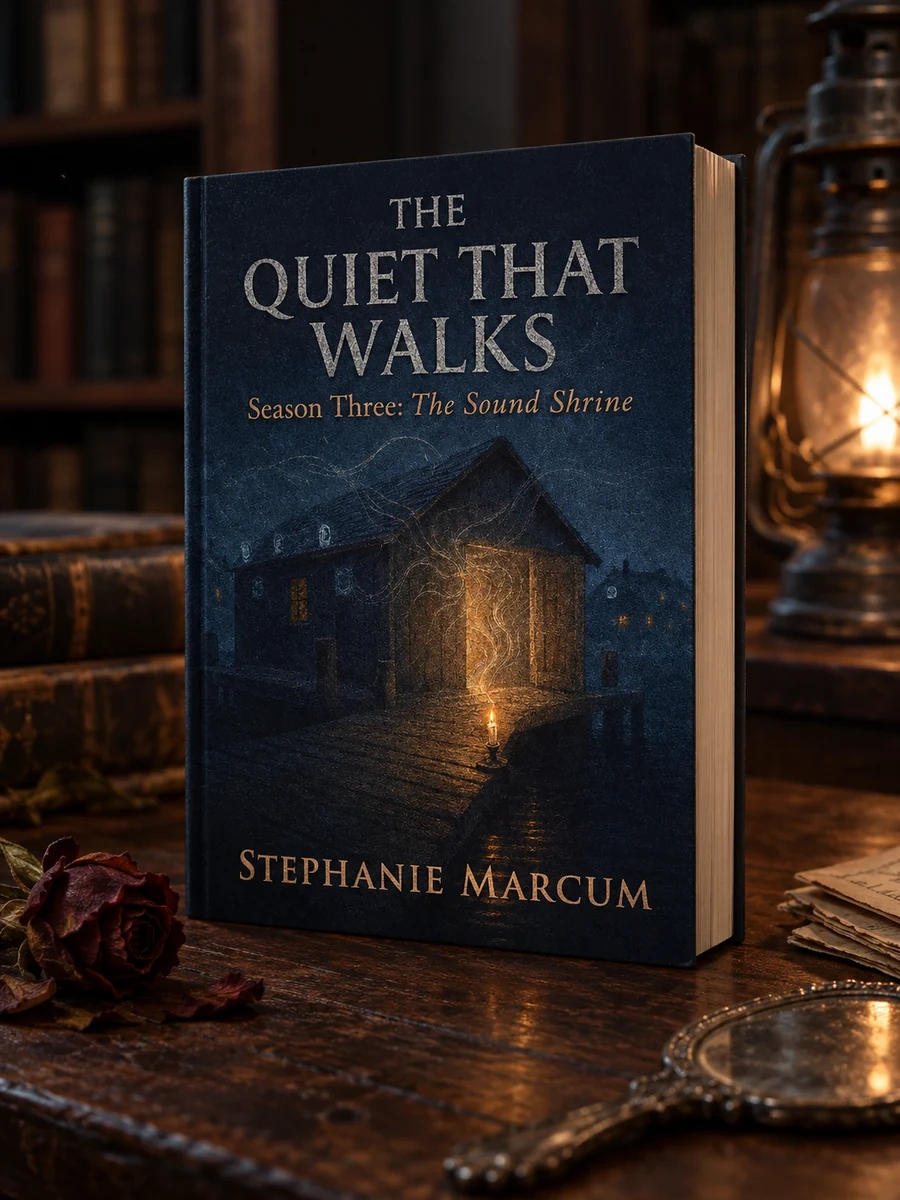
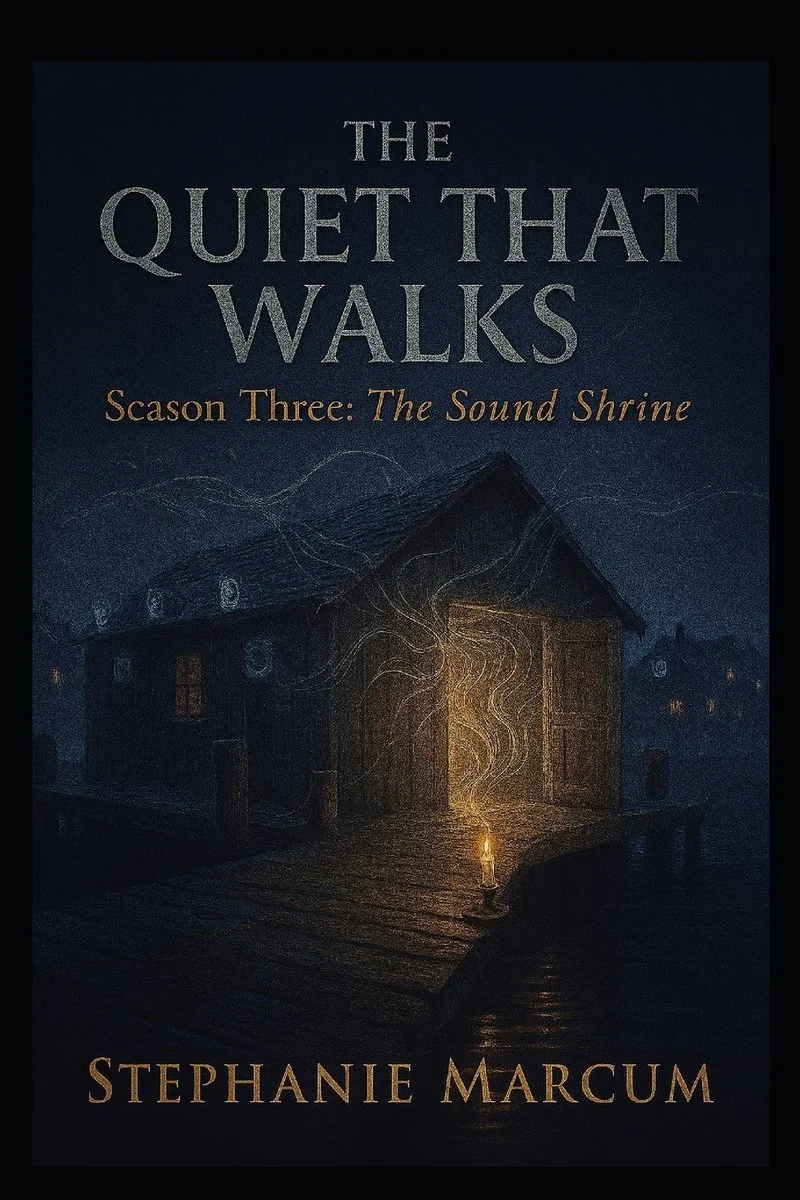
The Quiet That Walks - The Sound Shrine
The Quiet evolves from mimicry to construction in this third installment.
This volume shifts the series focus from local rescue efforts to a crisis centered on place and architectural horror. The Quiet attempts to build a permanent acoustic monument to keep people singing wrong songs forever. The team must decide what to sacrifice to dismantle the shrine. Marcum delivers precise sound design including pre-echo pressure and layered harmonics. The story combines domestic dread with sardonic humor. It appeals to readers who enjoy procedural elements and emotional beats. Those preferring action over atmospheric tension may find it slow.
Stephanie Marcum publishes this independently in 2025. The work continues the supernatural fiction tradition by focusing on architectural horror and community scaffolding. It appeals to American readers interested in procedural narratives that blend sardonic humor with human compassion within the genre of gothic and supernatural fiction.


📝 Description: The Quiet That Walks - The Sound Shrine
💎 Our verdict on The Quiet That Walks - The Sound Shrine
📖 Why choose it
Why this book is worth reading
Readers who appreciate procedural narratives combined with deep emotional resonance will find value in this installment. The book offers a unique exploration of architectural horror where sound becomes a tangible, worshipped entity. Those drawn to sardonic humor balanced with genuine human compassion will enjoy the character dynamics. It appeals to individuals seeking atmospheric tension and precise sound design elements like pre-echo pressure rather than fast-paced action. Fans of cosmic horror grounded in domestic settings will find the shift from rescue missions to place-based crises compelling. The narrative invites reflection on sacrifice, privacy, and the cost of community safety against a shrine demanding worship.
⭐ Reader reviews
Reader rating
Marcum delivers a sophisticated entry that shifts focus from individual rescues to broader architectural crises. The author excels in precise sound design, utilizing layered harmonics and pre-echo pressure to create genuine domestic dread. This volume successfully blends sardonic humor with profound human compassion, maintaining its procedural structure while exploring horror rooted in community dynamics. It suits readers who enjoy atmospheric tension and specific acoustic phenomena over traditional jump scares. Those preferring action may find the pacing slow, but fans of psychological horror will appreciate the emotional beats. The narrative effectively pushes toward a horror of construction where sound itself becomes a shrine, demanding significant sacrifices from the protagonists.