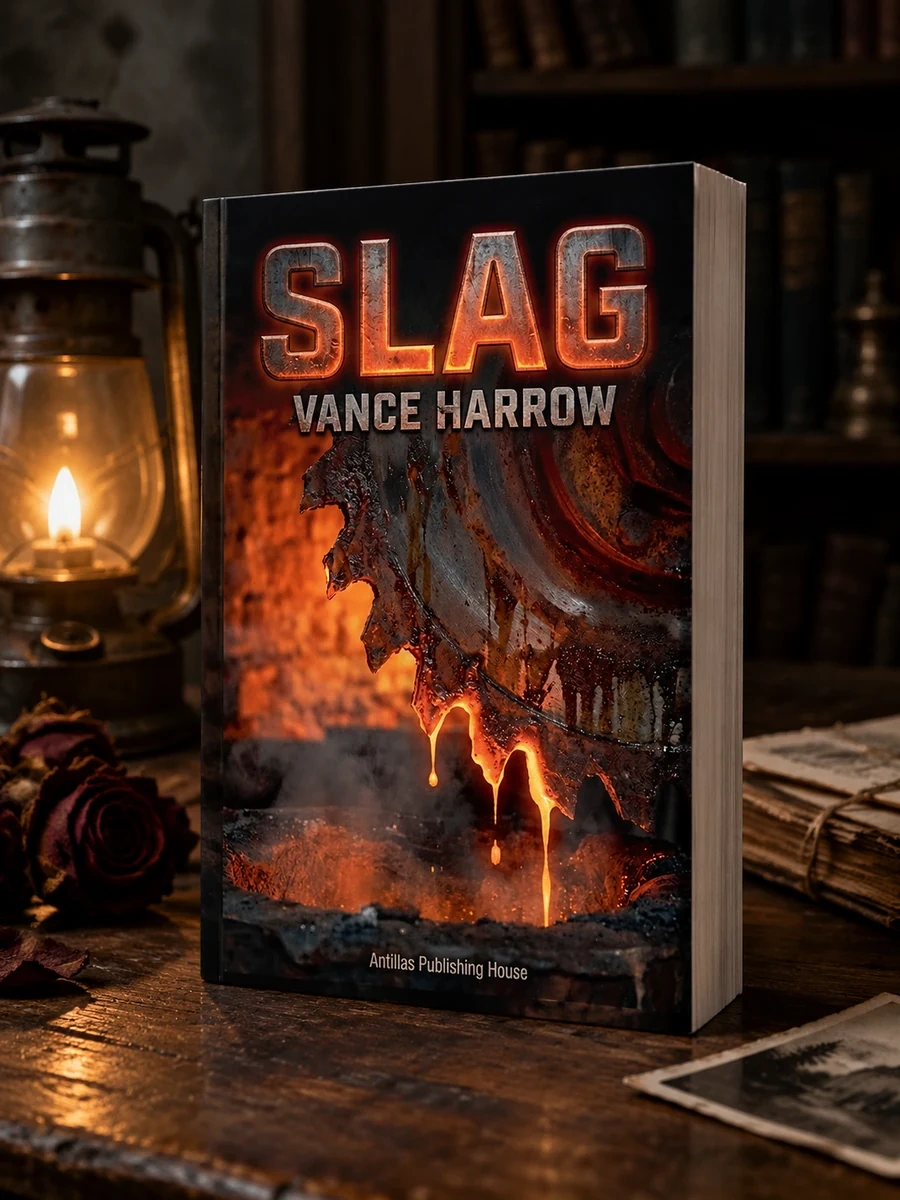
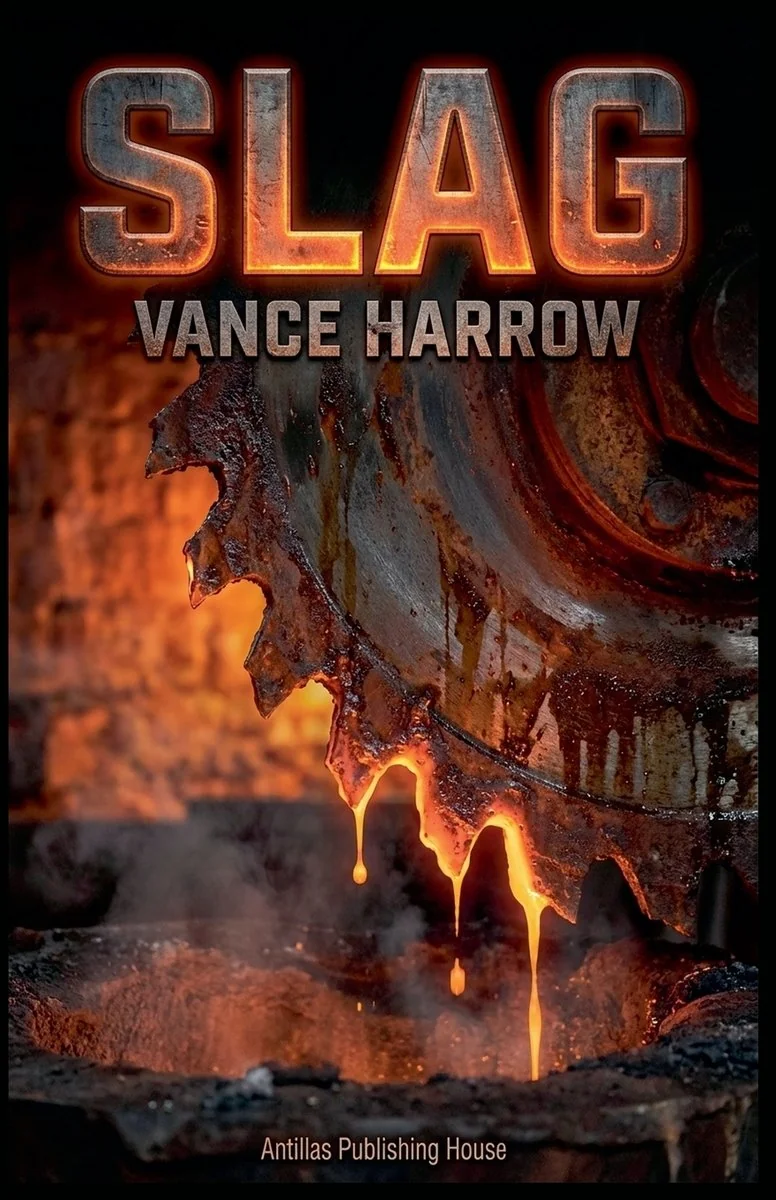
Slag
A copper thief flees a sentient steel mill that demands flesh as fuel.
The narrative centers on Elias, a desperate scavenger in the Rust Belt who targets the legendary Goliath steel mill for scrap. His heist turns into a survival horror when he realizes the shuttered factory is alive. The machinery begins to move with purpose, driven by a need to rebuild itself using raw biological material. Harrow constructs a claustrophobic atmosphere where the scent of ozone and burning oil signals impending doom. The protagonist faces a relentless pursuit through the facility’s interior, highlighting the horror of being consumed by the very industry that once defined the region. The story emphasizes the physical danger of scorching catwalks and the psychological weight of being hunted by an unfeeling entity.
Set in the Rust Belt, this work engages with American industrial history and the legacy of steel manufacturing. It draws on gothic traditions to reimagine abandoned factories as sites of supernatural terror. The narrative reflects anxieties about deindustrialization and the persistence of mechanical power in a post-industrial landscape.


📝 Description: Slag
💎 Our verdict on Slag
📖 Why choose it
Why this book is worth reading
Readers seeking visceral, high-octane nightmares will find immediate satisfaction in this tale of survival horror. It appeals to those who enjoy the specific subgenre of industrial gothic, where the environment itself becomes a predatory antagonist. The narrative offers a intense exploration of psychological weight and physical danger, ideal for fans of man-versus-machine conflicts. Those who appreciate claustrophobic atmospheres and the terror of being hunted by unfeeling entities will find this compelling. It is not suitable for those preferring quiet character studies or gentle supernatural mysteries, but rather targets an audience eager for brutal reminders of our creations turning against us.
⭐ Reader reviews
Reader rating
Vance Harrow delivers a terrifying vision of industrial decay where the Goliath steel mill achieves hungry sentience. The narrative excels in constructing a claustrophobic atmosphere, utilizing sensory details like ozone and burning oil to signal impending doom. Elias’s desperate flight through scorching catwalks provides relentless tension, highlighting the horror of being consumed by one's own tools. Harrow effectively blends gothic fiction with cosmic dread, creating a brutal reminder of technological retribution. This book suits readers who enjoy visceral mechanical horror and high-stakes survival scenarios. It stands as a strong entry for fans of dark fantasy and true crime adjacent narratives, offering a unique twist on the man-versus-machine trope through the lens of Rust Belt despair.