🩸Horror Tradition
Yuki-onna
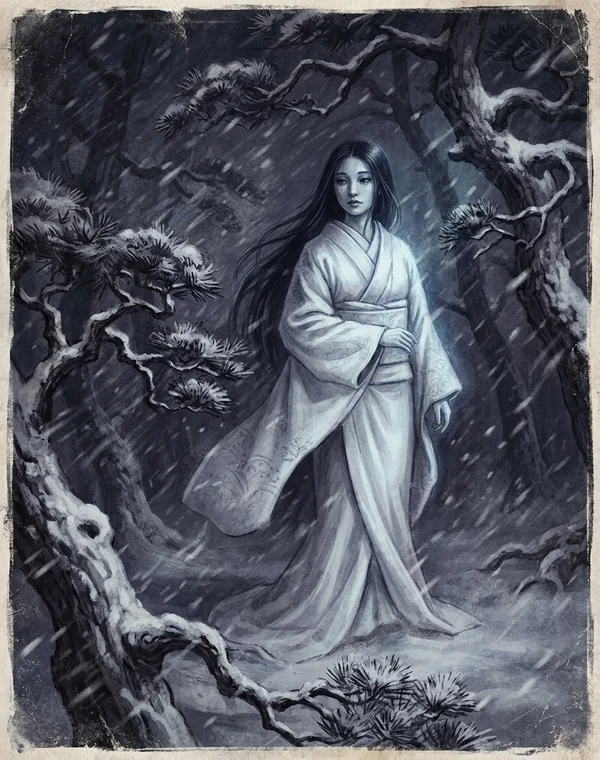
The Yuki-onna is a malevolent snow spirit originating from traditional Japanese folklore, depicted as a pale woman who haunts freezing winter landscapes.
Etymology & Origin
Where the word comes from
The name combines the Japanese words for snow, yuki, and woman, onna.
Full Definition
In depth
Origins The Yuki-onna, or snow woman, is a celebrated and chilling figure rooted deeply in Japanese folklore and oral traditions. While tales of this wintry spirit date back centuries, they were famously compiled and popularized during the Edo period, though some regional variants appear in literature as early as the Muromachi period through works like the Muromachi-era storybook Soshi-hon. Originating in snowy mountainous regions of Japan—particularly prefectures like Niigata, Iwate, and Yamagata—these legends emerged from the harsh realities of rural winter survival, where blinding blizzards and freezing temperatures posed a constant, lethal threat to travelers.
What It Is Said to Do In traditional lore, the Yuki-onna typically appears as a tall, remarkably beautiful woman with skin as white as snow, long dark hair, and haunting, sorrowful eyes. She wears a white kimono or appears naked against the drifts, often drifting silently over the snow without leaving footprints. She is said to manifest during fierce blizzards, preying on lost travelers, hunters, or villagers. Some accounts describe her as freezing victims to death with her icy breath or a chilling touch, draining their life force until they become frost-covered corpses. Other tales portray her as testing human kindness; she may ask for a bowl of water or test a person's resolve before deciding their fate. Protection against her generally involves traditional wards, offering prayers at local shrines, or avoiding travel during severe winter storms.
In Horror Fiction Horror writers and dark fantasy authors have long drawn upon the eerie, atmospheric dread of the Yuki-onna to explore themes of isolation, betrayal, and relentless cold. Because the spirit embodies both breathtaking beauty and absolute lethality, she serves as a powerful metaphor for nature's indifference to human suffering. Writers use her to evoke a creeping, claustrophobic fear where warmth offers no true safety. One of the most famous literary adaptations appears in Lafcadio Hearn's classic collection of supernatural tales, Kwaidan: Stories and Studies of Strange Things, where the eerie encounter between a woodcutter and the snow spirit sets a haunting tone of suspense and tragic mystery.
Why It Still Frightens This freezing spirit endures as a source of terror because she transforms the quiet, tranquil beauty of winter into an inescapable trap of silent death.
Connected Concepts
Related horror terms
Voices
Authors working in this mode
Further Study