🩸Horror Tradition
Headless Horseman
The headless horseman is a terrifying spectral rider originating from European folklore, most famously immortalized in American literature as a Hessian trooper haunting Sleepy Hollow.
Etymology & Origin
Where the word comes from
The term combines the Old English derived adjective headless with horseman, describing a mounted rider lacking a head.
Full Definition
In depth
Origins The legend of the headless rider traces its deep roots far back into European folklore and medieval traditions. Versions of the motif appear across various cultures, including Celtic mythology, where headless figures often served as harbingers of doom or symbols of impending death, and Germanic oral histories detailing restless warriors. The most enduring iteration of this dark myth crystallized in the Hudson Valley of New York, rooted in regional oral traditions brought over by early European settlers. Washington Irving famously captured and adapted these local legends in his 1820 short story, cementing the headless mercenary into the bedrock of American folklore.
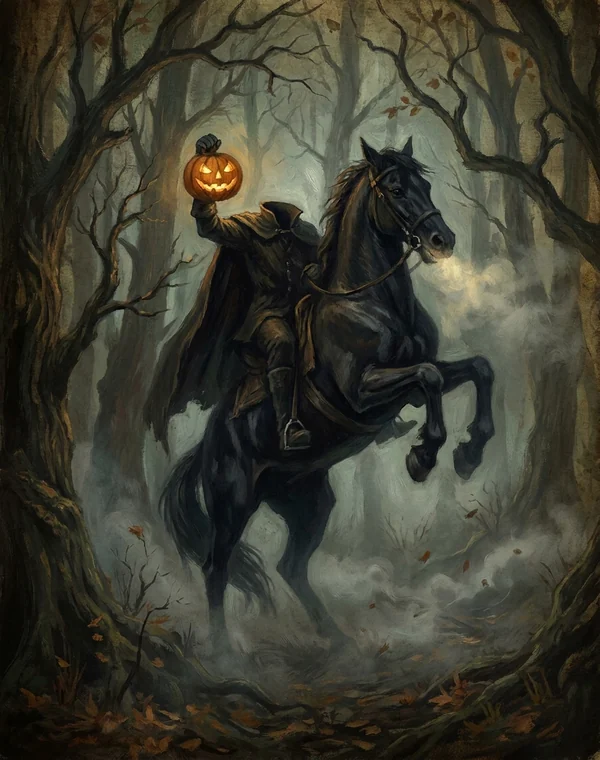
What It Is Said to Do In traditional accounts, the headless horseman is typically depicted as a towering, menacing figure mounted on a massive, coal-black steed, carrying his severed head either tucked beneath an arm or resting on the saddle pommel. Said to rise exclusively during the witching hours of the night, the specter gallops furiously across rural byways and bridges in frantic search of his missing head. According to folklore, witnesses who cross paths with the rider are often pursued relentlessly. Traditional protective folklore suggests that reaching a running stream or consecrated ground offers safety, as the phantom is unable to cross moving water.
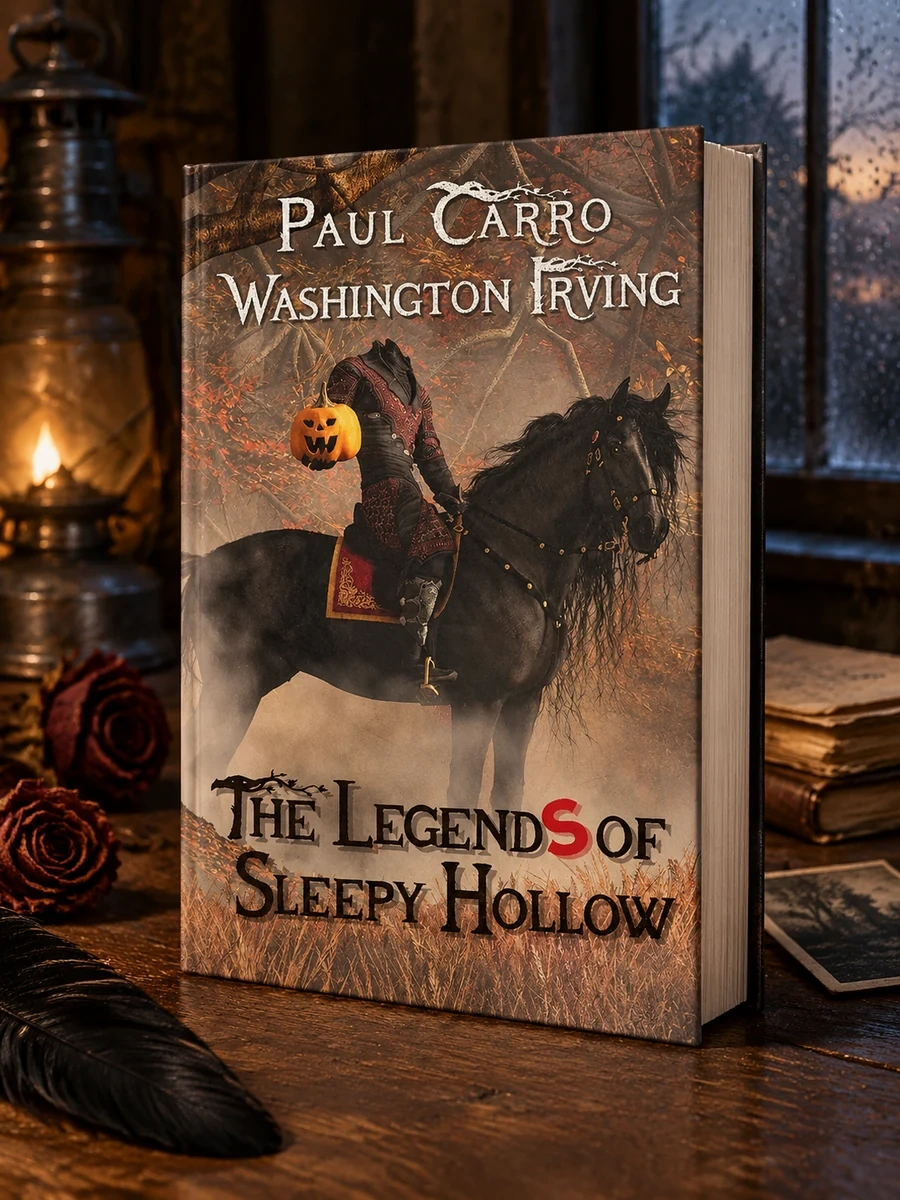
In Horror Fiction Within horror fiction, authors use the headless horseman to explore themes of inescapable guilt, historical trauma, and the terror of the unknown rural landscape. The figure transforms the familiar, comforting expanse of the countryside into a trap of isolation and pursuit. Landmark works include Washington Irving's foundational Gothic tale "The Legend of Sleepy Hollow," which brilliantly balances atmospheric dread with psychological ambiguity, and modern anthologies that reimagine the Hessian ghost as an embodiment of primal, headless panic.
Why It Still Frightens This chilling icon endures because it strips away identity and reason, replacing the human face with a terrifying void that forces us to confront our deepest fears of sudden, violent oblivion.
Connected Concepts
Related horror terms
Further Study