🩸Horror Tradition
Kuchisake-Onna
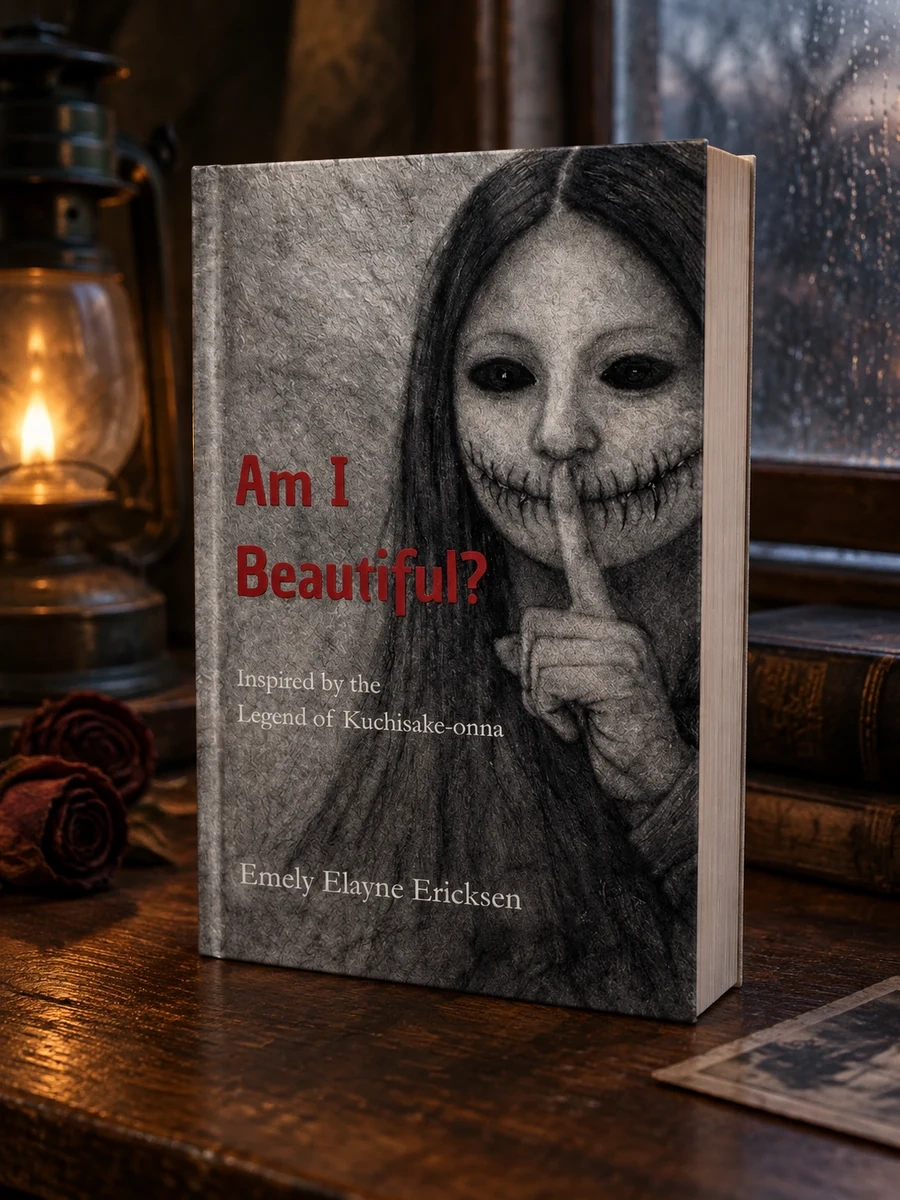
Kuchisake-Onna is a malicious urban legend originating from modern Japanese folklore concerning a disfigured female specter who stalks pedestrians at night.
Etymology & Origin
Where the word comes from
The name derives from the Japanese words kuchi, meaning mouth, sake, meaning split or torn, and onna, meaning woman.
Full Definition
In depth
Origins Kuchisake-Onna, translated literally as the Slit-Mouthed Woman, is a prominent fixture of modern Japanese urban legend and contemporary folklore. While folklorists trace elements of her narrative back to earlier ghost tales from the Edo period and pre-modern Japanese traditions, the specific urban legend as it is widely recognized exploded into cultural consciousness across Japan during the late 1970s. The panic surrounding sightings of the spirit reportedly spread rapidly among school children, causing widespread fear and prompting police intervention and escorted walks home in various prefectures.
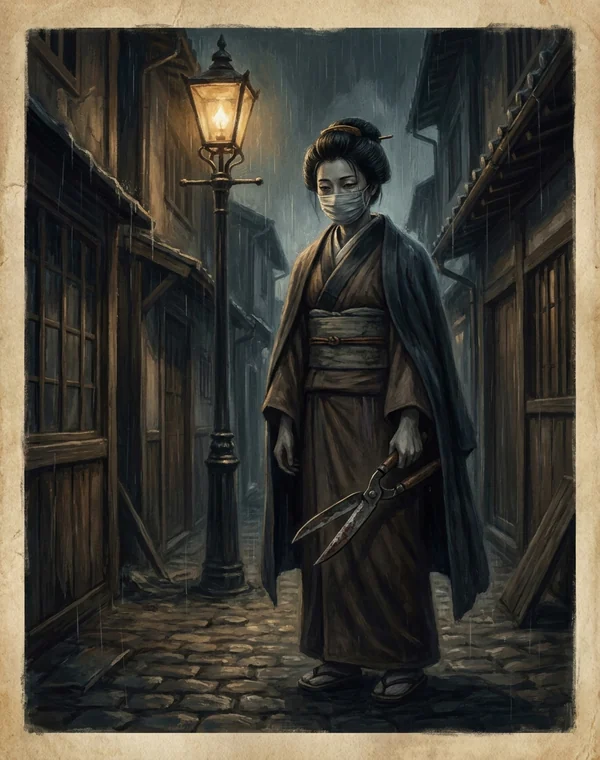
What It Is Said to Do According to traditional accounts, the spirit appears as a woman wearing a surgical mask—a common sight in Japan—to conceal a horrific wound stretching from ear to ear. She approaches solitary travelers, most often children or students walking home after dark, and asks a chilling question: Am I beautiful? If the victim answers no, she slashes them with a pair of scissors or a sickle. If they answer yes, she removes her mask to reveal her mutilated mouth and repeats the question. If the victim panics, screams, or says no, she kills them. Surviving requires quick wits, such as answering that she looks average, tossing hard candies or fruit to distract her while fleeing, or confusing her with a counter-question.
In Horror Fiction Authors and manga creators frequently draw upon the Kuchisake-Onna to explore themes of isolation, urban anxiety, and the psychological weight of modern Japanese societal pressures. Because the legend occupies a space between traditional ghost stories and contemporary urban fears, horror writers use her to evoke a sudden breach of safety in mundane settings like dark alleyways or suburban train stations. While many depictions exist across Japanese horror anthologies and manga series such as those by Junji Ito, strict caution regarding specific novel titles ensures that only verified cultural narratives are attributed.
Why It Still Frightens This enduring specter preys upon the terrifying realization that ordinary interactions in familiar, safe streets can instantly turn fatal through no fault of one's own.
Connected Concepts
Related horror terms
Further Study