🩸Horror Tradition
Will-o'-the-wisp
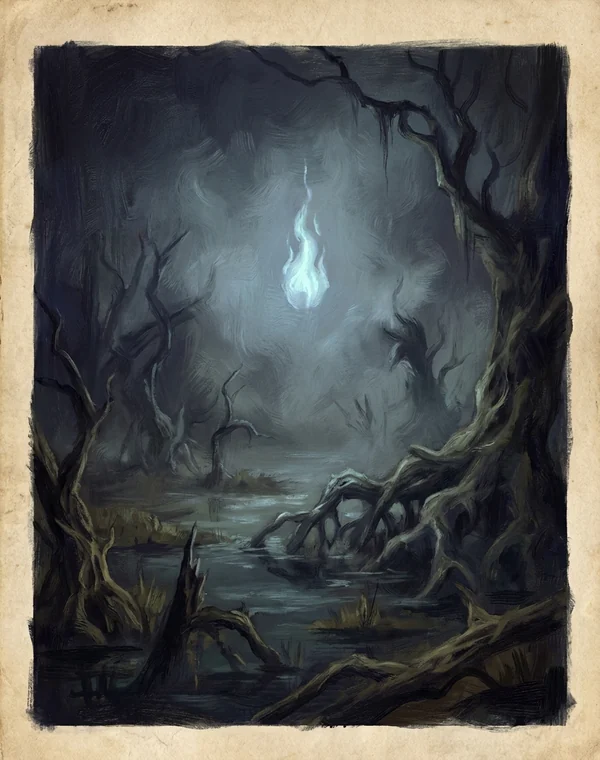
A mysterious atmospheric ghost light originating from European folklore, famously said to lure unsuspecting travelers off safe paths into treacherous swamps and bogs.
Etymology & Origin
Where the word comes from
Derived from the colloquial practice of naming a phantom light after a man named Will holding a torch (wisp), historically recorded as 'will-with-a-wisp'.
Full Definition
In depth
Origins The will-o'-the-wisp is a widespread atmospheric phenomenon rooted deeply in European folklore, with particularly robust traditions in British, Scandinavian, and Germanic regions. The legend stretches back centuries, long before modern science could explain the natural process of organic decay. Historically, rural communities struggled to make sense of the pale, flickering lights dancing over marshlands, fens, and peat bogs at night. Folklorists note that similar luminous atmospheric anomalies appear in global mythologies, often interpreted as wandering spirits, trapped souls, or mischievous nature entities trying to lead the living astray.
What It Is Said to Do In traditional lore, the will-o'-the-wisp appears as a flickering ball of pale or bluish light that hovers just above the surface of stagnant water or wet ground. It is said to behave with a deceptive intelligence, moving away whenever a traveler approaches in an effort to draw them deeper into dangerous, sinking mires. While some traditions view them as helpful guides, the vast majority of folklore warns that following a wisp results in getting hopelessly lost or drowning in the bog. To protect against these deceitful lights, traditional safeguards included turning one's pockets inside out, holding iron objects, or steadfastly ignoring the glow and praying for safe passage.
In Horror Fiction Horror fiction and dark fantasy frequently employ the will-o'-the-wisp as a potent symbol of isolation, deception, and the terrifying indifference of nature. Writers use the phenomenon to evoke a creeping sense of dread, where the environment itself feels sentient and hostile. Rather than a traditional monster with claws, the wisp represents psychological horror—the panic of realizing you are being led to your doom by your own hopeful pursuit of safety.
Why It Still Frightens Even in an era of scientific explanation, the will-o'-the-wisp terrifies because it preys on our deepest primal fear: trusting a guiding light only to discover it was a trap designed to lead us into the dark.
Connected Concepts
Related horror terms
Further Study