🩸Horror Tradition
Mae Nak
Mae Nak is a tragic ghost from Thai folklore, originating from Bangkok folklore and dating back to the mid-nineteenth century during the reign of King Rama IV.
Etymology & Origin
Where the word comes from
The name combines 'Mae', a Thai honorific prefix meaning mother, with 'Nak', the given name of the tragic spirit.
Full Definition
In depth
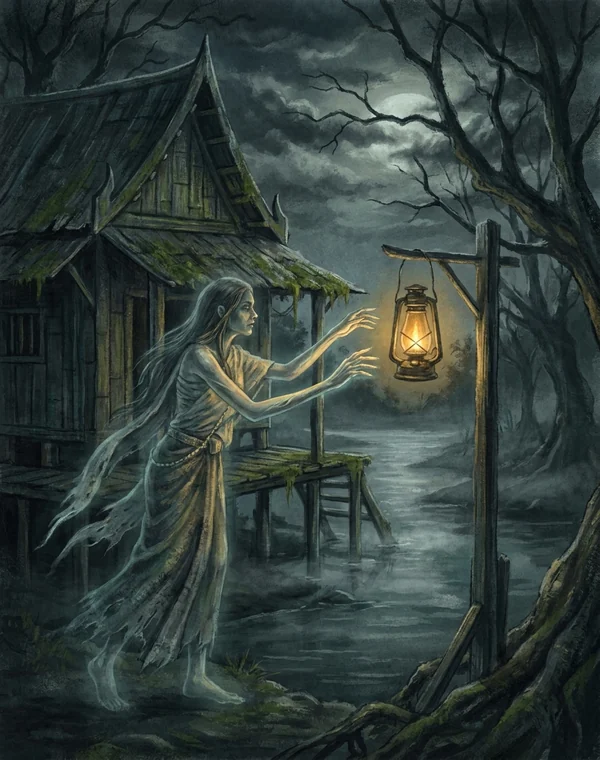
Origins Mae Nak is a deeply embedded legend in Thai folklore, tracing its roots back to Phra Khanong in Bangkok during the mid-nineteenth century, specifically the reign of King Rama IV. According to traditional accounts, the tale centers on a young pregnant woman named Nak who tragically dies during childbirth while her husband, Mak, is away fighting in a war. Rather than passing peacefully into the next realm, her spirit lingers in her riverside home out of profound love and devotion, waiting for her husband's return.
What It Is Said to Do In traditional folklore, Mae Nak manifests as a terrifying yet deeply pitiful apparition, recognizable by her pale complexion, traditional Thai garments, and supernatural ability to elongate her arms to unnatural lengths to complete household tasks like picking up dropped fruit. When locals or skeptical villagers attempt to reveal her true ghostly nature to her unsuspecting husband, her temper flares into murderous rage, leading to violent vengeance against anyone who threatens her domestic illusion. Traditionally, villagers believed that spiritual protective measures involving Buddhist monks, sacred rituals, and the trapping of her spirit in an earthen jar or skull relic were necessary to subdue her restless ghost.
In Horror Fiction In horror fiction and literature, writers use the figure of Mae Nak to explore themes of intense romantic obsession, maternal tragedy, and the terrifying blurring of lines between the living world and the afterlife. Authors and dramatists adapt her story to emphasize psychological terror and domestic dread, transforming a domestic sanctuary into a chamber of inescapable horror. While cinematic adaptations are numerous, literary retellings in Thai and translated anthologies focus heavily on the profound sorrow and relentless possessiveness that define her eternal spectral existence.
Why It Still Frightens Mae Nak continues to frighten because she twists the ultimate symbols of love, loyalty, and home into instruments of inescapable terror.
Connected Concepts
Related horror terms
Further Study