🩸Horror Tradition
Rokurokubi
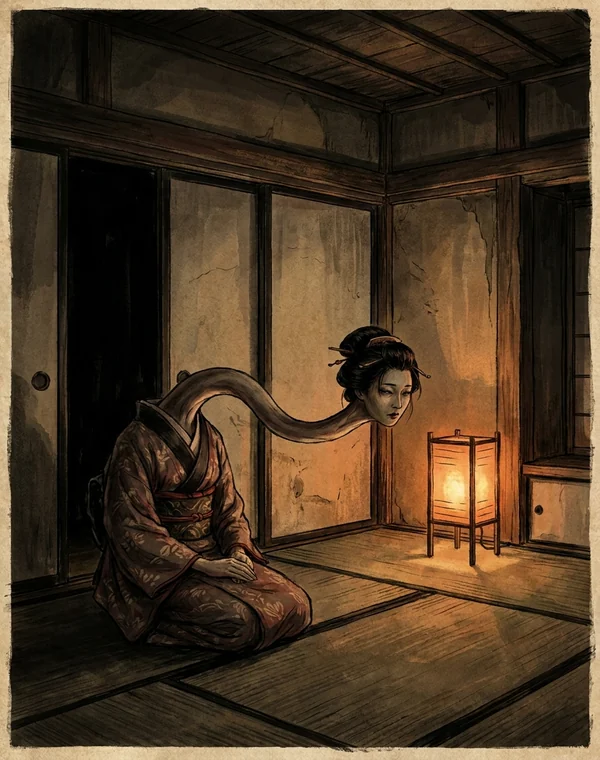
The rokurokubi is a traditional Japanese yōkai characterized by its uniquely elongating neck, deeply rooted in the folklore of the Edo period.
Etymology & Origin
Where the word comes from
Derived from the Japanese words rokuro, referring to a potter's wheel or a neck-stretching mechanism, and kubi, meaning neck.
Full Definition
In depth
Origins The rokurokubi originates from Japanese folklore, gaining widespread prominence during the Edo period through urban legends, ghost stories called kaidan, and popular art. While earlier tales featured humans cursed with strange bodily transformations, the creature evolved in traditional storytelling into a distinct supernatural entity. In many accounts, these beings appear as ordinary humans by day—often living unassuming lives as wives, merchants, or neighbors—only to manifest their terrifying nature after nightfall. The legend draws upon older Asian motifs of detached or extended body parts, reflecting deep cultural fascinations with hidden curses, moral failings, and the uncanny blurring of the human and the monstrous.
What It Is Said to Do According to folklore, the defining trait of a rokurokubi is its ability to stretch its neck to incredible lengths while sleeping, leaving its dormant body behind. Some accounts describe the detached head roaming independently to spy on neighbors, frighten victims, or consume oil from paper lanterns. In other regional variants, the creature's head detaches entirely and floats through the night air. While some rokurokubi are portrayed as malevolent tricksters who feed on human fear, others are said to be unaware of their own condition, believing their nocturnal wanderings to be nothing more than vivid dreams. Traditional protective measures against them include hanging protective charms, securing doors with sacred talismans, or observing sleepers to catch the wandering head before it can safely return to its body.
In Horror Fiction In modern horror literature and speculative fiction, writers employ the rokurokubi to evoke psychological dread and the terrifying realization that evil can reside within trusted companions. Because the creature wears a familiar human face during the day, it embodies the horror of the domestic sphere breached by the supernatural. Authors use the unsettling transformation of the neck to disrupt the safety of the bedroom, turning an ordinary domestic environment into a space of vulnerability and entrapment. Although specific Western adaptations vary, classic Japanese ghost anthologies and contemporary horror collections frequently revisit the figure to explore themes of hidden guilt, marital deception, and the fragile boundary between the normal and the grotesque.
Why It Still Frightens This chilling yōkai endures because it perverts the safety of home and sleep, transforming a trusted loved one into an unrecognizable nighttime predator.
Connected Concepts
Related horror terms
Further Study