Nagini
Derived from South Asian mythology, a nagini is a female serpent entity or semi-divine shape-shifter traditionally associated with underground realms, hidden treasures, and dualities of life and destruction.
Where the word comes from
Derived from the Sanskrit word nagin or nagini, meaning female serpent or snake.
In depth
Origins
In South Asian tradition, particularly within Hindu, Buddhist, and Jain folklore, the nagini is the female counterpart to the naga, a class of serpentine or semi-human supernatural beings. Dating back over two millennia, these figures originated in ancient Indian religious lore and subsequently spread across Southeast Asia, embedding themselves into local animistic and river-worship beliefs. They are deeply tied to water sources, subterranean caverns, and sacred spaces, functioning as ancient guardians of the earth and hidden wealth. Rather than simple beasts, traditional folklore casts them as powerful entities capable of moving between human form and colossal reptilian shapes.
What It Is Said to Do
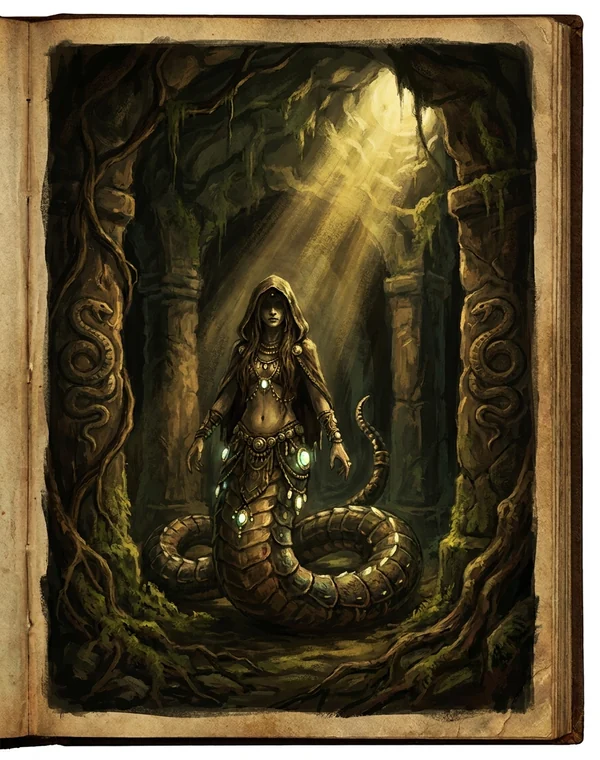
In traditional descriptions, a nagini can manifest as an ordinary venomous snake, a multi-headed cobra, a hybrid creature with a human upper torso and a serpent tail, or a fully human illusionist. They are said to dwell in magnificent underwater or subterranean palaces known as nagalokas, guarding sacred treasures, controlling weather patterns, and bestowing fertility or devastating floods. Traditional protection against their wrath involves respectful offerings, ritual placation near water bodies, and avoiding the desecration of natural springs or serpent-haunted groves.
In Horror Fiction
Horror and dark fantasy writers leverage the nagini figure to evoke a primal, skin-crawling dread centered on deception, bodily corruption, and the loss of humanity. In modern literature, such entities exploit the uncanny valley by wearing a familiar human mask before revealing a cold, predatory serpentine core. This archetype trades on the fear of betrayal by trusted companions and the claustrophobia of enclosed subterranean spaces. Classic and modern weird fiction utilizes these shapeshifting serpent forms to symbolize internal poison, creeping obsession, and the insidious erosion of free will.
Why It Still Frightens
They terrify because they combine intelligence with cold-blooded malice, erasing the boundary between human warmth and lethal, alien hunger.