🩸Horror Tradition
Lamia
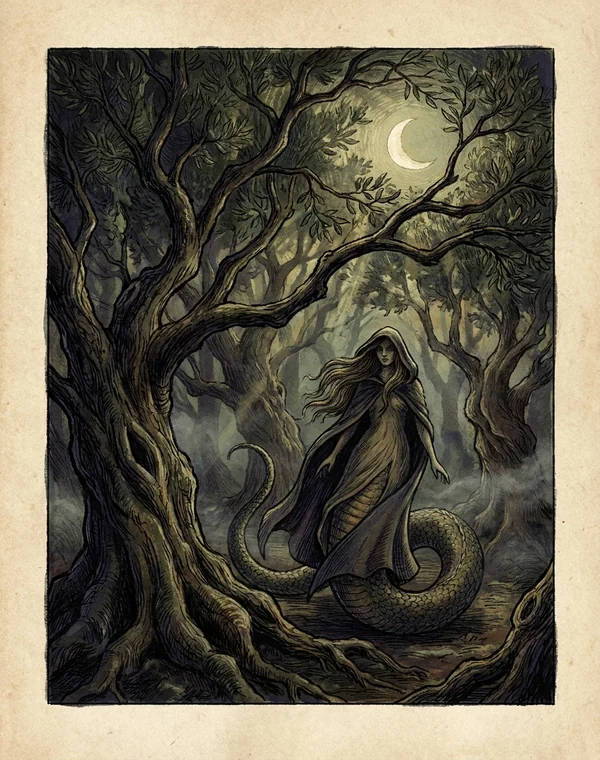
The lamia is a mythical female monster originating in ancient Greek folklore, traditionally depicted as a seductive creature that preys upon unsuspecting travelers and young children.
Etymology & Origin
Where the word comes from
Derived from the ancient Greek word lamia, likely related to laimos, meaning throat or gullet, reflecting the creature's voracious appetite.
Full Definition
In depth
Origins The lamia traces its roots deep into ancient Greek mythology and folklore, emerging as a terrifying figure as early as the classical period. Originally envisioned as a queen of Libya who bore Zeus children, her tragic fate turned her into a vengeful monster after Hera, out of jealousy, slew her offspring and drove her mad. Deprived of sleep and consumed by grief, Lamia mutilated her own visage and transformed into a monstrous predator that hunted the children of others. Over subsequent centuries, the Greek legend evolved from a specific mythological queen into a generalized archetype of child-eating demons and nocturnal female phantoms that haunted the Mediterranean world.
What It Is Said to Do Traditional folklore describes the lamia as a shape-shifting entity capable of adopting a deceptive, alluring human facade from the waist up while retaining the serpentine or bestial lower body of a monster. Under this charming guise, she lures travelers, lovers, or youths into isolated settings before revealing her true, predatory nature to consume their flesh or drink their blood. In various regional traditions, lamias are also said to possess the terrifying ability to remove their own eyes at will, leaving them blind when resting but regaining superhuman perception upon replacing them. Protection against these creatures historically involved talismans, apotropaic wards, or vigilance against nocturnal visitors who offered unnatural flattery or strange nocturnal feasts.
In Horror Fiction Horror writers have long drawn upon the dual nature of the lamia, utilizing the creature to explore themes of hidden decay beneath seductive beauty, predatory obsession, and the horror of the monstrous feminine. Rather than portraying her as a mindless beast, modern and classical literature often positions the lamia as an intelligent, tragic, or deeply manipulative antagonist who preys on human hubris. John Keats famously explored this duality in his narrative poem 'Lamia', while contemporary horror and dark fantasy fiction frequently incorporate lamias into modern urban settings, exploring the tension between ancient folklore and modern isolation.
Why It Still Frightens The enduring terror of the lamia lies in its embodiment of ultimate betrayal: the terrifying realization that what appears beautiful, nurturing, and safe can instantly transform into an insatiable predator designed to consume us from within.
Connected Concepts
Related horror terms
Further Study