🩸Horror Tradition
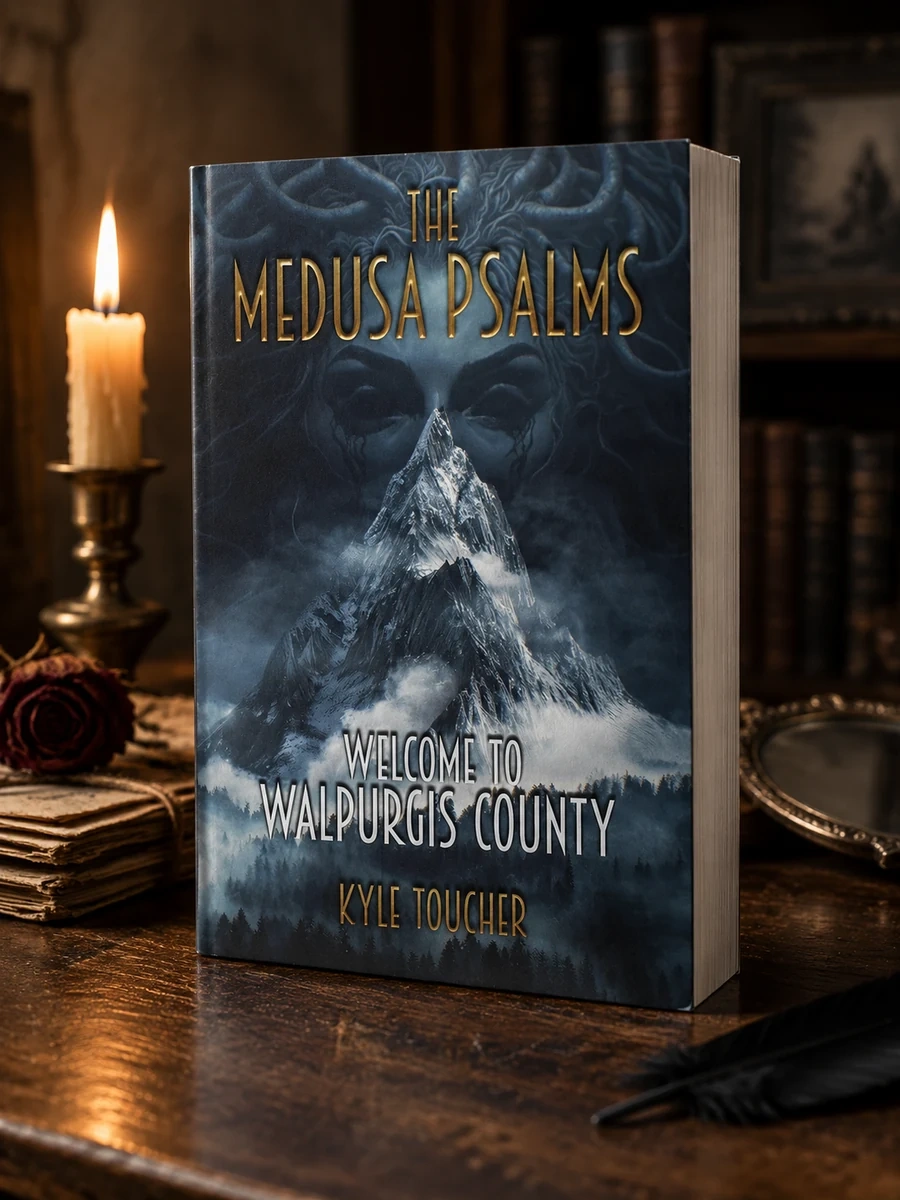
Medusa
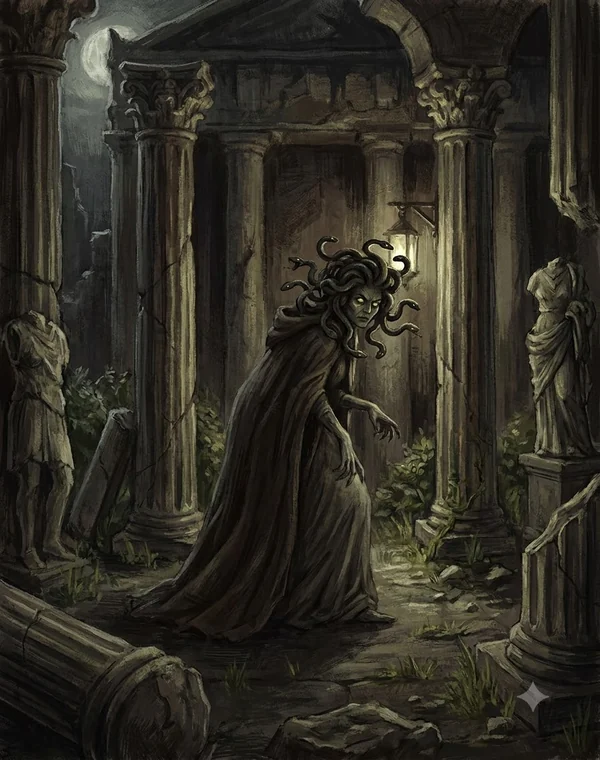
Medusa is a famous Gorgon of ancient Greek mythology whose terrifying visage and serpentine hair turn anyone who looks directly at her into solid stone.
Etymology & Origin
Where the word comes from
The name Medusa derives from the ancient Greek verb medousa, meaning guardian or protectress.
Full Definition
In depth
Origins Medusa originates in ancient Greek mythology and is one of the three Gorgons, alongside her immortal sisters Stheno and Euryale. According to early classical traditions, she was born to the primordial sea deities Phorcys and Ceto. While her sisters possessed immortality, Medusa was famously mortal. In the most enduring version of her myth popularized by Ovid's Metamorphoses, Medusa was originally a breathtaking mortal maiden serving as a priestess in the temple of Athena. After being violated by Poseidon within the sacred precinct, she was cruelly punished by the goddess rather than the god, transformed into a monstrous winged being with glowing eyes, massive bronze claws, boar-like tusks, and a writhing mane of venomous serpents in place of hair.
What It Is Said to Do In classical folklore and myth, Medusa's most devastating power is her lethal gaze, which instantly petrifies any living mortal or beast that dares to look directly upon her face. She is depicted as a terrifying hybrid creature possessing sharp fangs, scaly skin, and coiling snakes, combining the predatory traits of fierce beasts with uncanny human features. Because her glance guarantees petrification, those who hunted her or sought her demise could not look at her directly. The hero Perseus managed to defeat her only by utilizing a polished bronze shield as a reflective mirror, allowing him to navigate her lair and decapitate her safely while she slept.
In Horror Fiction Horror and dark fantasy writers frequently draw upon Medusa to explore themes of inescapable doom, bodily horror, bodily autonomy violation, and the psychological terror of petrification. In speculative fiction, the Gorgon archetype manifests as a symbol of female rage, monstrous transformation, and the dangerous consequences of staring into the abyss of absolute terror. Authors use her myth to examine the dread of being frozen in time or rendered helpless before an overwhelming, unnatural predator.
Why It Still Frightens Medusa endures as a terrifying icon because her lethal gaze turns human vulnerability into a permanent monument of helpless panic and absolute paralysis.
Connected Concepts
Related horror terms
Voices
Authors working in this mode
Further Study