🩸Horror Tradition
Kobold
A kobold is a temperamental household, mine, or seafaring spirit from German folklore that rewards respect with good fortune but turns vindictive and lethal when mistreated.
Etymology & Origin
Where the word comes from
The name derives from the Middle High German kobolt, likely rooted in the Greek kobalos, meaning a rogue or knave.
Full Definition
In depth
Origins The figure of the kobold stems deep within German folklore and medieval Central European tradition, with literary and historical references emerging strongly by the thirteenth century. Evolving from ancient hearth deities, household gods, and subterranean elementals, these spirits were believed to inhabit domestic spaces, deep mine shafts, and sailing ships. Over centuries of oral storytelling, rural communities across German-speaking lands passed down accounts of these capricious entities, viewing them as an inescapable part of daily life and labor.
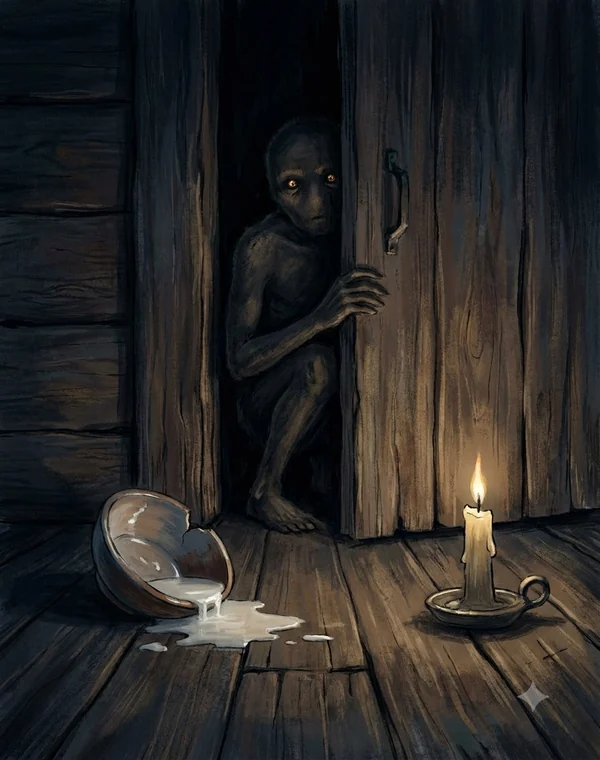
What It Said to Do In traditional lore, a kobold can appear in various forms, ranging from an invisible presence to a wrinkled old man in peasant or miner garb, a small child, or even a streak of fire. Domestic kobolds perform unseen household chores—such as sweeping floors and washing dishes—in exchange for offerings like a bowl of milk. However, subterranean variants dwelling in dark mines knock on stone walls to warn of cave-ins or throw rocks to punish intrusive miners. If mocked, neglected, or spied upon, a kobold shifts rapidly from a helpful custodian into a malicious trickster capable of causing severe accidents, psychological torment, or fatal harm. Protection against them relies entirely on maintaining strict boundaries, offering constant appeasement, and never attempting to unmask or pry into their hidden nature.
In Horror Fiction Horror and dark fantasy writers leverage the kobold to evoke the chilling dread of an unwelcomed guest bound to the domestic or working sphere. Rather than acting as mindless beasts, literary kobolds exploit human vulnerability through psychological pressure, relentless gaslighting, and the gradual subversion of a safe home. They represent the terror of a domestic sanctuary corrupted from within, where locking the doors provides no safety because the tormentor already lives beneath the floorboards or behind the hearth.
Why It Still Frightens The kobold taps into the unsettling anxiety of sharing one's private space with an unpredictable entity whose favor can vanish in an instant, turning the comfort of home into a claustrophobic trap.
Connected Concepts
Related horror terms
Further Study