🩸Horror Tradition
Cthulhu
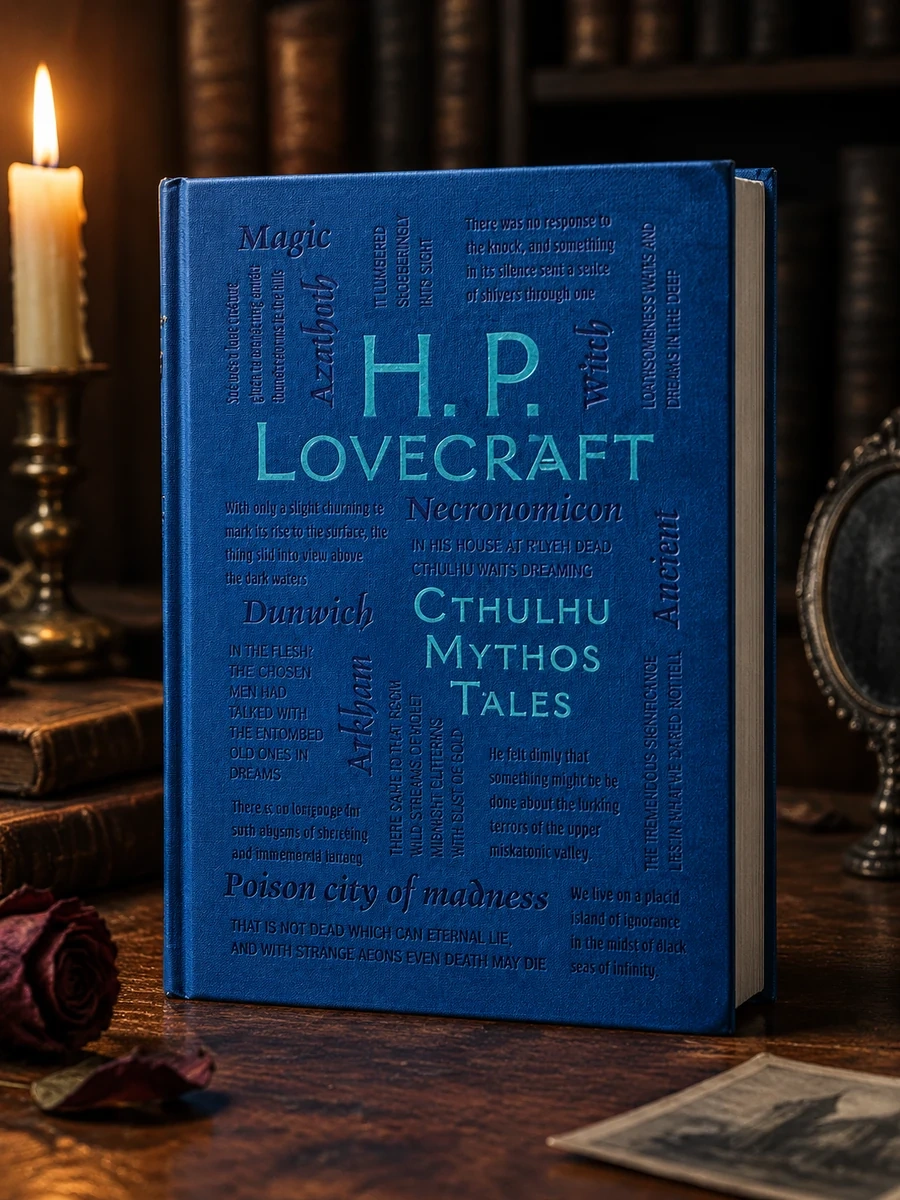
Cthulhu is a colossal, tentacled cosmic entity originating from the pioneering weird fiction of American author H. P. Lovecraft.
Etymology & Origin
Where the word comes from
The name Cthulhu was devised by H. P. Lovecraft to represent an alien sound impossible for human vocal cords to pronounce accurately.
Full Definition
In depth
Origins Cthulhu originates from the early twentieth-century pulp horror fiction of American writer H. P. Lovecraft, first appearing in his short story "The Call of Cthulhu," published in the magazine Weird Tales in 1928. While Lovecraft drew upon ancient mythologies, folklore, and gothic traditions, Cthulhu was entirely invented as part of a pantheon of cosmic beings known as the Great Old Ones. In the fictional lore, Cthulhu lies in a death-like slumber within the sunken stone city of R'lyeh in the South Pacific, waiting for the stars to align so that he may rise again to reclaim dominion over the Earth.
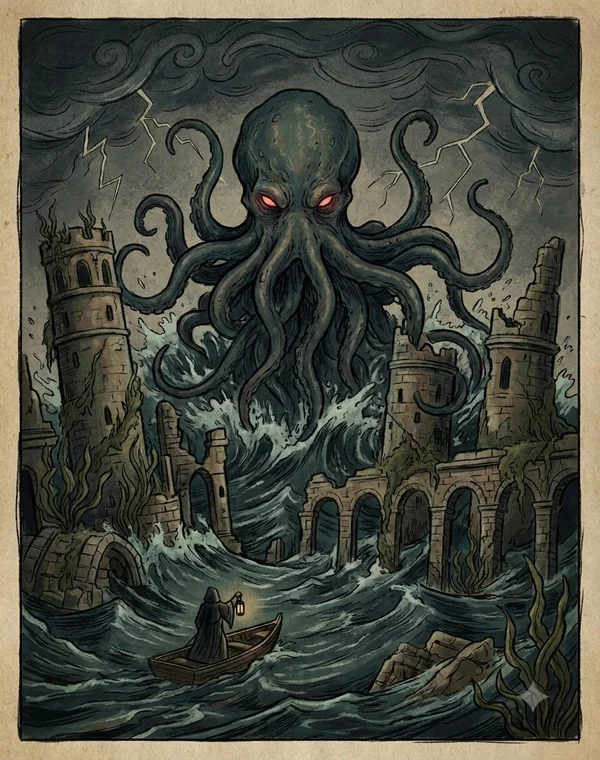
What It Is Said to Do Cthulhu is traditionally described as a mountain-sized entity possessing a human-like body, a head resembling an octopus with a mass of writhing tentacles, scaly rubbery wings, and a hulking, clawed form. Though composed of matter distinct from normal earthly biology, he is capable of exerting a powerful psychic influence over sensitive humans across vast distances. This telepathic broadcast induces madness, obsessive worship, and terrifying dreams among artists and poets. Against such a being, human protection is utterly futile; physical weapons cannot harm him, and individuals who encounter his physical form typically lose their sanity instantly upon comprehension of non-Euclidean geometry and cosmic insignificance.
In Horror Fiction Authors use Cthulhu and his associated mythos to evoke cosmic horror, a genre-defining fear rooted in the realization that humanity is insignificant, helpless, and completely unnoticed by the ancient, indifferent powers of the universe. Writers utilize the entity as the ultimate symbol of existential dread, where survival is temporary and knowledge brings madness rather than salvation. Landmark works that explore this thematic framework include Lovecraft's short story "The Call of Cthulhu," as well as expanded mythos contributions by later weird fiction writers such as August Derleth and Ramsey Campbell.
Why It Still Frightens Cthulhu endures because he personifies the terrifying realization that human civilization is a fragile speck surrounded by vast, incomprehensible alien realities.
Connected Concepts
Related horror terms
Voices
Authors working in this mode
Further Study