🩸Horror Tradition
Nure-onna
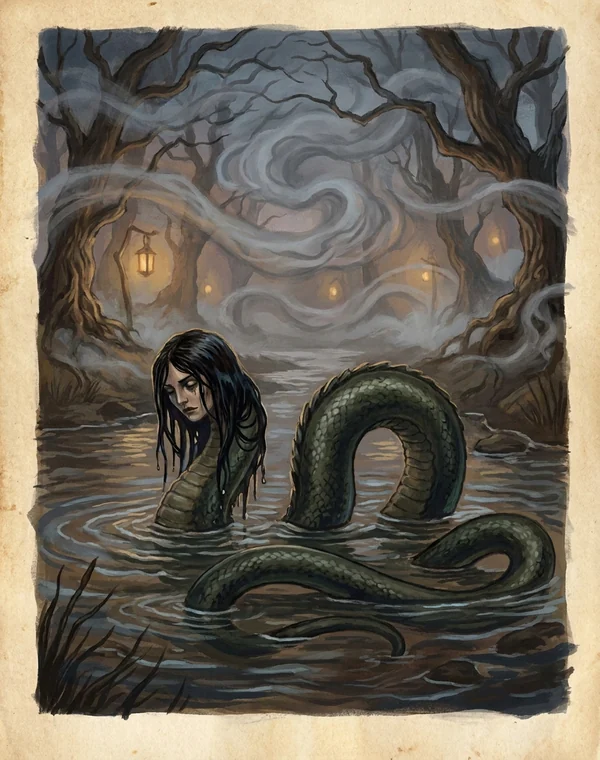
The nure-onna is a terrifying water-dwelling spirit from traditional Japanese folklore, known for possessing the body of a serpent and the head of a human woman.
Etymology & Origin
Where the word comes from
Derived from the Japanese words nure, meaning wet, and onna, meaning woman.
Full Definition
In depth
Origins The nure-onna, which translates literally to drenched woman, traces its roots deeply into Japanese folklore and regional mythology. While precise historical dates for the emergence of the legend are elusive, stories of water-dwelling serpentine monsters with human characteristics appear widely in Edo period yokai scrolls and regional oral traditions, reflecting centuries-old anxieties surrounding rivers, coastal waters, and treacherous shorelines. These tales often developed in rural fishing communities where unpredictable currents and deep bodies of water posed constant, fatal dangers.
What It Is Said to Do According to traditional lore, the nure-onna typically manifests near riverbanks, shores, and ocean coasts, often posing as a distressed woman cradling what appears to be a bundle or an infant to lure unsuspecting travelers closer. Once a victim approaches, the bundle is revealed to be a heavy, enchanted stone or the creature shifts its serpentine coils to trap the unwary. The nure-onna possesses a long, powerful snake body, sharp claws, and a serpent's forked tongue, though accounts vary as to whether her hair is soaking wet or if her entire body drips perpetually with water. She is frequently depicted as bloodthirsty, using her sharp teeth to drain her victims of blood. Protection against the nure-onna relies heavily on trickery and avoidance; traditional folklore suggests that offering her the bundle or a decoy object can momentarily distract her, buying a traveler precious seconds to escape back to safety.
In Horror Fiction In horror fiction and modern weird tales, writers use the nure-onna to tap into primordial fears of drowning, deception, and the uncanny valley where human and animal forms horrifyingly merge. Authors drawing upon Japanese myth incorporate the creature to symbolize inescapable entrapment and the hidden perils lurking beneath serene landscapes. Because the nure-onna frequently employs psychological manipulation rather than brute force alone, horror narratives often focus on the tension of isolation and the creeping realization of a traveler's doom.
Why It Still Frightens The nure-onna endures as a powerful source of terror because she weaponizes empathy, turning a basic human instinct to help a stranger into a fatal trap.
Connected Concepts
Related horror terms
Further Study