🩸Horror Tradition
Each-uisge
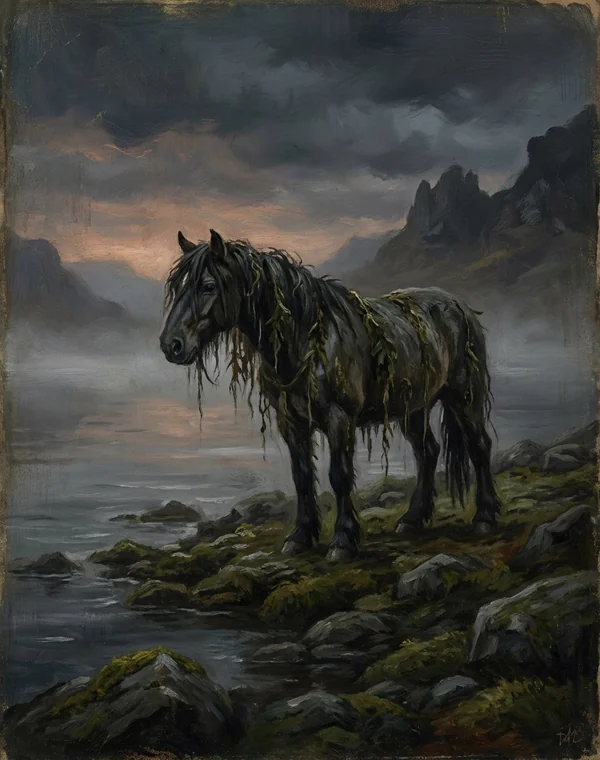
The each-uisge is a malevolent water horse from Scottish Celtic folklore that haunts lochs and sea lochs, taking human or equine form to lure unsuspecting travelers to their doom.
Etymology & Origin
Where the word comes from
Derived from Scottish Gaelic, each-uisge literally translates to water horse.
Full Definition
In depth
Origins The each-uisge originates from Scottish Celtic folklore and Highland tradition, with oral accounts dating back centuries before being recorded by 19th-century folklorists like John Francis Campbell. Deeply rooted in the rugged, water-scarce landscapes and deep lochs of Scotland, this creature represents the ancient Gaelic fear of treacherous inland waters and unpredictable coastal currents. Unlike its freshwater counterpart, the kelpie, the each-uisge is bound exclusively to deep lochs and sea lochs, carrying a significantly deadlier and more aggressive reputation throughout Highland and Hebridean lore.
What It Is Said to Do In traditional accounts, the each-uisge is a shape-shifter that most frequently appears on the shore as a magnificent, solitary pony, often saddled and bridled to entice a weary traveler to mount it. Once a victim climbs onto its back, their skin adheres permanently to the beast's supernatural hide, and the creature bolts directly into the deepest part of the loch, drowning the rider before devouring every part of them except the liver, which floats to the surface. It can also assume human shape, usually appearing as a handsome man who courts young women until his true nature is betrayed by aquatic weeds tangled in his hair. Protection against the each-uisge relies heavily on iron charms or iron implements, as cold iron is traditionally believed to neutralize the beast's power and break its hold.
In Horror Fiction Modern horror and dark fantasy writers frequently draw upon the each-uisge to evoke a profound sense of isolation, psychological dread, and the terrifying hostility of untouched wilderness. Authors use the creature not merely as a physical monster, but as an embodiment of the landscape's indifference to human survival, where natural beauty masks lethal predation. While direct appearances in major landmark novels can be sparse compared to more common vampires or ghosts, the myth strongly influences contemporary Scottish Gothic fiction and maritime horror short stories focusing on folkloric revival and rural dread.
Why It Still Frightens This legend endures because it transforms familiar, tranquil natural spaces into deadly traps, reminding us that ancient terrors still lurk just beneath the surface of the quietest waters.
Connected Concepts
Related horror terms
Further Study


