🩸Horror Tradition
Bigfoot
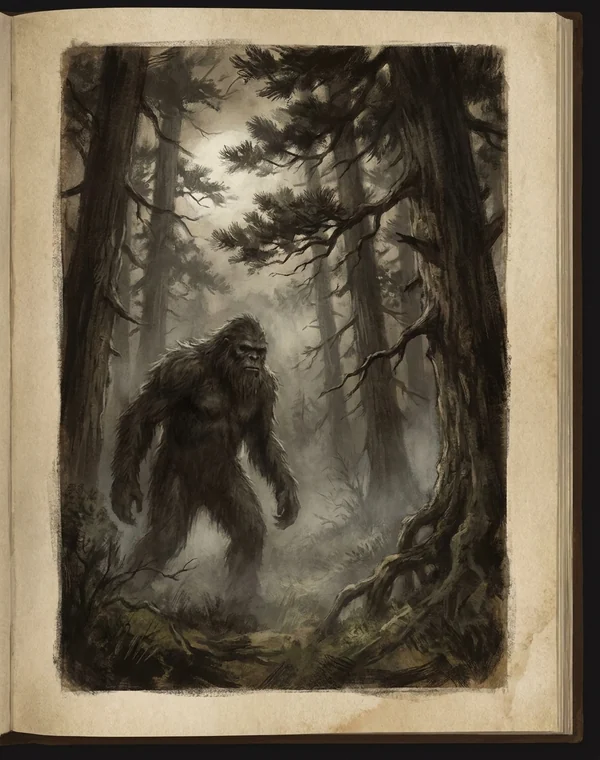
A legendary, large, hairy bipedal hominid that populates North American folklore and modern cryptozoological pop culture, traditionally associated with deep, secluded forest wildernesses.
Etymology & Origin
Where the word comes from
The name Bigfoot emerged in American media during the 1950s as a literal descriptive term for the massive tracks discovered in northern California.
Full Definition
In depth
Origins The figure known as Bigfoot, or Sasquatch, has deep roots in the oral traditions of numerous Indigenous peoples across North America, particularly throughout the Pacific Northwest and Canada. Within Coast Salish and other Pacific Northwest First Nations cultures, stories of giant, wild forest-dwelling beings have been passed down for generations. These traditional narratives often describe powerful entities closely tied to the landscape, the mountains, and the spiritual dimensions of the wilderness. While the name Sasquatch derives from a Halkomelem word meaning wild men, the modern concept of Bigfoot coalesced in mid-twentieth-century popular culture, heavily driven by newspaper accounts, localized footprint discoveries, and mid-century journalistic naming.
What It Is Said to Do In contemporary folklore and cryptozoology, Bigfoot is commonly depicted as an upright, ape-like creature standing between seven and ten feet tall, covered in thick brown, black, or reddish hair. Eyewitness reports frequently describe massive footprints, an overwhelming pungent odor, and eerie vocalizations ranging from deep guttural growls to piercing screams. While modern lore paints the creature as generally reclusive and evasive, avoiding human contact whenever possible, traditional indigenous stories often portray these beings as dangerous, powerful, and capable of abducting humans or possessing supernatural attributes. In modern folklore circles, practical protection against Bigfoot largely centers on avoiding deep wilderness areas at night, leaving offerings, or maintaining a respectful distance from perceived territory.
In Horror Fiction Horror literature utilizes Bigfoot not merely as a wild animal, but as a primal symbol of nature's indifference and terrifying hostility toward human encroachment. Authors employ the creature to tap into deep-seated anxieties about getting lost in the woods, the limits of human civilization, and the lurking unknown just beyond the edge of the campfire light. Unlike traditional monsters rooted in gothic European traditions, Bigfoot represents an untamed, earthy terror belonging exclusively to the North American wilderness. Writers often frame encounters through a lens of psychological isolation and overwhelming physical power, turning a simple camping trip into a desperate battle for survival against an apex predator that defies modern science.
Why It Still Frightens Bigfoot endures as a source of genuine fear because it weaponizes the vast, unmapped wilderness, reminding us that nature remains profoundly mysterious, untamable, and completely indifferent to human existence.
Connected Concepts
Related horror terms
Voices
Authors working in this mode
Further Study