🩸Horror Tradition
Nahual
A shapeshifting human sorcerer rooted in Mesoamerican folklore, capable of transforming into an animal counterpart to walk between worlds and wield mysterious powers.
Etymology & Origin
Where the word comes from
Derived from the Nahuatl word nāhualli, meaning disguise or occult practitioner.
Full Definition
In depth
Origins In Mesoamerican tradition, particularly within Nahua and broader indigenous Mexican and Central American cultures, the concept of the nahual stretches back centuries into pre-Columbian history. Originally intertwined with deep spiritual understandings of the cosmos, soul connection, and a person's tonal or animal counterpart, these figures were viewed as powerful practitioners who could bridge the mortal and spirit realms. Over generations of syncretism with European beliefs following Spanish colonization, the perception of the traditional shapeshifter shifted increasingly toward darker, more malevolent interpretations in rural folklore.
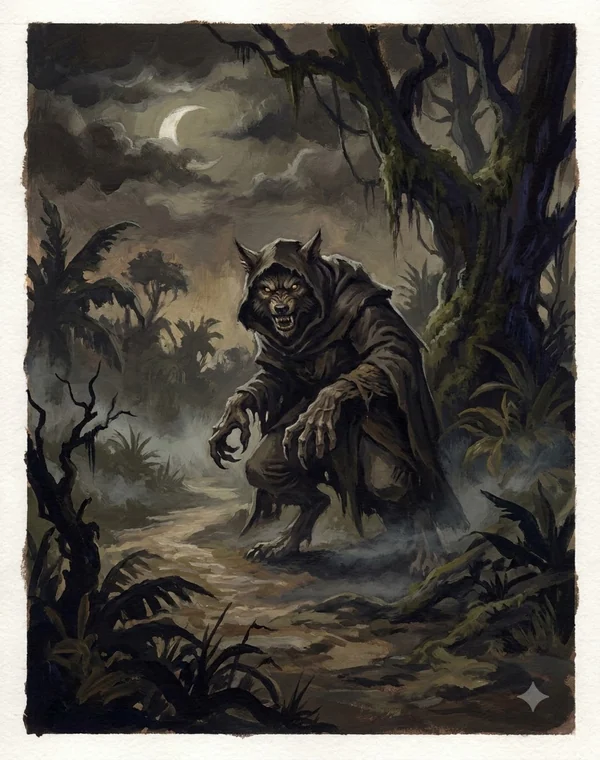
What It Is Said to Do According to folklore, a nahual possesses the ability to physically or spiritually transform into various creatures, most commonly predatory or nocturnal beasts such as jaguars, pumas, coyotes, dogs, or large birds. In these animal forms, they are said to roam the dark landscape to spy on neighbors, steal livestock, or cast malicious spells against enemies. Tales often describe physical anomalies that betray their human origins, such as maintaining human eyes or suffering matching injuries if attacked while in beast form. Communities historically protected themselves using traditional prayers, keeping iron objects near entryways, or marking thresholds with protective symbols.
In Horror Fiction In horror fiction, writers utilize the nahual to tap into primal anxieties surrounding identity, hidden malice, and the thin boundary between human civilization and the wild unknown. Rather than a simple monster, the figure represents a profound betrayal of trust, since the terrifying beast is often someone known within a tight-knit community. Authors evoke deep psychological dread by focusing on the loss of bodily autonomy, the corruption of ancient indigenous spirituality, and the inescapable claustrophobia of isolated rural settings where modern rules do not apply.
Why It Still Frightens The enduring terror of the nahual lies in the chilling idea that human malice can take clawed, predatory shape, turning trusted neighbors into monsters hidden in plain sight.
Connected Concepts
Related horror terms
Further Study