🩸Horror Tradition
Goblin
Goblins are grotesque, mischievous, and often malevolent mythical humanoids originating from medieval European folklore, traditionally associated with caves, forests, and dark subterranean spaces.
Etymology & Origin
Where the word comes from
Derived from the Anglo-Norman gobelin, likely connected to the Late Greek kobalos, meaning a rogue or mischievous sprite.
Full Definition
In depth
Origins The figure of the goblin has deep roots in European folklore, emerging strongly during the Middle Ages across various regional traditions. Tales of small, mischievous, or malicious spirits appear in medieval English, French, and Germanic oral histories. Etymologists and historians suggest the term may derive from the Anglo-Norman word gobelin, which itself likely connects to the Late Greek word kobalos, meaning a rogue or mischievous sprite. Over the centuries, these oral traditions evolved into distinct regional variations across the continent, ranging from household boggarts and domestic kobolds to subterranean tunnel-dwellers.
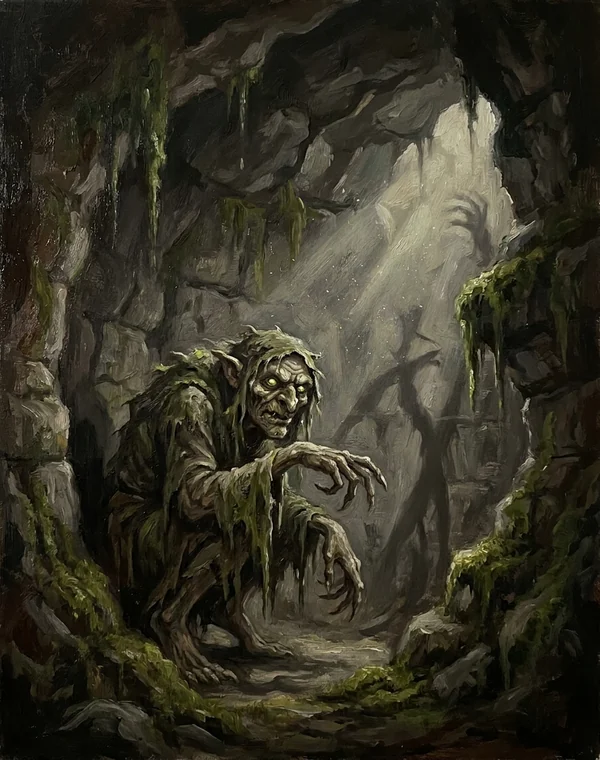
What It Is Said to Do In traditional folklore, goblins are described as small, misshapen humanoids with exaggerated facial features, long fingers, and sharp teeth, often possessing skin the color of earth, stone, or rotting vegetation. They are traditionally said to dwell in hidden recesses such as deep caves, shadowy forests, old mines, and dark corners of human dwellings. Folklore depicts them as intensely greedy, often hoarding stolen gold, shiny trinkets, and household items. While some tales portray them as merely bothersome tricksters who sour milk or hide tools, darker legends describe them as malicious entities capable of kidnapping human children, leading travelers astray, or inflicting physical harm. Historically, people attempted to protect themselves and their property from goblin interference through various apotropaic measures, including leaving offerings of food to appease them, hanging iron charms, or reciting protective prayers.
In Horror Fiction Horror fiction and dark fantasy transform the folkloric goblin from a whimsical nuisance into a manifestation of primal, claustrophobic terror. Modern writers use goblins to explore themes of greed, moral decay, and the horrific unknown lurking just beneath the civilizing surface of human society. In these narratives, the goblin represents an unstoppable, voracious hunger and an alien malice that cannot be reasoned with. Authors leverage the uncanny nature of these creatures, utilizing their grotesque anatomy and subterranean domains to evoke a deep sense of dread and entrapment.
Why It Still Frightens Goblins continue to frighten because they tap into our deepest anxieties about what hides in the dark spaces of the world, reminding us that civilization is fragile and easily invaded by ancient, hungry forces.
Connected Concepts
Related horror terms
Voices
Authors working in this mode
Further Study