🩸Horror Tradition
Cockatrice
A legendary mythical beast combining the features of a rooster and a serpent, originating from European folklore and medieval bestiaries.
Etymology & Origin
Where the word comes from
Derived from the Old French cocatriz, ultimately stemming from the Latin calcatrix, meaning tracker or treaders.
Full Definition
In depth
Origins The cockatrice has ancient roots in European folklore, blending classical mythology with medieval natural history and bestiaries. The creature's conceptual lineage traces back through centuries of folk belief, gaining prominent literary and cultural traction in medieval England and France. While early Greco-Roman writers mentioned similar mythical serpents, the specific iconography of the cockatrice solidified during the Middle Ages, where it was often conflated with or distinguished from the basilisk in various regional traditions. Medieval scholars and scribes cataloged it alongside other monstrous marvels, embedding it deeply into the European imagination.
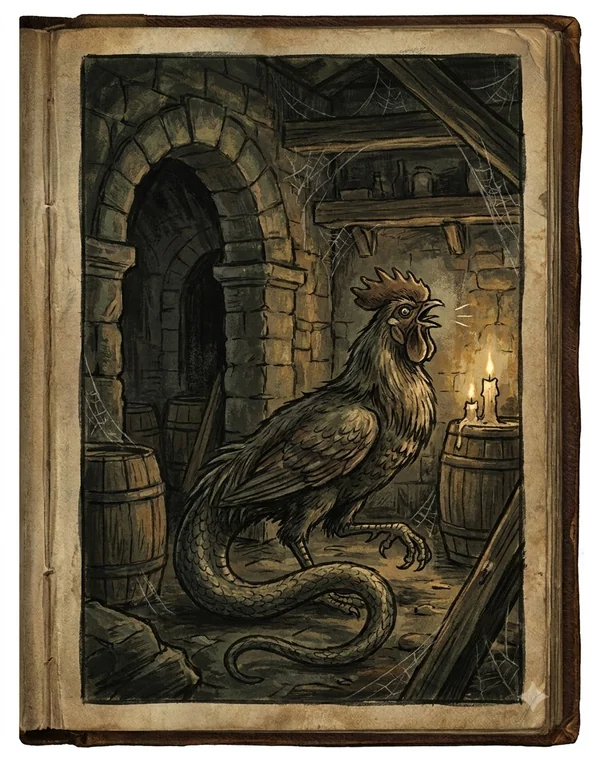
What It Is Said to Do According to traditional folklore, the cockatrice possesses the head, wings, and legs of a rooster combined with the long, undulating tail of a serpent or dragon. Its primary and most terrifying attribute is a lethal gaze capable of killing any living creature instantly upon eye contact, sometimes supplemented by a breath or touch so venomous it could wither surrounding flora and split rocks. Legend holds that the beast is hatched from a rooster's egg incubated by a toad or serpent, making its very genesis an unnatural abomination. The standard method of defense against a cockatrice involves holding up a mirror to reflect its own deadly gaze back upon itself, or introducing a weasel, which was believed to be immune to its venom.
In Horror Fiction In horror and dark fantasy fiction, writers utilize the cockatrice not merely as a physical threat, but as a chilling symbol of inescapable doom and sudden petrifaction. Unlike mindless beasts, the cockatrice carries an aura of archaic malice, invoking the dread of an ancient, predatory eye that strips away human agency in a single glance. Authors weave the creature into narratives of cursed estates, forgotten archives, and archaeological horror, where uncovering ancient lore awakens dormant evils. Its presence transforms ordinary spaces into traps of paralysis and terror, reflecting psychological fears of being seen, judged, and destroyed by an unblinking, alien malice.
Why It Still Frightens It endures as a terrifying motif because it preys on the primal dread of sudden, inescapable petrifaction and the horror of an unnatural, unnaturalized gaze.
Connected Concepts
Related horror terms
Further Study