🩸Horror Tradition
Kapre
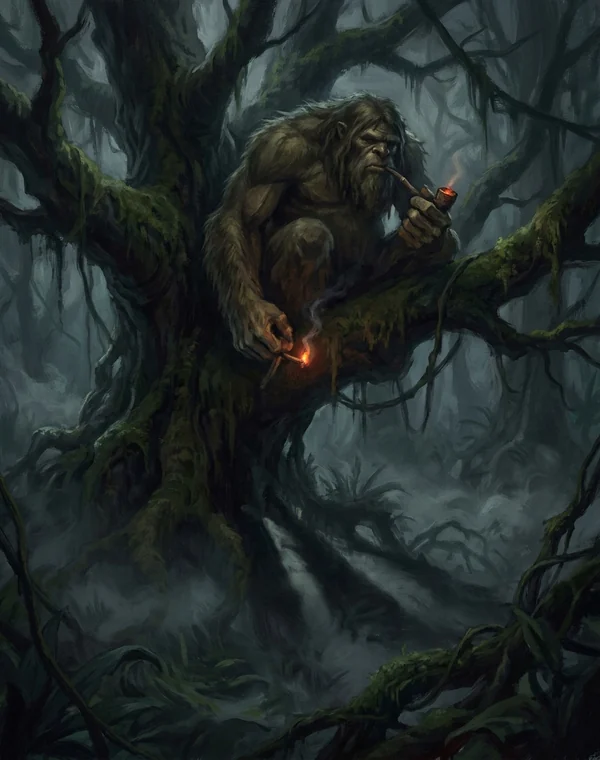
The kapre is a towering, tree-dwelling giant from Philippine folklore known for smoking large tobacco pipes and hiding within ancient rural canopies.
Etymology & Origin
Where the word comes from
The name derives from the Spanish term cafres, historically applied to non-Christian indigenous peoples, which itself stems from the Arabic kafir.
Full Definition
In depth
Origins In Philippine tradition, the kapre is an ancient elemental giant deeply rooted in rural mythology and pre-colonial beliefs. Generations of villagers have passed down stories of these towering figures residing within the dense canopies of old, untamed trees such as the balete, acacia, and mango. The figure evolved through centuries of oral storytelling, later absorbing colonial-era vocabulary, and remains a potent symbol of the untamed, shadowed wilderness that borders rural Philippine settlements.
What It Is Said to Do Appearing as a massive, dark-skinned, hairy humanoid often exceeding seven or eight feet in height, the kapre is perpetually wreathed in the thick smoke of a large tobacco pipe or cigar. It typically sits cross-legged on high branches at night, its presence betrayed by glowing red embers and a heavy, distinct scent of tobacco. While often described as a mischievous trickster that disorients travelers and causes them to wander in circles, the creature can also become deeply possessive or vengeful if its dwelling tree is harmed, occasionally taking human lovers or striking trespassers with inexplicable illnesses and terror.
In Horror Fiction In horror fiction, contemporary writers use the kapre to explore themes of isolation, ecological encroachment, and the collision between modern civilization and ancient, unyielding nature. Rather than acting as a simple cinematic monster, the figure embodies a suffocating atmosphere of dread, psychological disorientation, and the inescapable weight of local superstitions. Authors frequently leverage the sensory details of its legend—the sudden reek of tobacco on a windless night, rustling leaves from an empty bough, and glowing eyes in the dark—to evoke a creeping, rural claustrophobia.
Why It Still Frightens Even in an increasingly urbanized world, the kapre endures as a terrifying reminder that hidden, watchful entities still inhabit the deep shadows of the old-growth forests we think we have conquered.
Connected Concepts
Related horror terms
Further Study