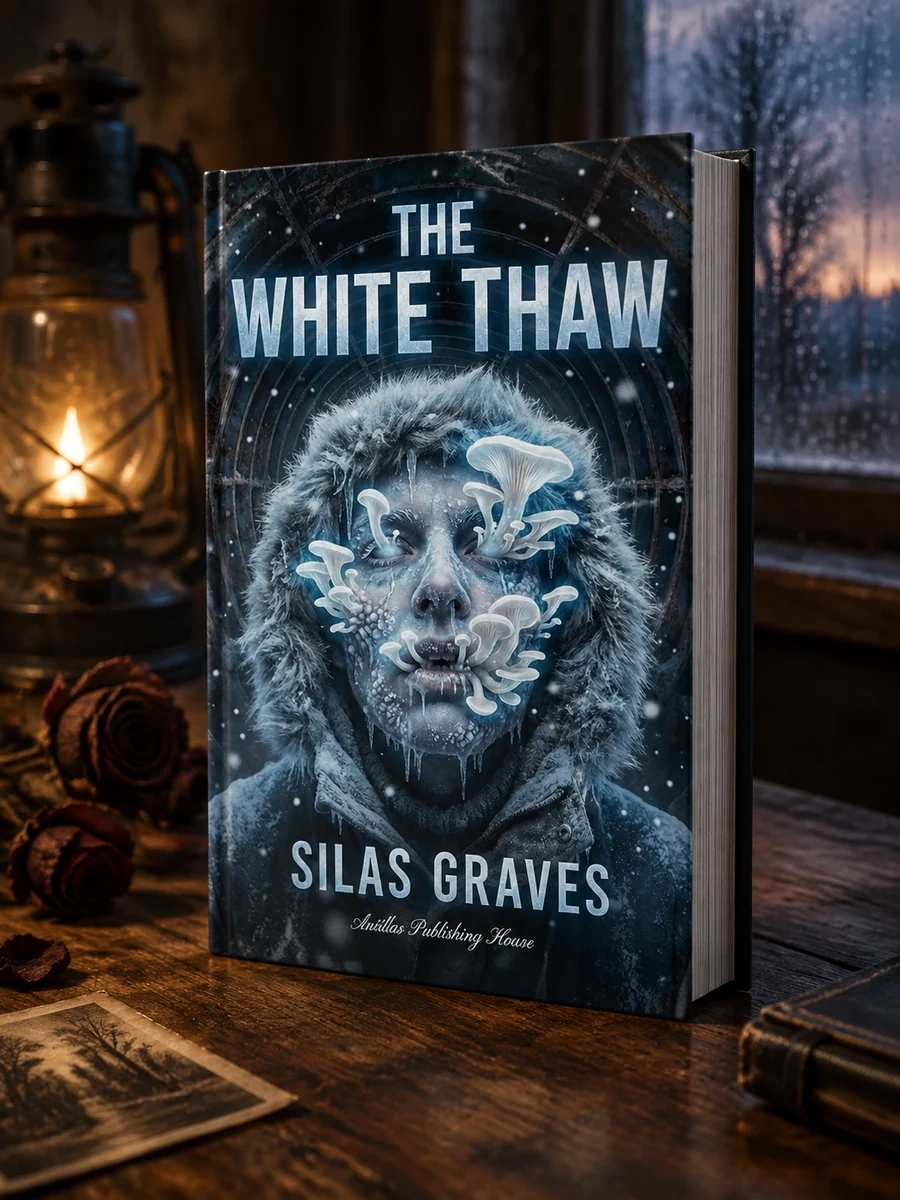

The White Thaw
A scientist leads a team into a Soviet station to find redemption in a sentient fungal colony.
The narrative follows Dr. Lena Petrova as she attempts to restore her reputation through a dangerous mission. She joins a group exploring Vostok-4, a site revealed by thawing permafrost. Inside, they encounter a beautiful yet terrifying white fungus. The organism communicates through a hive-mind and desires assimilation rather than death. Graves details the physical transformation of the crew as their bodies are repurposed. The tension arises from the inescapable nature of the infection and the claustrophobic setting. Lena’s past mistake haunts her present situation, adding psychological weight to the biological threat. The story examines the cost of scientific ambition when faced with ancient, alien intelligence.
The book draws on the tradition of Soviet-era isolation and the modern anxiety of climate change exposing forgotten sites. It sits within the genre of cosmic horror, where ancient entities overwhelm human understanding. The setting relies on the specific reality of melting Siberian permafrost revealing hidden histories.


📝 Description: The White Thaw
💎 Our verdict on The White Thaw
📖 Why choose it
Why this book is worth reading
Readers seeking atmospheric dread and psychological weight will find this novel compelling. It appeals to those who enjoy slow-burn body horror where the terror stems from inevitable assimilation rather than sudden violence. The narrative offers a deep dive into scientific hubris, making it suitable for fans of cosmic horror who appreciate the theme of ancient, alien intelligence overpowering human ambition. Those interested in the psychological cost of redemption and the loss of self within a claustrophobic setting will also find value here. It is ideal for readers who prefer tension built through isolation and biological consequence over fast-paced action.
⭐ Reader reviews
Reader rating
Graves delivers a masterful study in atmospheric dread, prioritizing psychological horror and biological transformation over conventional thrills. The narrative effectively intertwines Lena Petrova’s personal guilt with the terrifying reality of the sentient fungal hive-mind, creating a claustrophobic tension that feels both intimate and cosmic. The depiction of physical repurposing is visceral, grounding the abstract fear of assimilation in tangible, disturbing detail. This book suits readers who appreciate slow-burn isolation thrillers and the subgenre of scientific hubris gone wrong. It may disappoint those expecting rapid action or clear resolutions, as the focus remains firmly on the inescapable nature of the threat and the erosion of individual identity.
📖 Read on the blog
🏛 Books from this publisher Antillas Publishing House




You might also like
See more →



Have a question about this item?
Ask about the edition, condition, delivery or anything else — we reply by email or phone, usually within a day.
