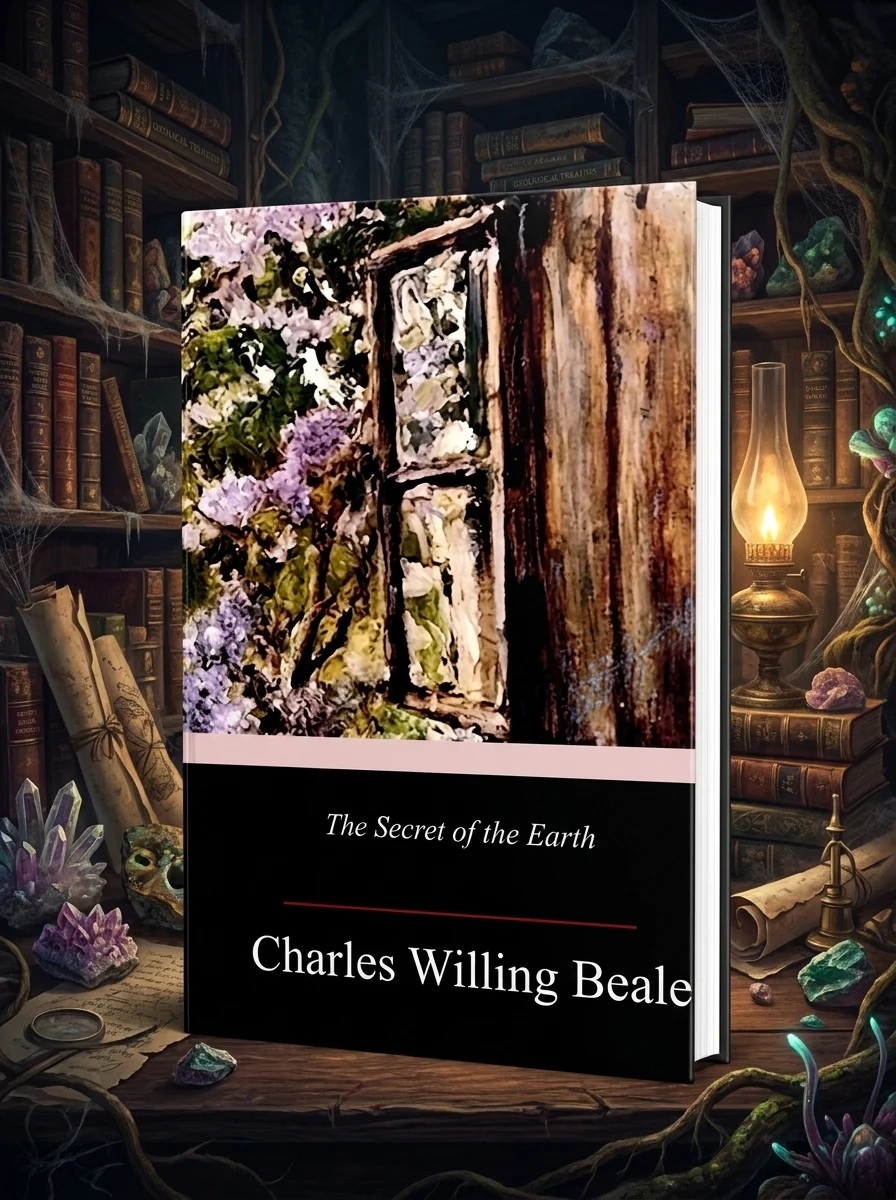
The Secret of the Earth
A 1898 novel about a sailor finding a document revealing a hidden underground civilization.
Beale constructs a narrative where maritime exploration intersects with subterranean mystery. Dirk Waaijen encounters a floating item that contains records of an alien society living beneath the earth's surface. This plot device drives the story toward descriptions of strange beings and unfamiliar landscapes. The text relies on the tradition of lost-world fiction popular in the late nineteenth century. Beale uses the format of a discovered document to introduce these elements. The work stands as one of his notable science fiction contributions alongside Miss Jack, of Tibet. It appeals to readers who enjoy historical speculative fiction that predates modern genre conventions.
Charles Willing Beale wrote this work in 1898 during the late Victorian era of American literature. It belongs to the tradition of lost-world fiction and early science fiction that explored subterranean mysteries. The text reflects the period's fascination with hidden civilizations and exotic geographical discoveries.


📝 Description: The Secret of the Earth
💎 Our verdict on The Secret of the Earth
📖 Why choose it
Why this book is worth reading
Readers who appreciate historical speculative fiction will find value in this text as a bridge between classic gothic supernatural elements and early science fiction tropes. It appeals to those interested in the evolution of the 'lost-world' narrative, offering a straightforward account of Dirk Waaijen's discovery without complex structural gimmicks. Fans of late nineteenth-century literature may enjoy the cultural context of its publication era. However, those seeking modern pacing or contemporary horror techniques might find the 1899 date a barrier. It serves as an interesting source material for enthusiasts of early genre fiction who want to explore the roots of subterranean adventure tales.
⭐ Reader reviews
Reader rating
Beale constructs a narrative where maritime exploration intersects with subterranean mystery, utilizing the format of a discovered document to introduce strange beings and unfamiliar landscapes. This approach places the work firmly within the lost-world fiction tradition popular in its time. The text offers a straightforward account of Dirk Waaijen's discovery, avoiding complex structural gimmicks in favor of direct description. It suits readers interested in classic speculative fiction that predates modern genre conventions. While it may not satisfy those looking for contemporary horror tropes or fast-paced plotting, it remains a relevant piece of historical literature for fans of early science fiction and gothic supernatural fiction.
📖 Read on the blog
✍️ More books by this author Charles Willing Beale



🏛 Books from this publisher Createspace Independent Publishing Platform






You might also like
See more →


Have a question about this item?
Ask about the edition, condition, delivery or anything else — we reply by email or phone, usually within a day.
