The Legend of Sleepy Hollow
A classic American ghost story featuring the Headless Horseman.
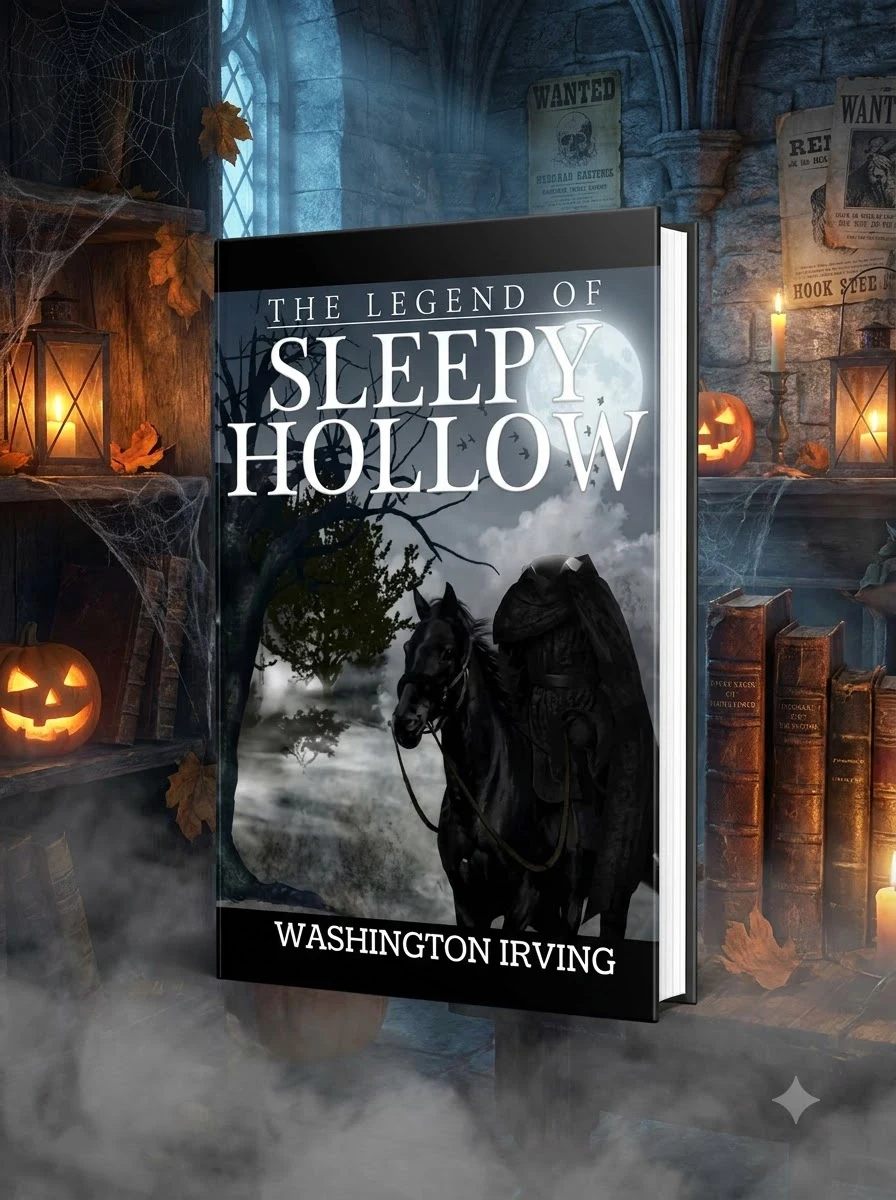
Washington Irving wrote this tale during his time abroad. The narrative follows Ichabod Crane, a schoolteacher who encounters the legendary Headless Horseman. This figure is described as a Hessian soldier missing his head from cannon fire. The story blends local folklore with supernatural elements to create tension. Readers experience the eerie atmosphere of Sleepy Hollow through Irving’s distinct voice. The work reflects early nineteenth-century American literary styles. It remains popular for seasonal reading during Halloween. The edition preserves the original text found in The Sketch Book of Geoffrey Crayon, Gent.
Irving wrote this while living in Birmingham, England. It first appeared in 1820 within his collection The Sketch Book of Geoffrey Crayon, Gent. This work stands among the earliest examples of American fiction with enduring popularity, particularly linked to Halloween traditions.


📝 Description: The Legend of Sleepy Hollow
💎 Our verdict on The Legend of Sleepy Hollow
📖 Why choose it
Why this book is worth reading
This book serves readers who appreciate atmospheric storytelling over complex plot structures or modern psychological horror. Fans of gothic folklore and early American literary history will find value in its historical significance as one of the earliest examples of enduring American fiction. It offers an accessible entry point into supernatural tales for general readers seeking traditional ghost stories. Those interested in Halloween traditions may enjoy the cultural resonance of the Headless Horseman legend. The narrative provides a straightforward presentation of Irving’s original voice, making it suitable for those who prefer classic literary styles over intricate mysteries or dense analysis.
⭐ Reader reviews
Reader rating
Irving creates an eerie atmosphere through distinct voice and local folklore rather than intricate mystery. The work excels as a piece of historical speculative fiction that remains popular for seasonal reading. It suits readers interested in gothic traditions and early American literature who desire atmospheric tension without complex plotting. While it lacks modern psychological depth or additional commentary, its enduring appeal lies in its cultural impact and classic ghost story structure. This volume preserves the original text faithfully, offering a pure experience of Irving’s craft. It is best for those seeking traditional supernatural fiction with lasting literary significance.