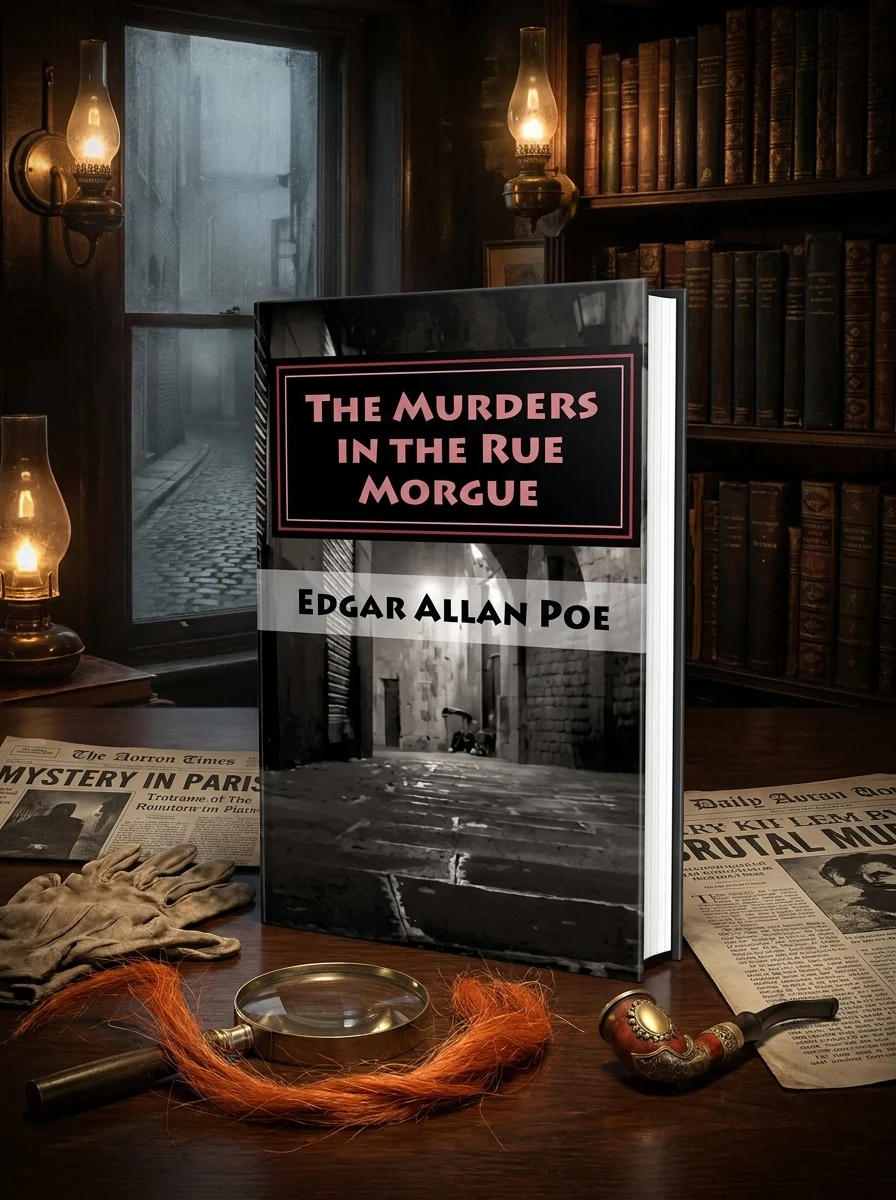
The Murders in the Rue Morgue
A collection of early detective stories featuring C. Auguste Dupin in Paris.
This work examines the origins of the fictional detective through the lens of C. Auguste Dupin. It highlights how Poe established key narrative conventions, including the brilliant protagonist and his chronicler. The text details the investigation of a gruesome crime where witness accounts contradict each other regarding the suspect's speech. A non-human hair found at the scene drives the inquiry forward. The compilation includes Dupin's appearances in The Mystery of Marie Roget and The Purloined Letter. These stories demonstrate the structural template used by later authors like Sherlock Holmes and Hercule Poirot. The edition presents these foundational texts for those interested in literary history.
This text sits within the tradition of gothic and supernatural fiction published in the United States. It draws on early 19th-century literary models to establish the detective genre. The work influences later characters who follow Poe's structural approach to solving crimes.


📝 Description: The Murders in the Rue Morgue
💎 Our verdict on The Murders in the Rue Morgue
📖 Why choose it
Why this book is worth reading
Readers interested in the structural evolution of mystery and horror fiction will find this volume essential for understanding how early detective tropes were codified. It is particularly valuable for those analyzing the literary devices that later defined characters like Sherlock Holmes and Hercule Poirot. The text offers a clear look at the origins of the fictional detective, making it ideal for students of genre history or enthusiasts of gothic and psychological horror who appreciate foundational narratives. It provides insight into the contrast between witness perception and logical deduction.
⭐ Reader reviews
Reader rating
This compilation effectively demonstrates how Poe established key narrative templates through C. Auguste Dupin’s investigations. The book excels in showcasing the structural framework of early detective stories, particularly the dynamic between a brilliant protagonist and his chronicler. It is best suited for readers studying the roots of mystery fiction or those interested in the intersection of horror and logical inquiry. While it may not satisfy seekers of modern psychological thrillers, it remains a vital resource for understanding how early authors crafted suspense through reasoning rather than contemporary plot twists.