

The Invisible Man
A scientist's invisibility leads to madness and village terror in this 1897 classic.
Griffin’s journey begins with a breakthrough that isolates him from society. His bandaged appearance in a quiet English community creates immediate tension. As he seeks power, his mental state deteriorates rapidly. Wells illustrates how the lack of accountability accelerates moral collapse. The plot moves through Griffin's increasing violence and paranoia. Each act of destruction stems from his inability to cope with his new existence. The story serves as a warning about unchecked ambition. It challenges readers to consider the ethical limits of scientific inquiry. The narrative does not offer easy answers but presents a stark view of human frailty.
Published in 1897, this work sits at the intersection of science fiction and gothic horror. It reflects late Victorian anxieties about scientific progress. The story draws on traditions of supernatural fiction while grounding them in speculative science. Its enduring relevance stems from its exploration of universal human flaws rather than specific historical events.


📝 Description: The Invisible Man
💎 Our verdict on The Invisible Man
📖 Why choose it
Why this book is worth reading
Readers interested in the psychological underpinnings of horror will find this text compelling, as it moves beyond simple monster tropes to explore the erosion of morality. Those fascinated by the intersection of science and ethics should engage with Griffin's descent, which serves as a stark warning about unchecked ambition. It appeals to fans of Gothic fiction who appreciate narratives that challenge the limits of human comprehension. The book offers a chilling examination of isolation and power, making it essential for those who enjoy classic tales where scientific hubris leads to inevitable destruction. It is ideal for readers seeking a thoughtful, rather than purely action-driven, horror experience.
⭐ Reader reviews
Reader rating
H.G. Wells delivers a potent exploration of moral decay disguised as a science fiction narrative. The text excels in portraying the psychological toll of invisibility, transforming a scientific breakthrough into a vehicle for terror and isolation. By focusing on Griffin’s deterioration, Wells critiques the corrupting nature of power without offering easy answers. This approach suits readers who prefer intellectual engagement over straightforward adventure. While some may find the lack of traditional plot momentum frustrating, others will appreciate the rigorous examination of human frailty. It remains a vital study in the consequences of playing with forces beyond comprehension, delivering a chilling and relevant critique of scientific inquiry.
📖 Read on the blog
✍️ More books by this author H G Wells




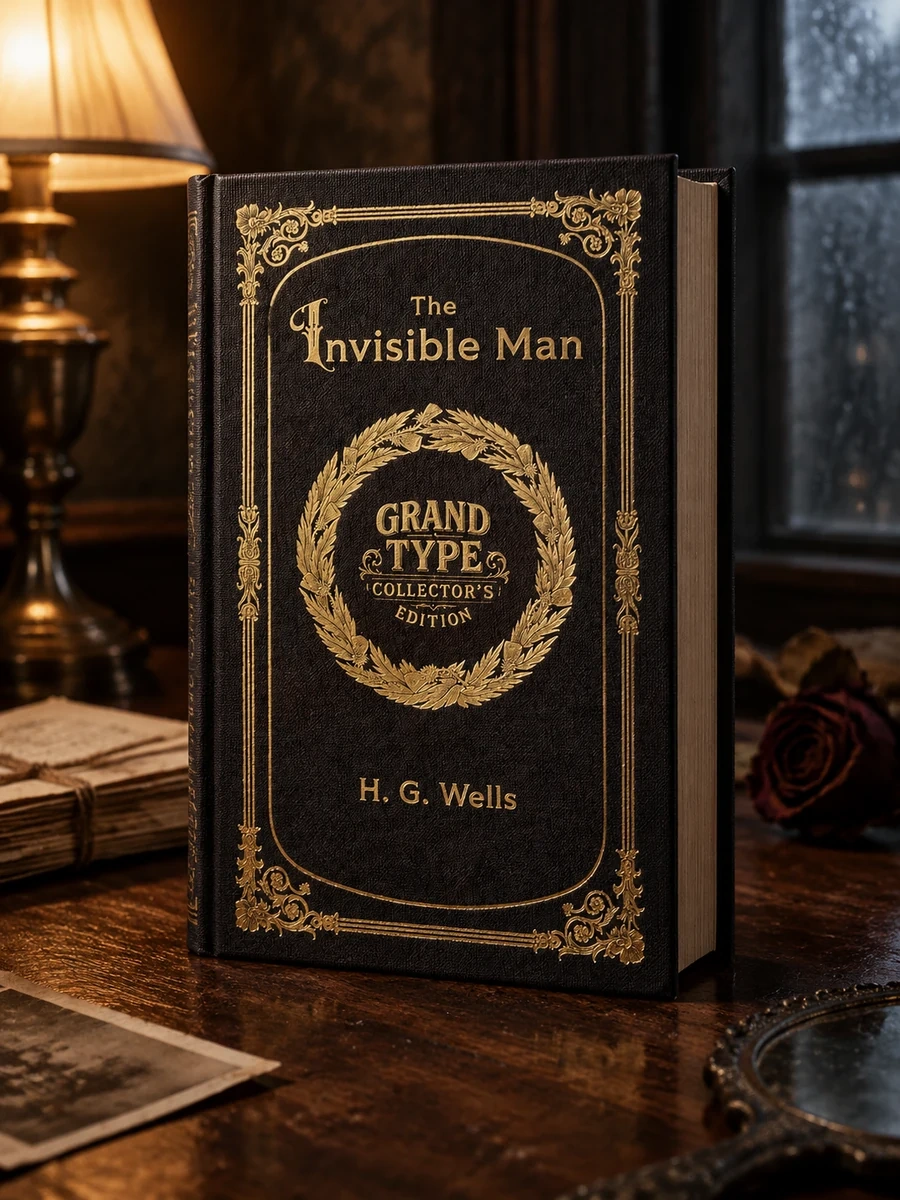



🏛 Books from this publisher Mjp Publishers



You might also like
See more →





Have a question about this item?
Ask about the edition, condition, delivery or anything else — we reply by email or phone, usually within a day.
