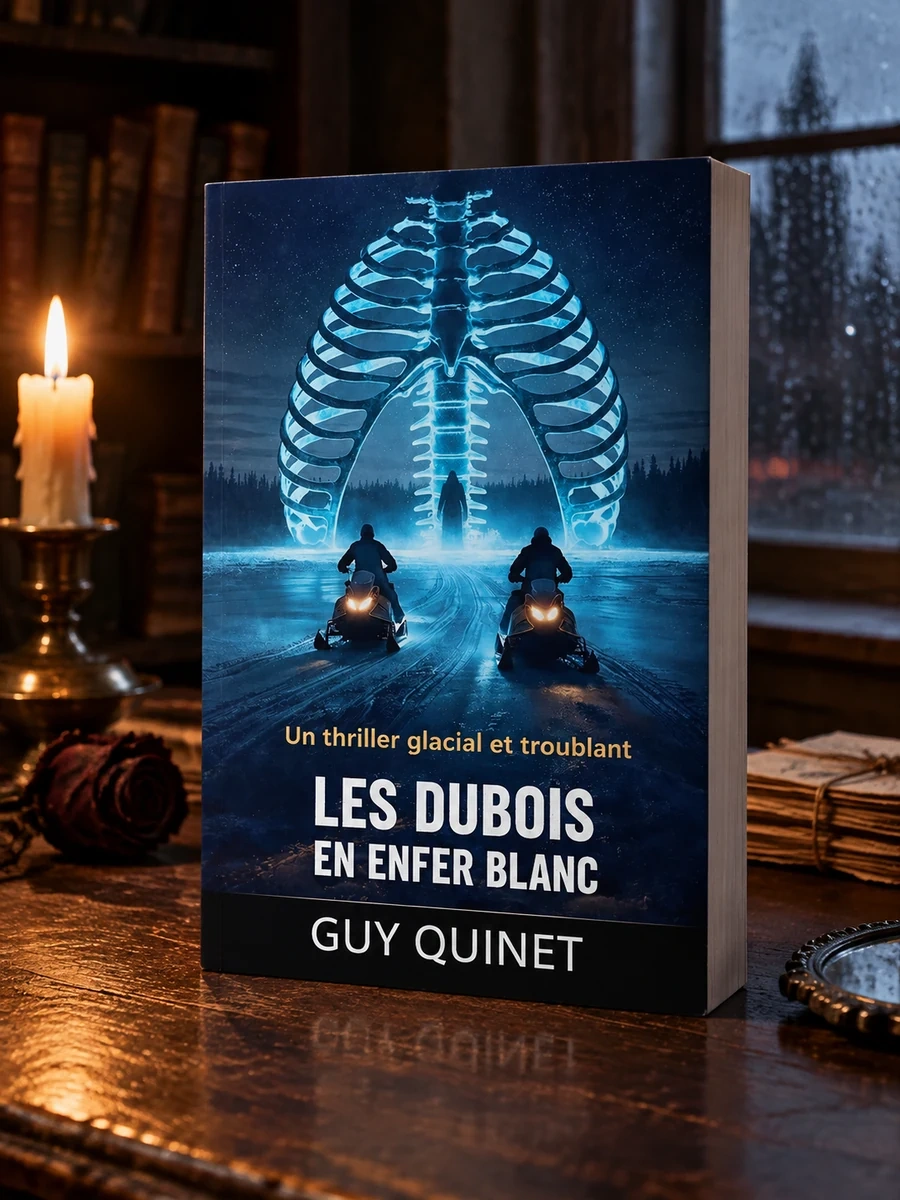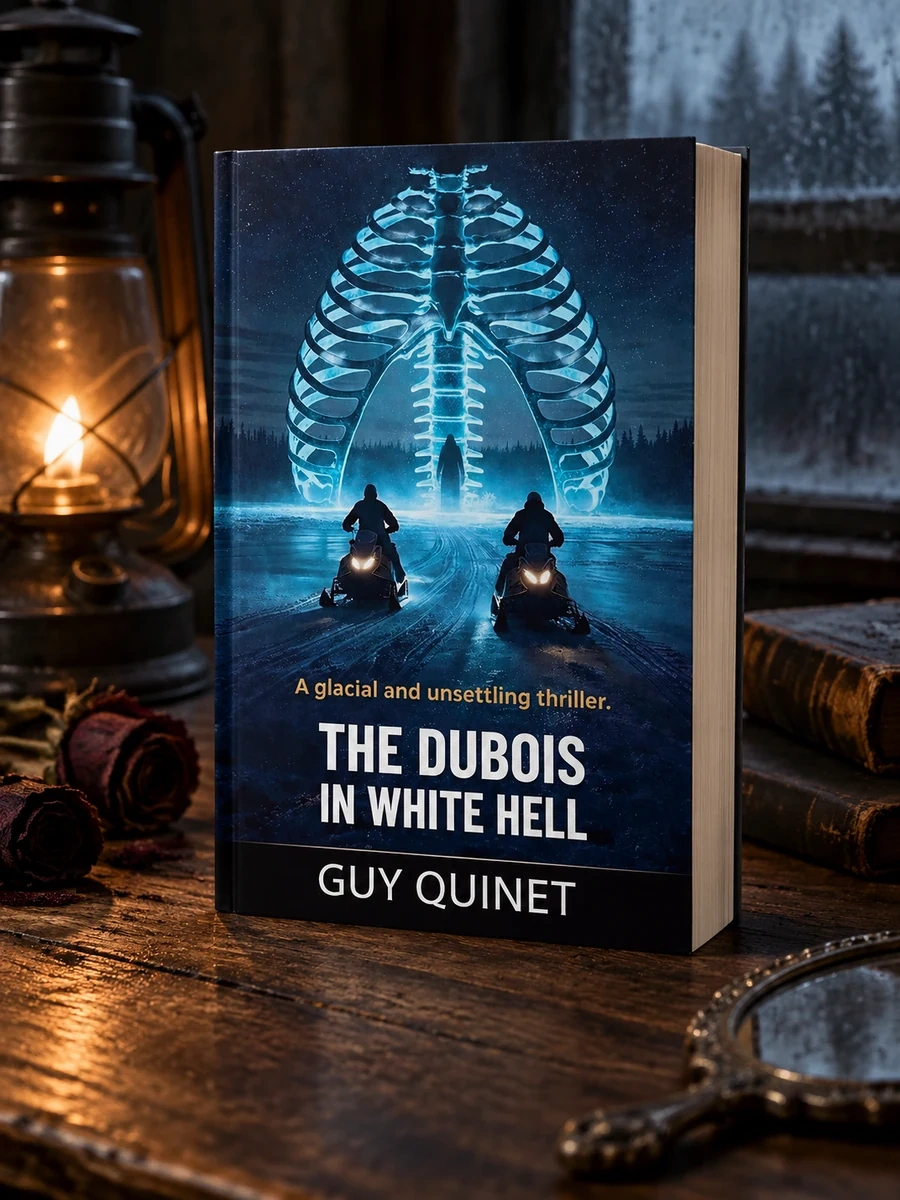
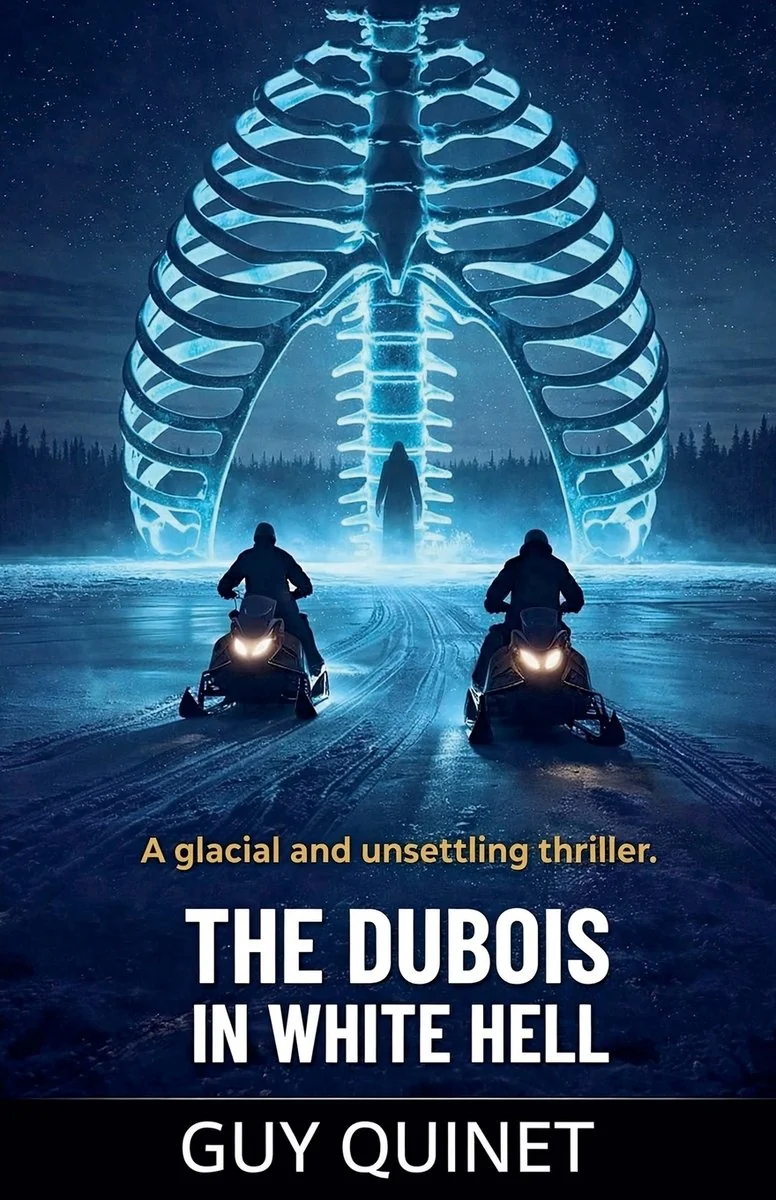
The Dubois in white hell
A survival story about two men lost in the unmapped north of Quebec.
Quinet explores the psychological impact of extreme isolation through the experiences of Marco and Guy Dubois. Their journey into the Lanaudiere region turns into a fight for life when equipment fails in sub-zero conditions. The narrative highlights the contrast between their desire for quiet and the intrusive presence they find. Sylvie appears as a key figure in the abandoned village, linking them to the mysterious mark on the ice. The story emphasizes the sensory details of cold and silence. It does not offer easy answers but rather focuses on the immediate threat of the environment and the unknown entity watching from the trees.
The story is set in the Lanaudiere region of Quebec, Canada. It draws on local legends of unnamed zones and frozen trails that do not appear on maps. The narrative reflects the French Canadian experience of winter survival and the fear of the deep wilderness.


📝 Description: The Dubois in white hell
💎 Our verdict on The Dubois in white hell
📖 Why choose it
Why this book is worth reading
Readers who appreciate atmospheric tension and claustrophobic settings will find this book compelling. It suits those who enjoy psychological horror that explores the fragility of the human mind under extreme isolation. The narrative focuses on sensory details of cold and silence, offering a slow-burn dread rather than fast-paced action. It is ideal for audiences interested in the intersection of true survival scenarios and supernatural ambiguity, providing a study in physical deterioration and psychological fear without resorting to easy answers or clear resolutions.
⭐ Reader reviews
Reader rating
Quinet effectively constructs a chilling atmosphere where the environment itself becomes the primary antagonist. The stark reality of frozen trails and abandoned places grounds the fear in tangible danger, creating a palpable sense of dread. The narrative’s strength lies in its refusal to offer easy answers, instead focusing on the immediate threat of the unknown entity watching from the trees. This approach rewards patience, as the tension builds through physical deterioration and psychological isolation rather than explicit supernatural exposition. It is best suited for readers who value mood over plot resolution.