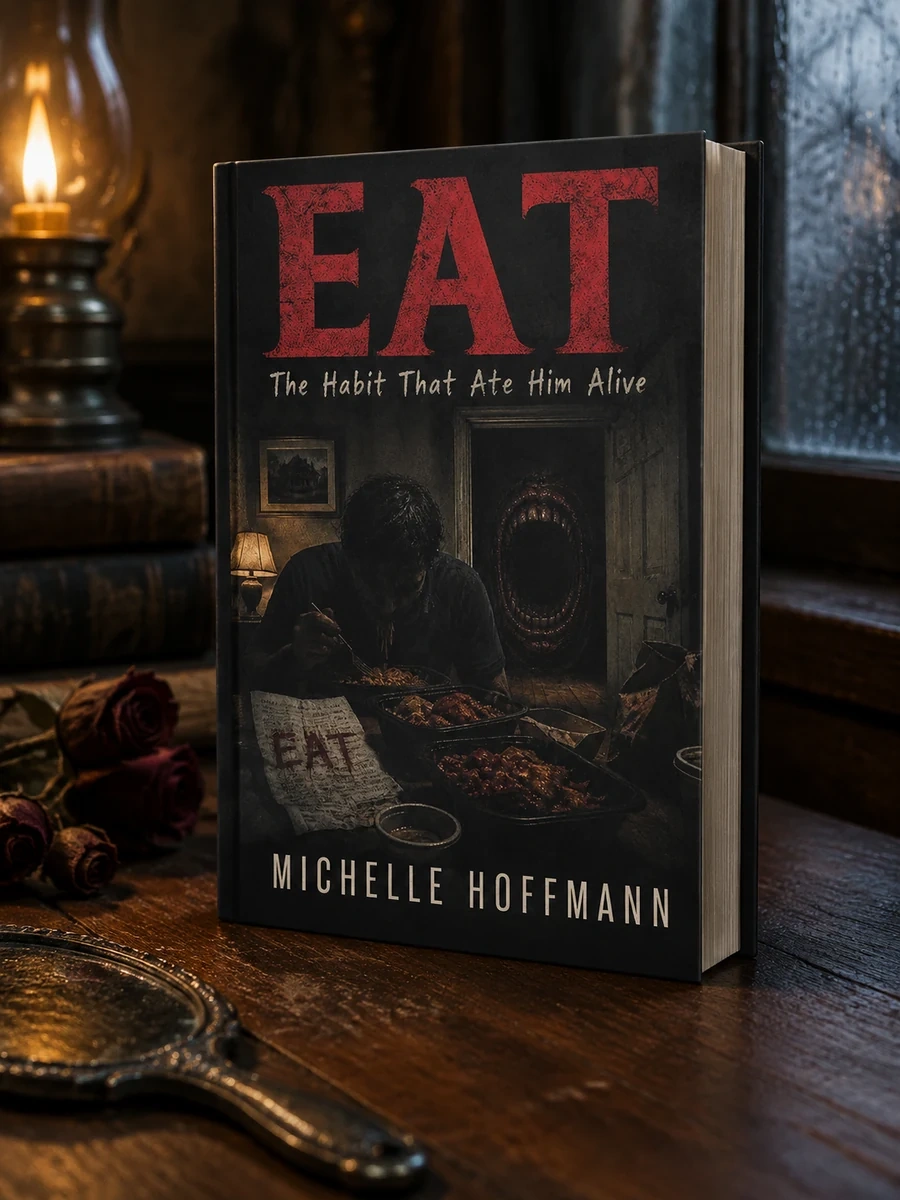
Eat: The Habit That Ate Him Alive
A man's hunger becomes a separate entity that consumes his reality.
Hoffmann’s 2026 release examines the erosion of Martin Browne’s identity through the lens of extreme gluttony. The text does not focus on medical details but rather on the metaphysical consequences of unchecked appetite. As Martin’s physical form expands, his perception of space and time fractures. The narrative structure mirrors this collapse by focusing intensely on the immediate sensations of hunger and the failure of satiety. The horror stems from the realization that the urge to eat is no longer a biological need but an autonomous command. This approach aligns with traditions of body horror and psychological thriller, where the monster is internal. Readers will find the story unsettling due to its realistic depiction of compulsion before it turns supernatural. The work does not provide advice or recovery narratives but stays firmly within the genre of speculative fiction.
This 2026 independent publication sits within the contemporary American tradition of psychological horror. It draws on modern understandings of addiction and body image to explore supernatural themes. The work reflects current cultural anxieties about loss of control and the erosion of personal agency in daily life.


📝 Description: Eat: The Habit That Ate Him Alive
💎 Our verdict on Eat: The Habit That Ate Him Alive
📖 Why choose it
Why this book is worth reading
Readers who appreciate character-driven psychological horror and narratives exploring the fragility of identity will find this book compelling. It offers a unique, unsettling examination of compulsion, where the hunger becomes an autonomous entity separate from the self. Those interested in speculative fiction that prioritizes internal dread over action or traditional monsters will gain from its slow-burn tension. The story provides no recovery narrative, staying firmly within the genre to depict the terrifying collapse of reality and perception as appetite overtakes existence.
⭐ Reader reviews
Reader rating
Hoffmann crafts a deeply unsettling tale where the monster is internal, utilizing the lens of extreme eating disorders to explore the loss of self. By focusing on immediate sensations and the failure of satiety, the narrative structure mirrors Martin’s fracturing perception of space and time. The horror stems from the realistic depiction of compulsion before it turns supernatural, creating a slow-burn atmosphere of dread. This approach suits readers who enjoy psychological thrillers and body horror but may not appeal to those seeking fast-paced action or traditional ghost stories. It is a rigorous examination of addiction and identity.
📖 Read on the blog
✍️ More books by this author Michelle Hoffmann






🏛 Books from this publisher Independently Published






You might also like
See more →




Have a question about this item?
Ask about the edition, condition, delivery or anything else — we reply by email or phone, usually within a day.
