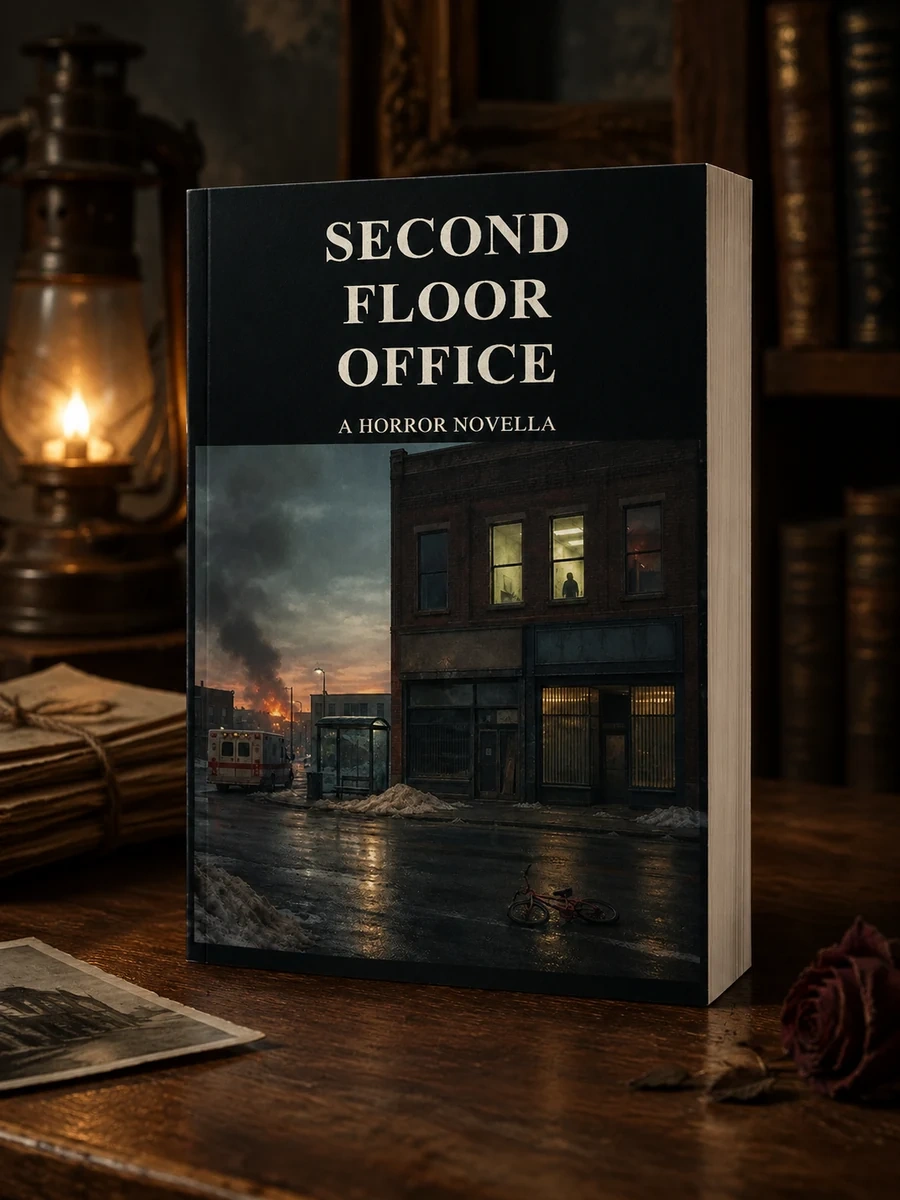
Second Floor Office: A Horror Novella
A bureaucrat faces his victims in a second-floor office where hell arrives as meetings.
This novella examines the spiritual cost of administrative cruelty through the character of Ray Voss. He built a life on signed denials and deferred repairs, only to face exact memories from those he ruined. The text uses the setting of a property office to explore themes of accountability and silence. Each encounter strips away his professional defenses, forcing him to acknowledge the smoke, winter, and eviction boxes outside his window. Mikle avoids traditional horror tropes, focusing instead on the cold reality of ignored disclosures and refused amendments.
The work sits within contemporary independent horror publishing, released in June 2026. It reflects modern anxieties about institutional power and the dehumanizing nature of office work. The novella format allows for a concentrated exploration of guilt without the sprawl of a full novel.


📝 Description: Second Floor Office: A Horror Novella
💎 Our verdict on Second Floor Office: A Horror Novella
📖 Why choose it
Why this book is worth reading
Readers who appreciate psychological horror rooted in corporate malfeasance will find significant value in this narrative. It offers a stark look at how paperwork causes real-world harm, appealing to those interested in the spiritual cost of administrative cruelty. The book suits individuals who prefer slow-burn tension over fast-paced action or traditional gore. By focusing on the cold reality of ignored disclosures and refused amendments, it provides a chilling examination of accountability. Those fascinated by the intersection of legalistic detail and existential dread will gain from its unique approach to damnation through bureaucratic indifference.
⭐ Reader reviews
Reader rating
Mikle crafts a chilling novella that reimagines damnation through the lens of bureaucratic indifference. The narrative follows Ray Voss, whose life unravels as he faces visitors possessing exact memories of harm caused by his paperwork. Mikle avoids traditional horror tropes, focusing instead on the cold reality of ignored disclosures and refused amendments. The story draws on gothic traditions where hell sends meetings rather than monsters. Outside the window, the street reveals what the files omitted: smoke, winter, stretchers, and a child's bicycle in the road. The novella is organized as a series of confrontations where Ray faces one chance per meeting to tell the truth. This structure forces him to confront the widow who waited for a furnace repair and the mother silenced by procedure.
📖 Read on the blog
✍️ More books by this author Toby Mikle


🏛 Books from this publisher Independently Published






You might also like
See more →

Have a question about this item?
Ask about the edition, condition, delivery or anything else — we reply by email or phone, usually within a day.
