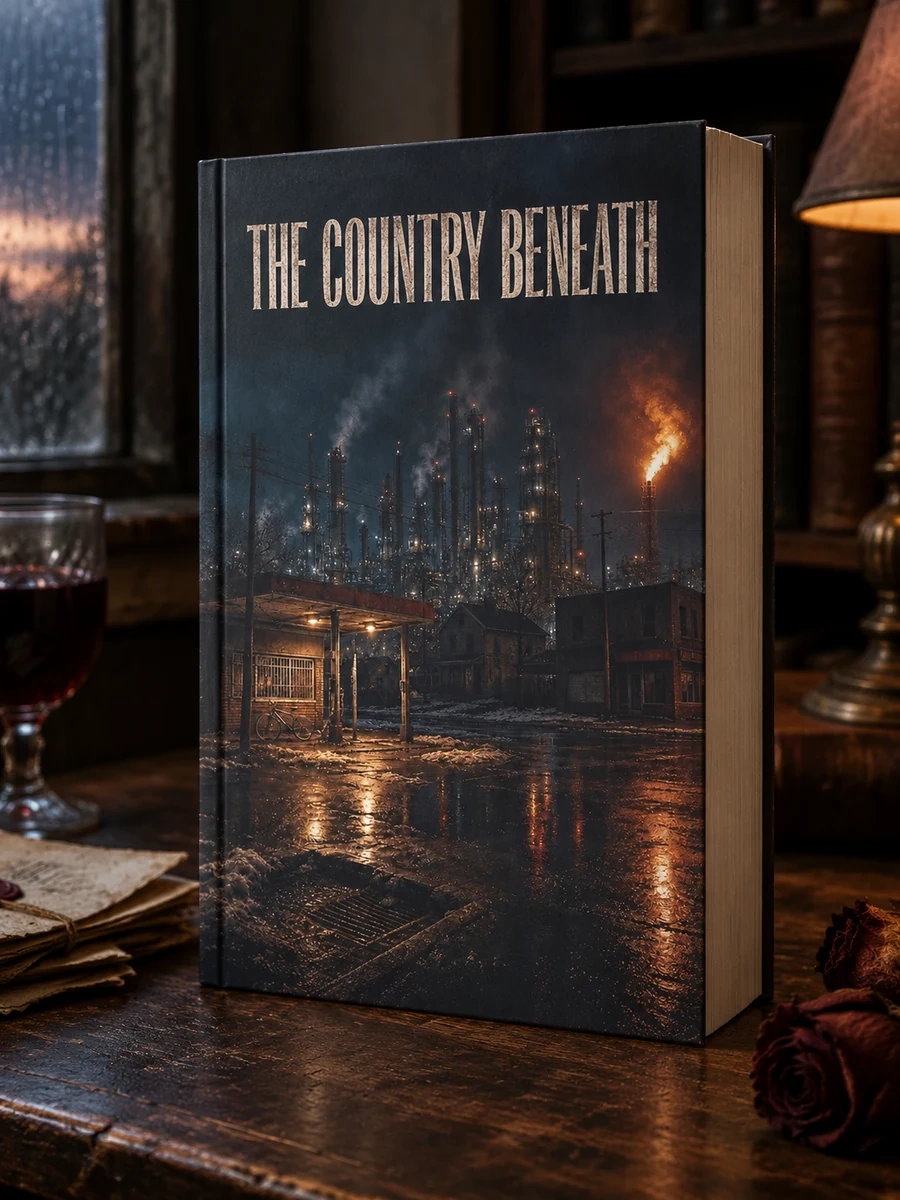
The Country Beneath
A collection of linked Midwestern horror tales about buried secrets and industrial decay.
Mikle weaves four separate narratives into a single cohesive mystery centered on regional trauma. The stories span from 1983 to 2026, connecting disparate characters through a shared supernatural threat. Each tale highlights how communities ignore the horrors in their backyards until they become undeniable. The digitization of old recordings in the modern era acts as the catalyst for the final confrontation. The author uses the setting itself as a character, emphasizing the weight of history and industry on the present.
The work sits within the tradition of literary Midwestern horror, drawing on gothic and supernatural fiction styles. It reflects the cultural anxiety surrounding industrial sites and small-town dynamics in Minnesota, Iowa, and Lake Superior regions during the late twentieth and early twenty-first centuries.


📝 Description: The Country Beneath
💎 Our verdict on The Country Beneath
📖 Why choose it
Why this book is worth reading
Readers who appreciate literary horror rooted in specific regional identities will find value in this cohesive mystery. The book is ideal for those who enjoy slow-burn atmospheric tension and thematic depth over immediate action or jump scares. It appeals to fans of gothic fiction that treats the setting as a living character, emphasizing the weight of history on the present. By connecting disparate narratives through a shared supernatural threat, it offers a unique exploration of community silence and industrial decay. Those interested in how digitization interacts with ancient evils will also find the narrative structure compelling and intellectually engaging.
⭐ Reader reviews
Reader rating
Mikle successfully weaves four distinct eras into a singular, haunting mystery centered on regional trauma. The strength lies in its atmospheric construction, where the Midwest itself becomes a vessel for buried secrets and industrial decay. The progression from 1983 to 2026 allows for a gradual escalation of dread, culminating in a confrontation driven by the digitization of analog recordings. This approach suits readers who prefer psychological depth and gothic landscapes over fast-paced action. While traditional haunted house enthusiasts might find the focus on geological silence less engaging, those seeking a thoughtful examination of blame and grief will appreciate the nuanced tone and interconnected storytelling.
📖 Read on the blog
✍️ More books by this author Toby Mikle


🏛 Books from this publisher Independently Published






You might also like
See more →
Have a question about this item?
Ask about the edition, condition, delivery or anything else — we reply by email or phone, usually within a day.
