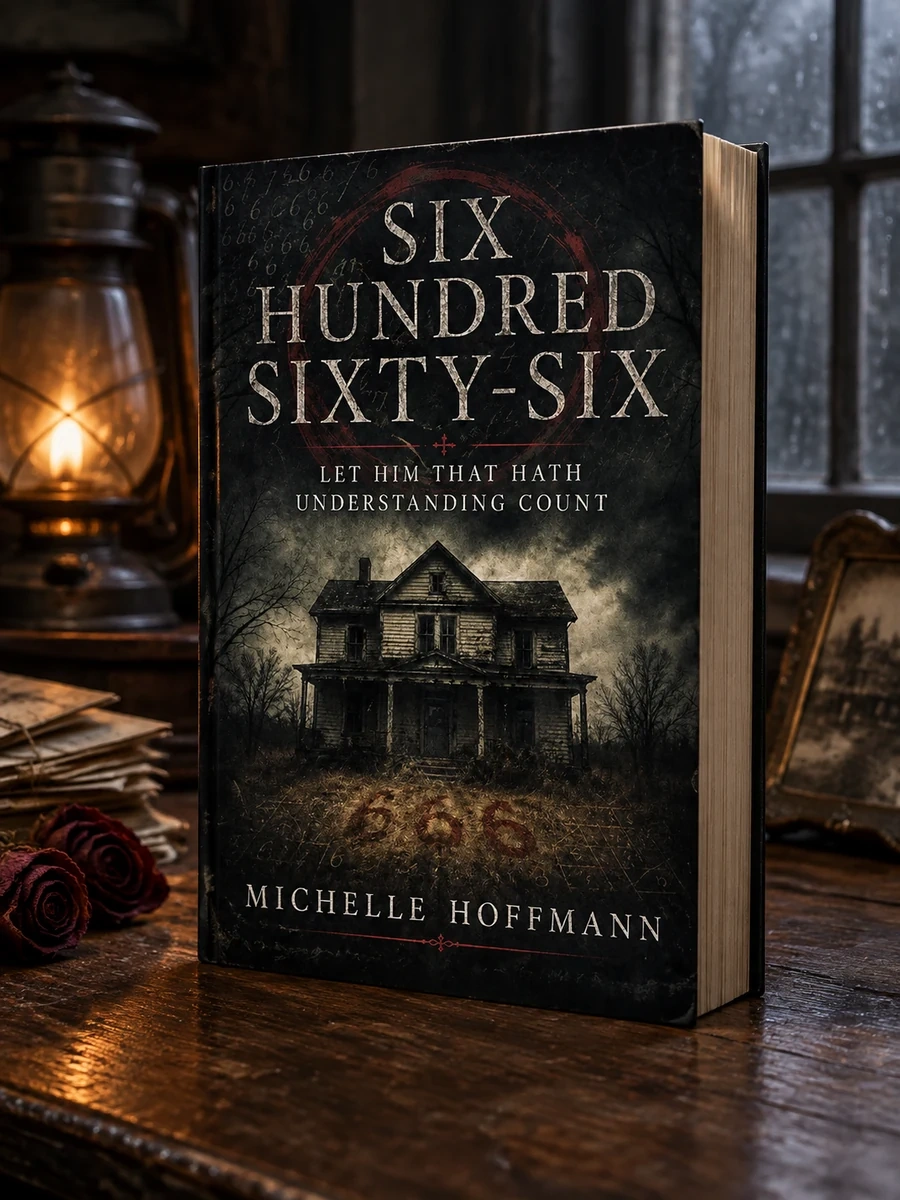
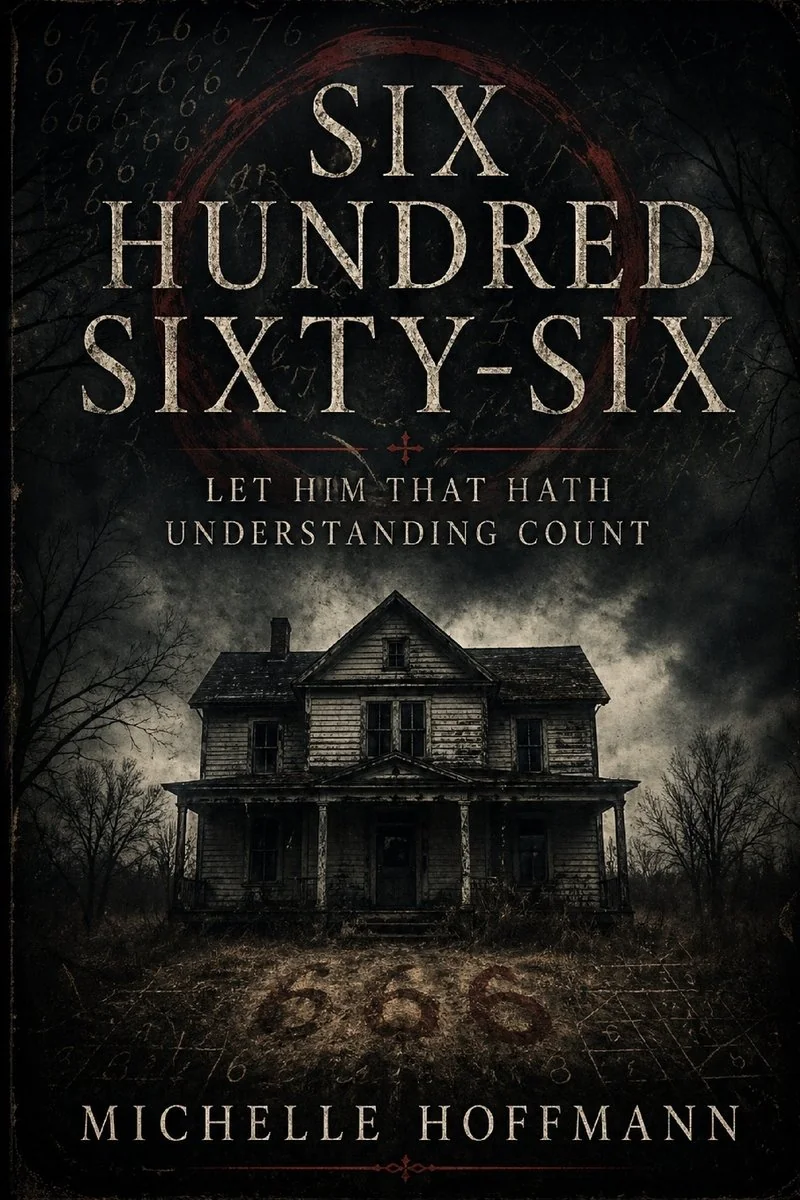
Six Hundred Sixty-Six: Let Him That Hath Understanding Count
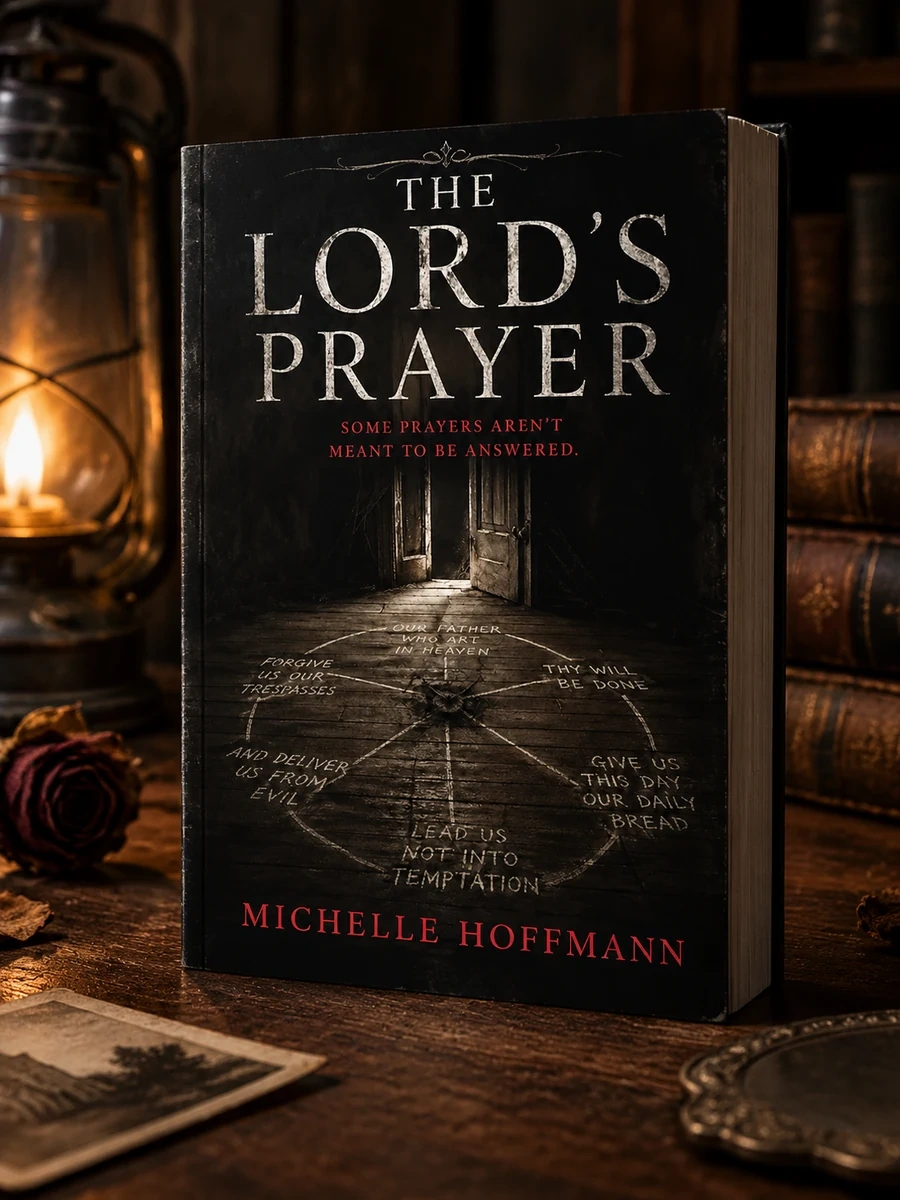
A gothic novel about a farmhouse haunted by a biblical formula and a counting number.
The plot tracks Claire Dunleavy’s attempt to renovate an old property on Briar Hill. Her discovery of 666 behind a wall connects her to Elliot Goss, who interpreted Revelation 13:18 as a usable formula rather than a caution. Jill and Martin Reyes join the investigation, uncovering details that trigger physical changes in the house. Walls move and names surface as the entity beneath answers their presence. Hoffmann structures the narrative around this escalating interaction between the living investigators and the buried past. The story emphasizes the danger of treating sacred texts as tools for control. It ends with the terrifying confirmation that the count is active and has identified Claire.
This book sits within the American independent publishing landscape, released in 2026. It draws on Christian apocalyptic traditions, specifically Revelation 13:18, to ground its supernatural elements in historical religious interpretation rather than generic fantasy.


📝 Description: Six Hundred Sixty-Six: Let Him That Hath Understanding Count
💎 Our verdict on Six Hundred Sixty-Six: Let Him That Hath Understanding Count
📖 Why choose it
Why this book is worth reading
This book is ideal for readers who enjoy slow-burn horror that relies on psychological tension and specific religious themes rather than fast-paced action. Those interested in the intersection of historical research and supernatural threat will find value in the exploration of forbidden knowledge. The narrative appeals to fans of gothic atmosphere and architectural dread, offering a deep dive into how biblical formulas can destabilize reality. It is particularly suitable for those who appreciate stories where the environment itself becomes an active participant in the horror, responding to the presence of the investigators with shifting walls and hidden names.
⭐ Reader reviews
Reader rating
Hoffmann successfully merges gothic atmosphere with occult suspense, creating a tense narrative around Claire Dunleavy’s discovery of the number 666. The novel excels in depicting architectural dread, where the farmhouse responds violently to investigation. By treating Revelation 13:18 as a functional formula for power, the story offers a unique take on biblical horror. It suits readers who prefer intellectual engagement with sacred texts over secular thrills. The emphasis on physical changes within the house and the danger of controlling the unknown provides a compelling, albeit unsettling, reading experience for those who enjoy slow-burn supernatural mysteries.