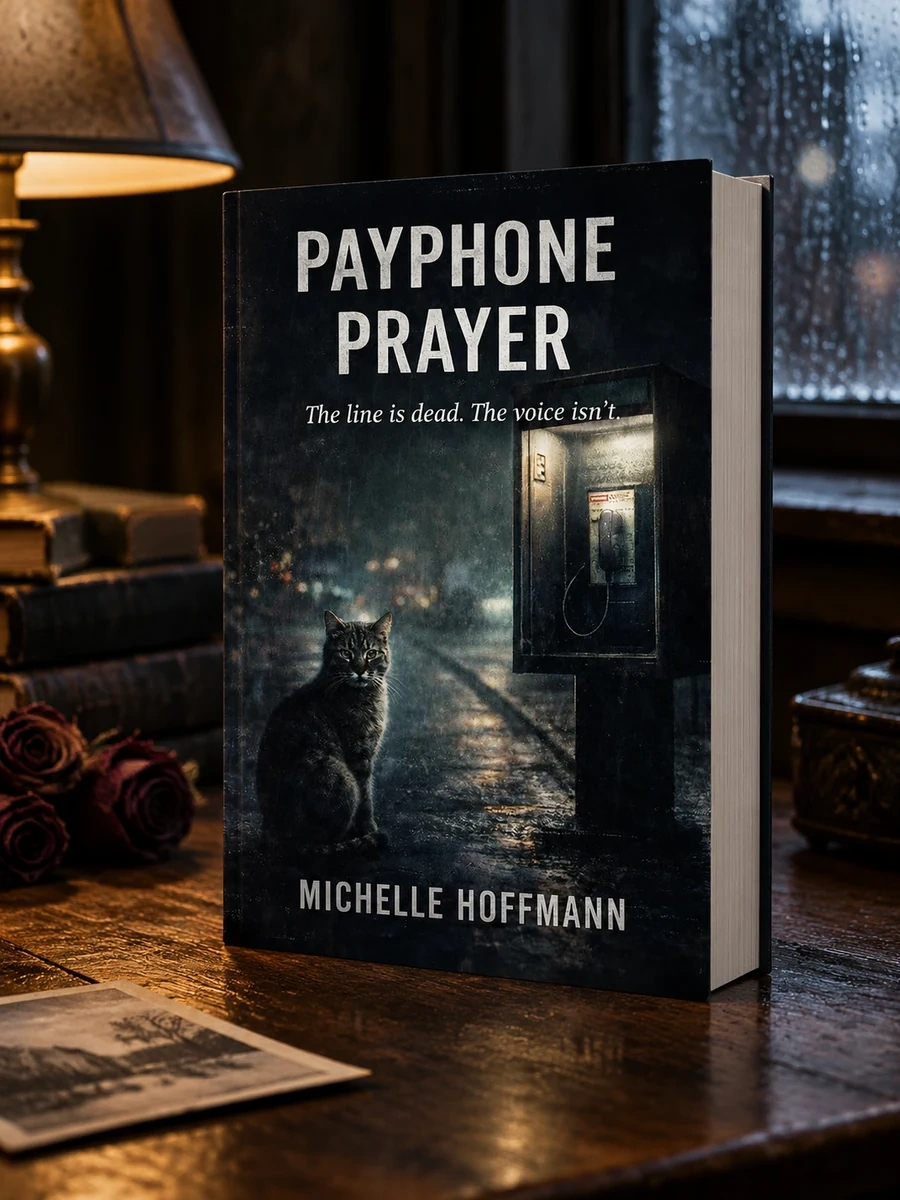
Payphone Prayer: The line is dead. The voice isn't.
A singer answers a dead payphone and triggers a city-wide grief outbreak.
Lena becomes an anomaly in a society that values emotional silence above all else. Her connection to the Choir disrupts the carefully managed calm of the urban landscape. The book investigates how unprocessed sorrow can dismantle authoritarian structures designed to suppress it. Hoffmann uses the metaphor of signal interference to show how genuine human experience resists digital optimization. The narrative does not offer easy solutions but rather depicts the chaotic cost of reclaiming one’s grief from a system that wants to erase it.
This work sits within the near-future speculative fiction tradition, drawing on contemporary anxieties about emotional regulation and public safety mandates. It reflects current cultural debates regarding mental health, societal compliance, and the commodification of closure in a digital age.


📝 Description: Payphone Prayer: The line is dead. The voice isn't.
💎 Our verdict on Payphone Prayer: The line is dead. The voice isn't.
📖 Why choose it
Why this book is worth reading
Readers who appreciate slow-burn psychological tension and speculative fiction about societal compliance will find this work engaging. It appeals to those interested in how unprocessed sorrow can dismantle authoritarian structures designed to suppress it. The book offers a profound exploration of the boundary between peace and compliance, showing what happens when people stop asking permission to feel. It is ideal for audiences who enjoy examining the dangers of enforced calm and the power of unfinished love through a lens of genuine human experience resisting digital optimization.
⭐ Reader reviews
Reader rating
Hoffmann crafts a compelling near-future narrative where emotional regulation is mandated as public safety, centering on Lena’s refusal to let her loss be optimized. The novel operates effectively as a psychological thriller with horror elements, using the metaphor of signal interference to demonstrate how genuine human emotion resists suppression. While it lacks fast-paced action or traditional ghost stories, its strength lies in depicting the chaotic cost of reclaiming grief from a system that treats feeling as a disorder. It suits readers seeking thematic depth over plot speed, offering a chilling look at control and memory without providing easy solutions.
📖 Read on the blog
✍️ More books by this author Michelle Hoffmann








🏛 Books from this publisher Independently Published






You might also like
See more →


Have a question about this item?
Ask about the edition, condition, delivery or anything else — we reply by email or phone, usually within a day.
