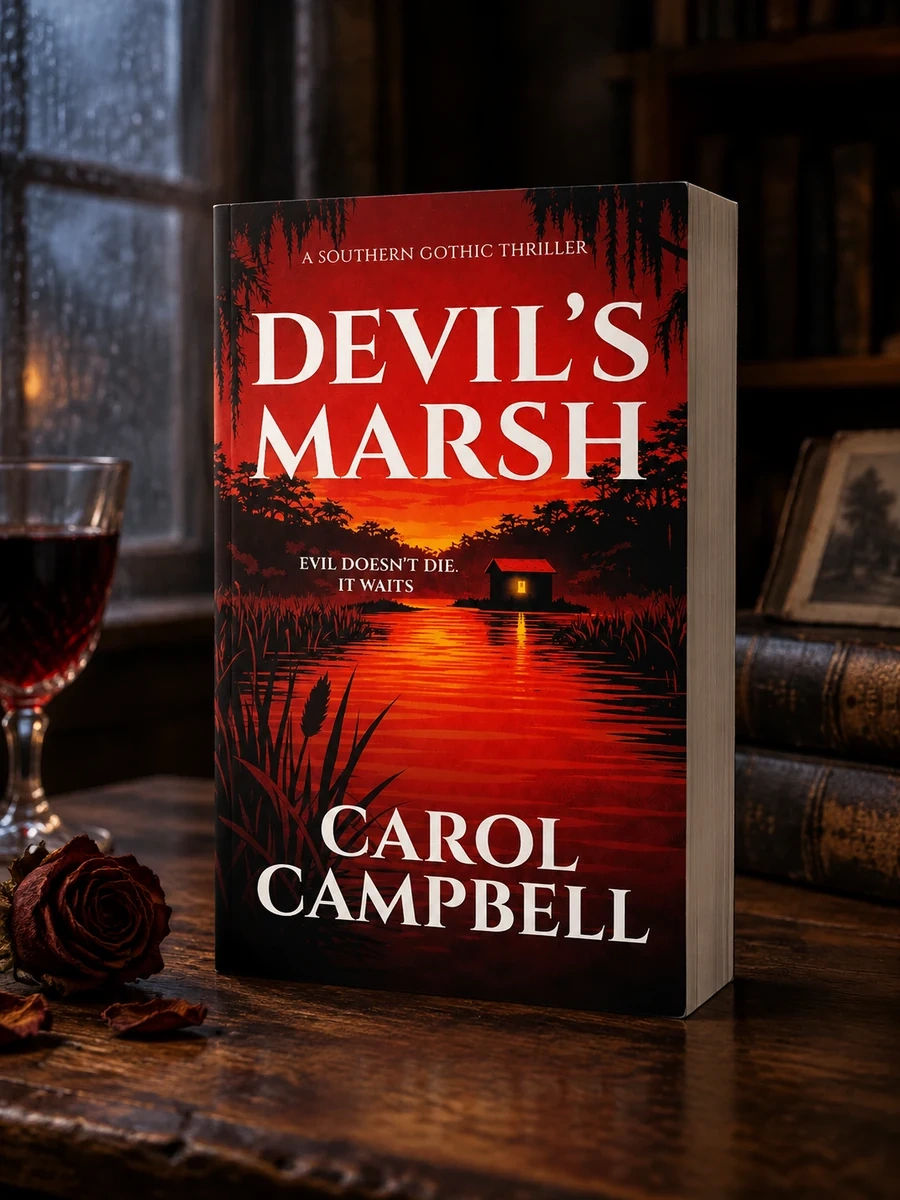
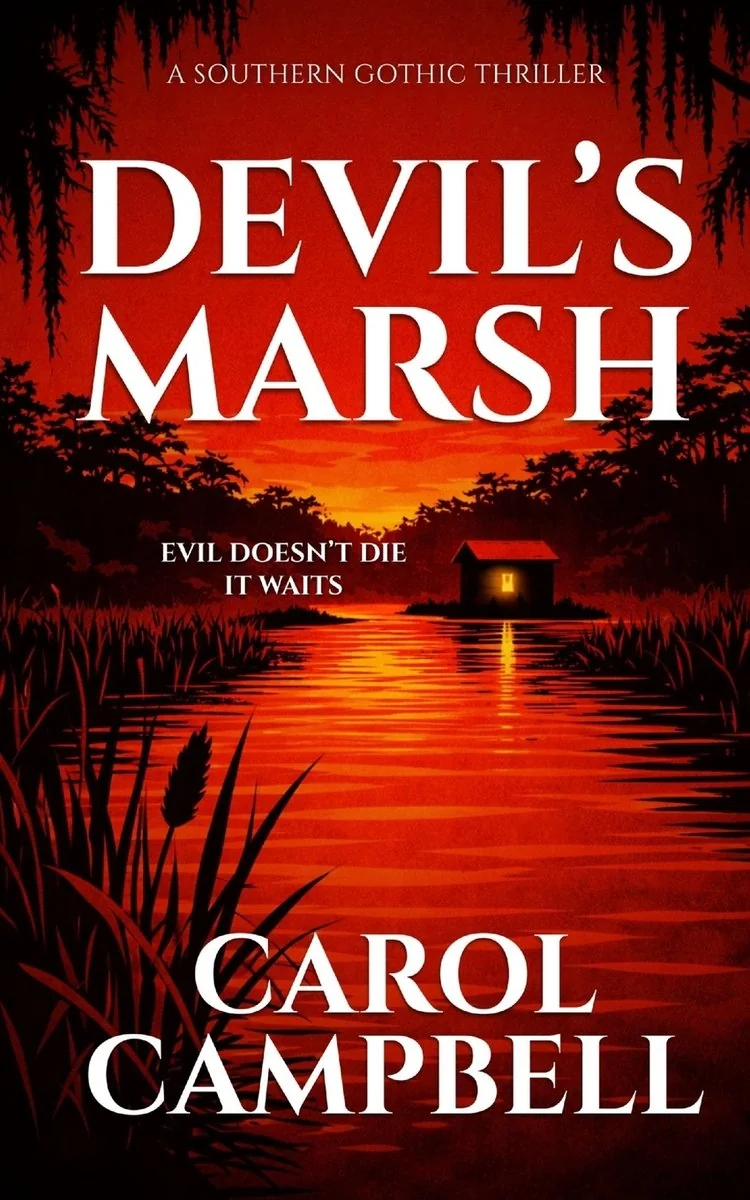
Devil's Marsh
A haunted house story about a family massacre and a watching evil.
Izzy moves into the LaBlanc house hoping to escape her personal history, but the building retains memories of violence. The text details how the town ignored the slaughter of an entire family, allowing bloodstains to fade while the underlying evil persisted. Izzy soon discovers that the isolation she sought is actually a trap. The marsh surrounding the property is not empty; it holds figures with painted faces who walk toward the water at night. These entities are linked to the LaBlanc lineage, which did not end with the massacre. Campbell uses the setting of Devil's Marsh to explore how trauma lingers in physical spaces and how communities choose to forget rather than heal.
The narrative is set in a US town where religious authority, specifically a preacher, attempted to sanitize a site of violence. It reflects American Gothic traditions that tie land ownership to ancestral sin and supernatural retribution.


📝 Description: Devil's Marsh
💎 Our verdict on Devil's Marsh
📖 Why choose it
Why this book is worth reading
Readers who appreciate atmospheric horror rooted in the psychological weight of history will find this narrative compelling. It offers a deep exploration of how trauma lingers in physical spaces, making the setting of Devil's Marsh feel like an active, malevolent character. Those interested in stories where the past refuses to stay buried, and where communities choose forgetting over healing, will engage with its themes of generational evil. The book suits those who enjoy slow-burn tension built through family secrets and rural isolation rather than fast-paced action. It provides a chilling look at how nature holds dark, watching eyes, appealing to fans of cursed properties and the enduring power of memory in horror fiction.
⭐ Reader reviews
Reader rating
Campbell effectively utilizes the haunted house subgenre to explore the persistence of evil within domestic spaces. The narrative succeeds in making the marsh and the LaBlanc residence feel alive with menace, using the painted-faced figures to embody the lingering violence of the past. The focus on psychological weight rather than immediate threat creates a suffocating atmosphere that rewards patient readers. It is best suited for those who enjoy Gothic traditions where community silence amplifies supernatural horror. While it lacks clear resolutions or rapid pacing, its strength lies in the immersive depiction of trauma and isolation. The book stands as a solid entry for enthusiasts of atmospheric dread and the idea that physical locations retain the memories of historical atrocities.