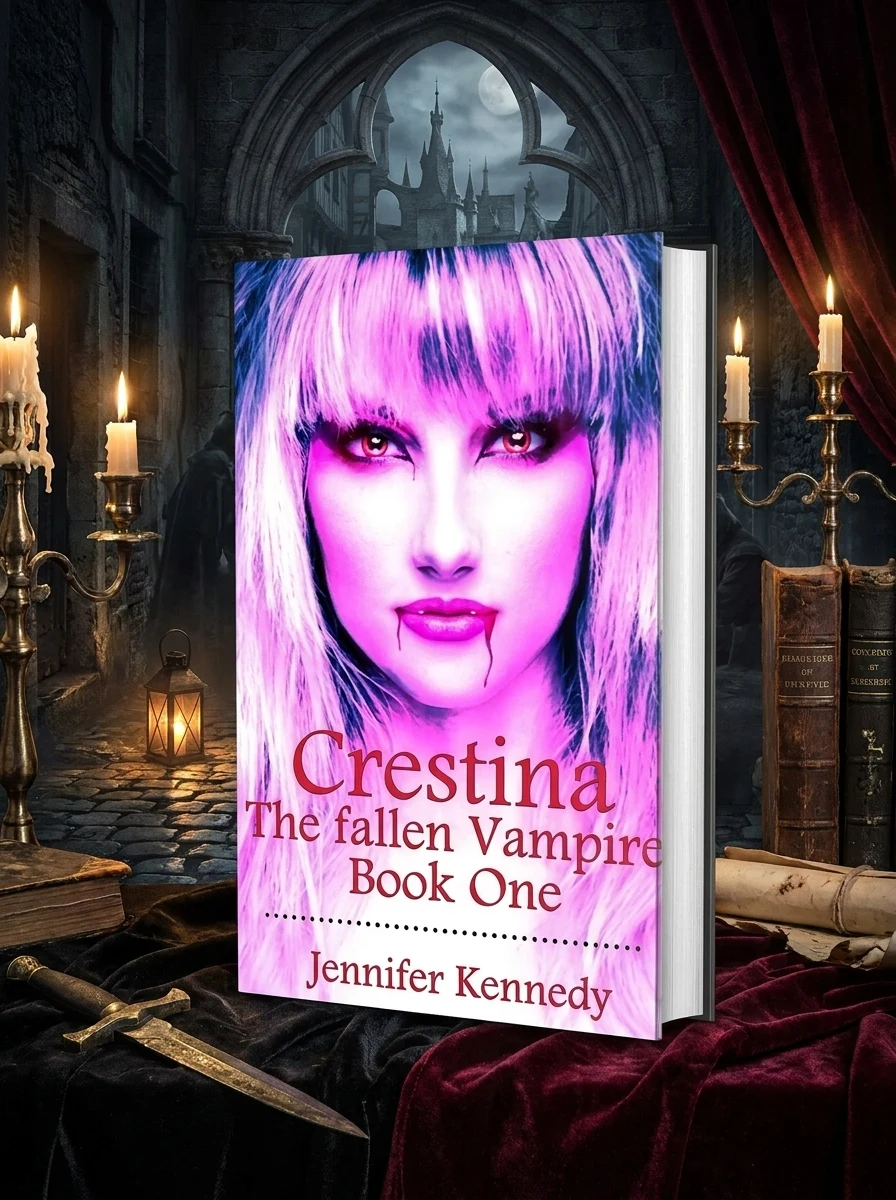

Crestina: The Fallen Vampire Book One
A 1611 vampire romance exploring emotional conflict and religion.
Kennedy uses the year 1611 as the backdrop for a story about Lea and Crestina. Lea meets Crestina in an alley, leading to a night of danger and revelation. Crestina sees herself in Lea, which creates intense emotional struggle. The book mixes real historical events with fantasy elements. It focuses on women’s insecurities and religious battles. The tone is romantic horror. Readers get a look at how supernatural encounters affect personal identity. The story avoids modern sensibilities, sticking to the period’s context. It highlights the pain of self-discovery through a dark lens.
The narrative is set in 1611, combining historical accuracy with dark fantasy fiction. This period allows for an exploration of classic romantic horror tropes within a specific cultural framework. The story addresses the emotional battles women faced during this time, particularly regarding religion and societal expectations. Kennedy uses this era to ground the supernatural elements in a tangible reality.


📝 Description: Crestina: The Fallen Vampire Book One
💎 Our verdict on Crestina: The Fallen Vampire Book One
📖 Why choose it
Why this book is worth reading
Readers seeking a departure from contemporary vampire tropes will find this debut compelling for its strict adherence to early seventeenth-century sensibilities. The book appeals to those interested in the psychological weight of supernatural encounters rather than mere action. It is ideal for fans of romantic horror who enjoy narratives centered on intense emotional conflict, religious struggle, and the exploration of female identity through a dark lens. By focusing on internal turmoil and historical accuracy, it offers a nuanced look at how spiritual and social structures shape personal desire. Those who appreciate slow-burn tension and character-driven drama within a gothic framework will gain significant satisfaction from this atmospheric and introspective tale.
⭐ Reader reviews
Reader rating
Kennedy delivers a sophisticated entry into the vampire genre by anchoring the narrative in the specific historical realities of 1611. The strength lies in its emotional depth, portraying the predator-prey dynamic as a complex mirror of self-discovery and religious anxiety. The tone is appropriately romantic yet chilling, avoiding modern sensibilities to maintain period authenticity. This approach suits readers who prioritize psychological realism and gothic atmosphere over fast-paced plotting. While the focus remains heavily on internal conflict, it successfully creates a compelling environment where supernatural elements intersect with rigid social structures. It is a thoughtful exploration of identity that rewards patience and an appreciation for historical context in horror fiction.
📖 Read on the blog
🏛 Books from this publisher Independently Published








You might also like
See more →


Have a question about this item?
Ask about the edition, condition, delivery or anything else — we reply by email or phone, usually within a day.
