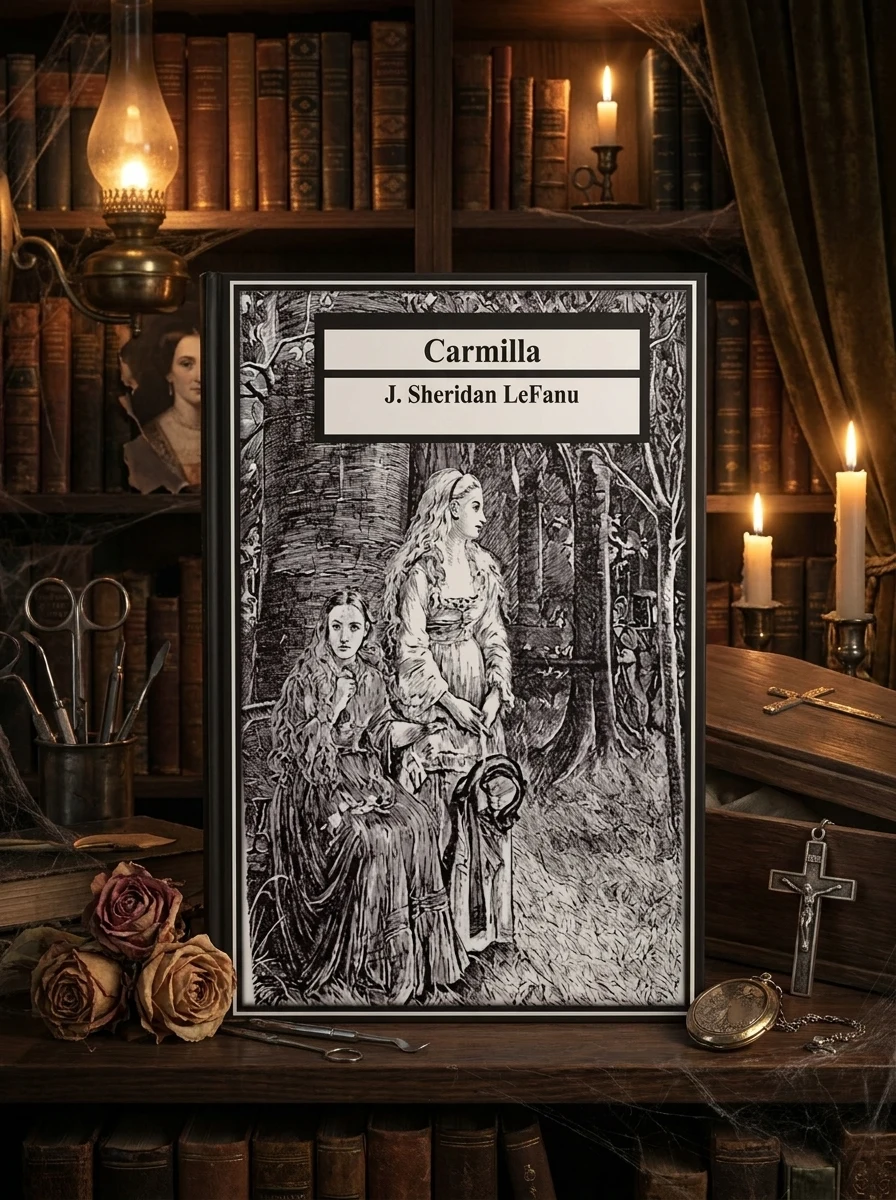
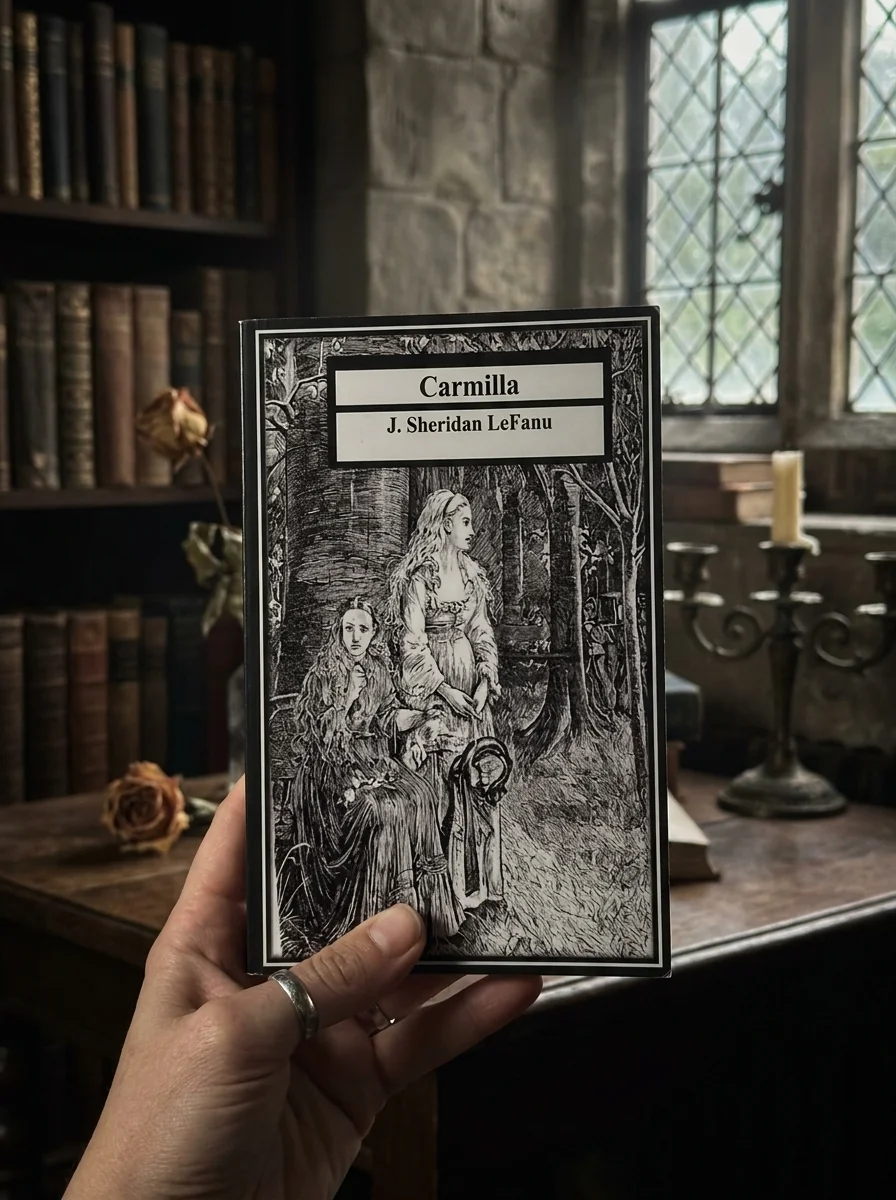
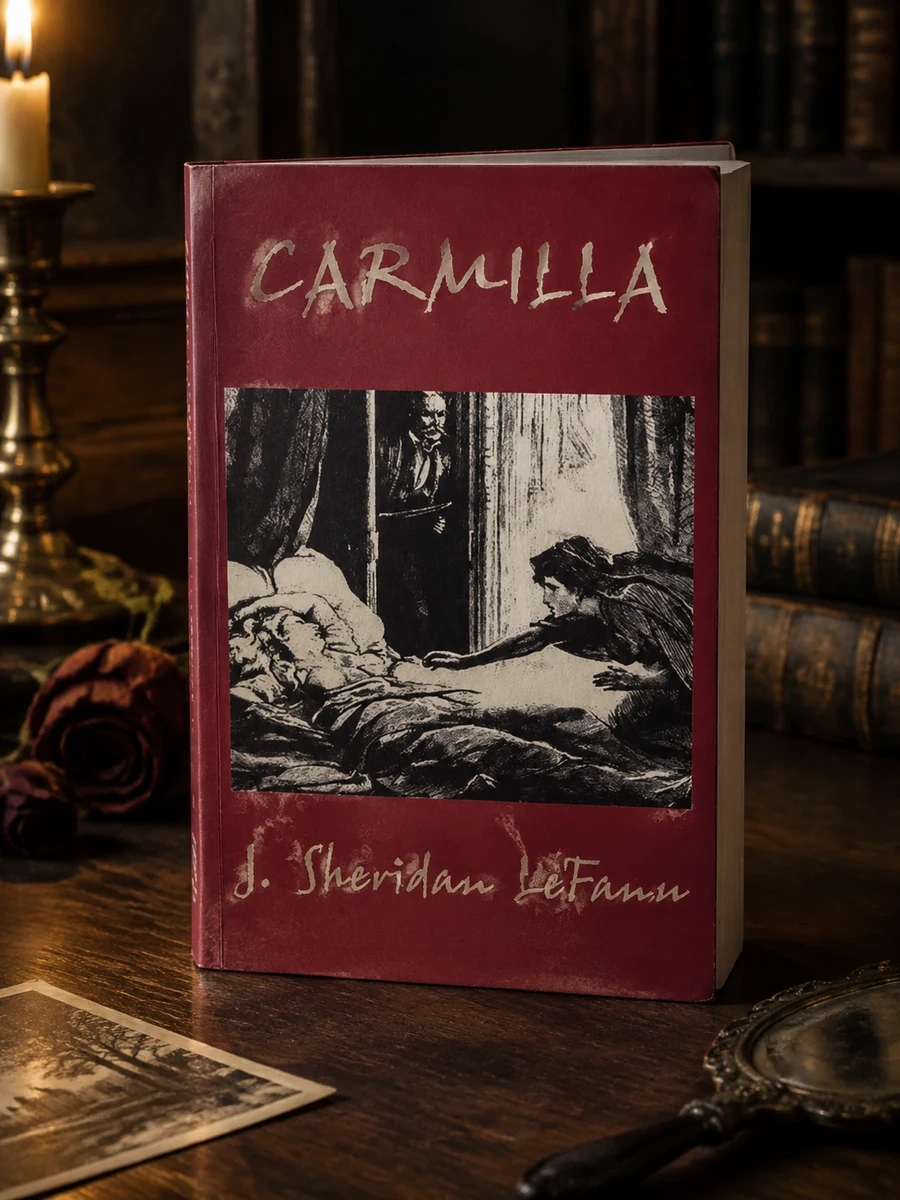
Carmilla
A Gothic novella about a young woman hunted by a female vampire named Carmilla.
This edition presents the original serial story that established key tropes in vampire literature. It focuses on the relationship between the narrator and her mysterious guest, revealing the true identity of the predator. The narrative relies on first-person account rather than external observation. This approach creates intimacy and dread. The text is organized as a continuous novella rather than a collection of short stories.
This work sits firmly in the late nineteenth century literary tradition. It was published serially in The Dark Blue between 1871 and 1872. This timeline places it well before the popularization of Dracula, marking it as an early example of the genre.


📝 Description: Carmilla
💎 Our verdict on Carmilla
📖 Why choose it
Why this book is worth reading
Readers interested in the historical development of vampire fiction will find significant value in this text, as it offers a direct look at how the genre evolved before becoming a mainstream staple. It is particularly appealing to those who appreciate classic Gothic traditions and literary history rather than modern fast-paced horror or contemporary thriller elements. The narrative’s reliance on a first-person account creates a unique intimacy and dread, making it essential for fans of early horror literature who wish to understand the structural origins of vampire stories. By examining themes of obsession and identity through a lens typical of its era, the book provides insight into the literary lineage of supernatural predation.
⭐ Reader reviews
Reader rating
Sheridan Le Fanu crafts a compelling Gothic novella that remains a cornerstone of the horror genre. The narrative’s strength lies in its intimate first-person perspective, which effectively builds dread as the narrator becomes the target of a mysterious female vampire. While it may not suit readers seeking contemporary thrills or rapid pacing, it is an excellent choice for those who enjoy atmospheric tension and psychological depth. The work successfully explores themes of obsession and identity within the context of early supernatural fiction. Its historical significance cannot be overstated, as it established key elements that would define later vampire literature. It is a must-read for anyone studying the evolution of horror or appreciating the nuances of 19th-century Gothic storytelling.
📖 Read on the blog
✍️ More books by this author J Sheridan Lefanu




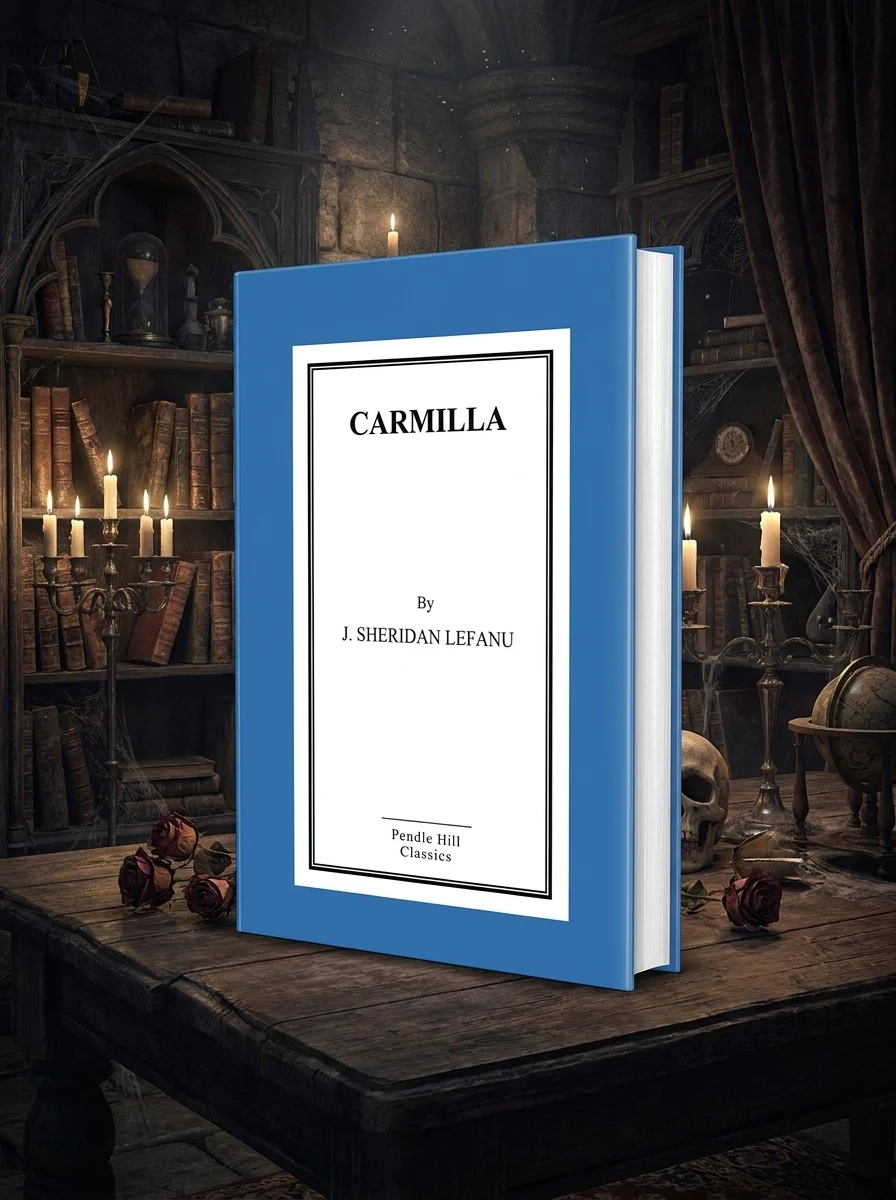

🏛 Books from this publisher Createspace Independent Publishing Platform






You might also like
See more →


Have a question about this item?
Ask about the edition, condition, delivery or anything else — we reply by email or phone, usually within a day.
