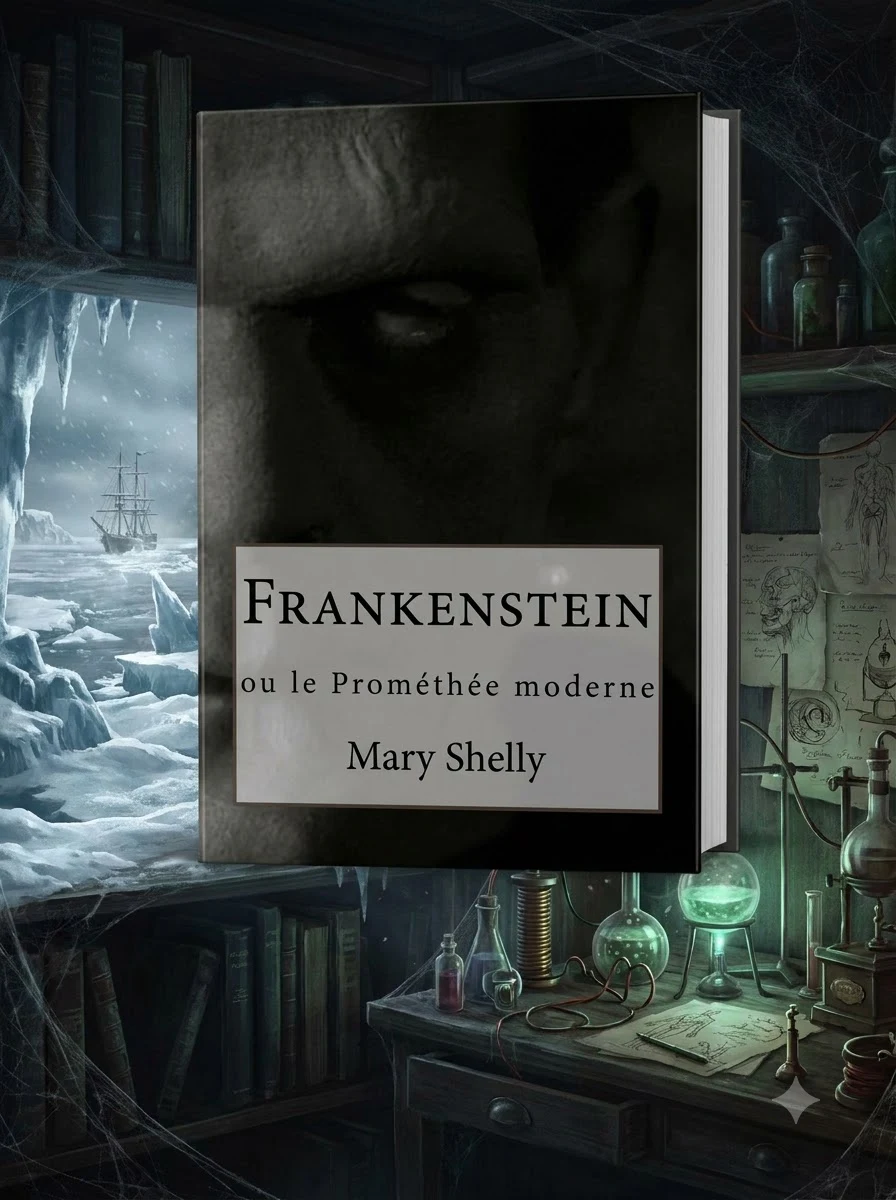
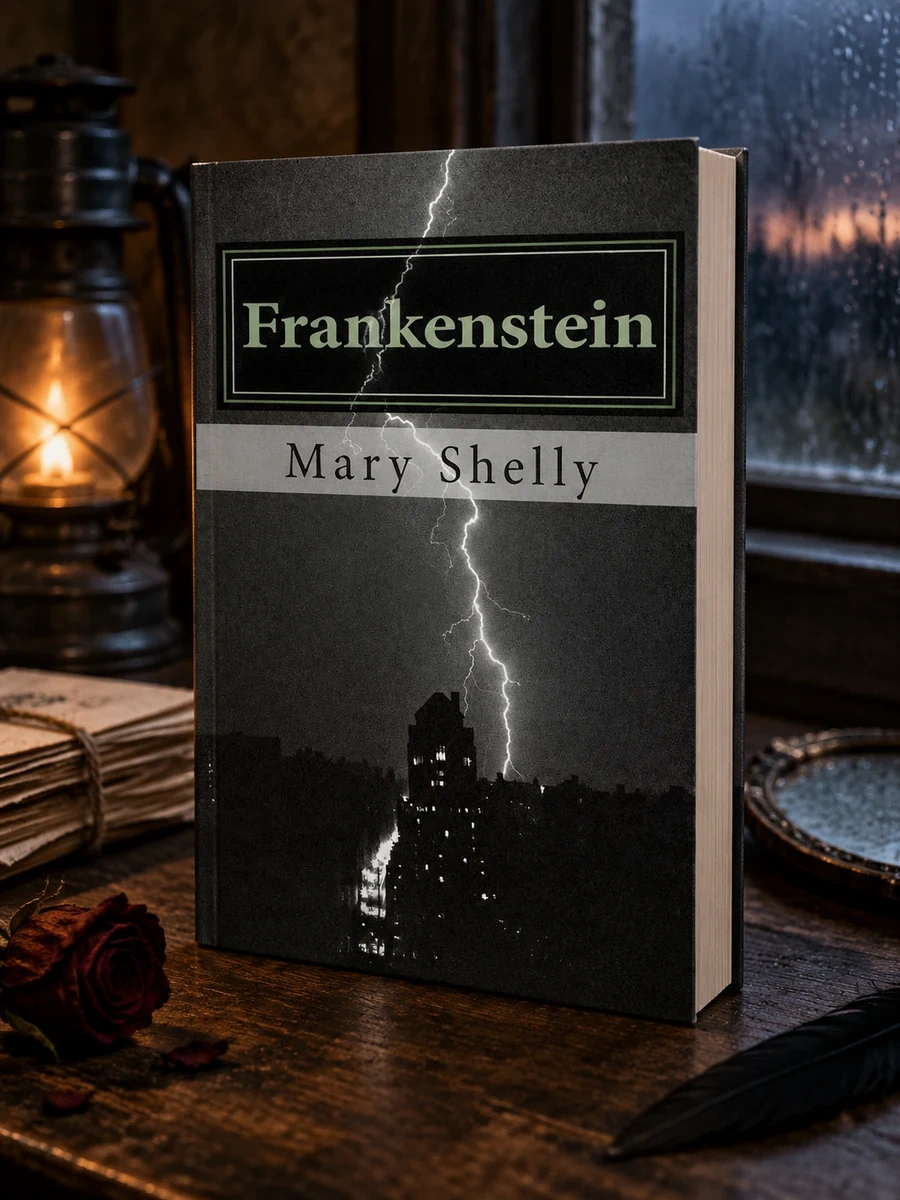
Frankenstein: ou le Promethee moderne
A gothic novel about a creator and his monstrous creation, framed by a polar explorer's tale.
This edition preserves the original French title while presenting the English text. The story moves between three distinct voices: Walton, Victor, and the creature. Each voice provides insight into the moral and emotional costs of playing God. The structure emphasizes isolation and the failure of communication between creator and creation. It challenges readers to consider the responsibilities that come with scientific advancement.
Published in 1818, this work by British author Mary Shelly bridges gothic fiction and early science fiction. It reflects Romantic era concerns about nature and industry. The novel emerged during a period of intense scientific curiosity in Europe.


📝 Description: Frankenstein: ou le Promethee moderne
💎 Our verdict on Frankenstein: ou le Promethee moderne
📖 Why choose it
Why this book is worth reading
Readers who appreciate complex narrative structures and gothic traditions will find this edition suitable for deep engagement with the origins of speculative fiction. The text offers a dense reading experience that relies heavily on dialogue and internal reflection rather than action sequences, appealing to those interested in the moral and emotional costs of scientific advancement. By framing the tale through multiple voices, including a polar explorer, the book challenges readers to consider the responsibilities inherent in playing God. Those seeking straightforward adventure plots may find the philosophical debates slow, but enthusiasts of psychological horror will gain insight into the failure of communication between creator and creation. This work is essential for anyone wishing to explore the themes of ambition and consequence through the lens of the Prometheus myth.
⭐ Reader reviews
Reader rating
Shelley presents a gothic novel that functions as an early precursor to science fiction, utilizing a framed structure to layer perspectives effectively. The narrative moves between Walton, Victor, and the creature, each voice providing insight into the moral costs of ambition. The monster’s narration adds psychological depth, justifying his hatred toward his creator through personal torment. While the text relies heavily on dialogue and internal reflection rather than action sequences, it offers a dense reading experience for those interested in speculative fiction origins. Readers who appreciate complex narrative structures will find this work suitable, whereas those seeking straightforward adventure may find the philosophical debates slow. It remains a significant entry in British literature, challenging readers to consider the consequences of scientific advancement through isolation and failed communication.
📖 Read on the blog
✍️ More books by this author Mary Shelly


🏛 Books from this publisher Createspace Independent Publishing Platform

You might also like
See more →

Have a question about this item?
Ask about the edition, condition, delivery or anything else — we reply by email or phone, usually within a day.
