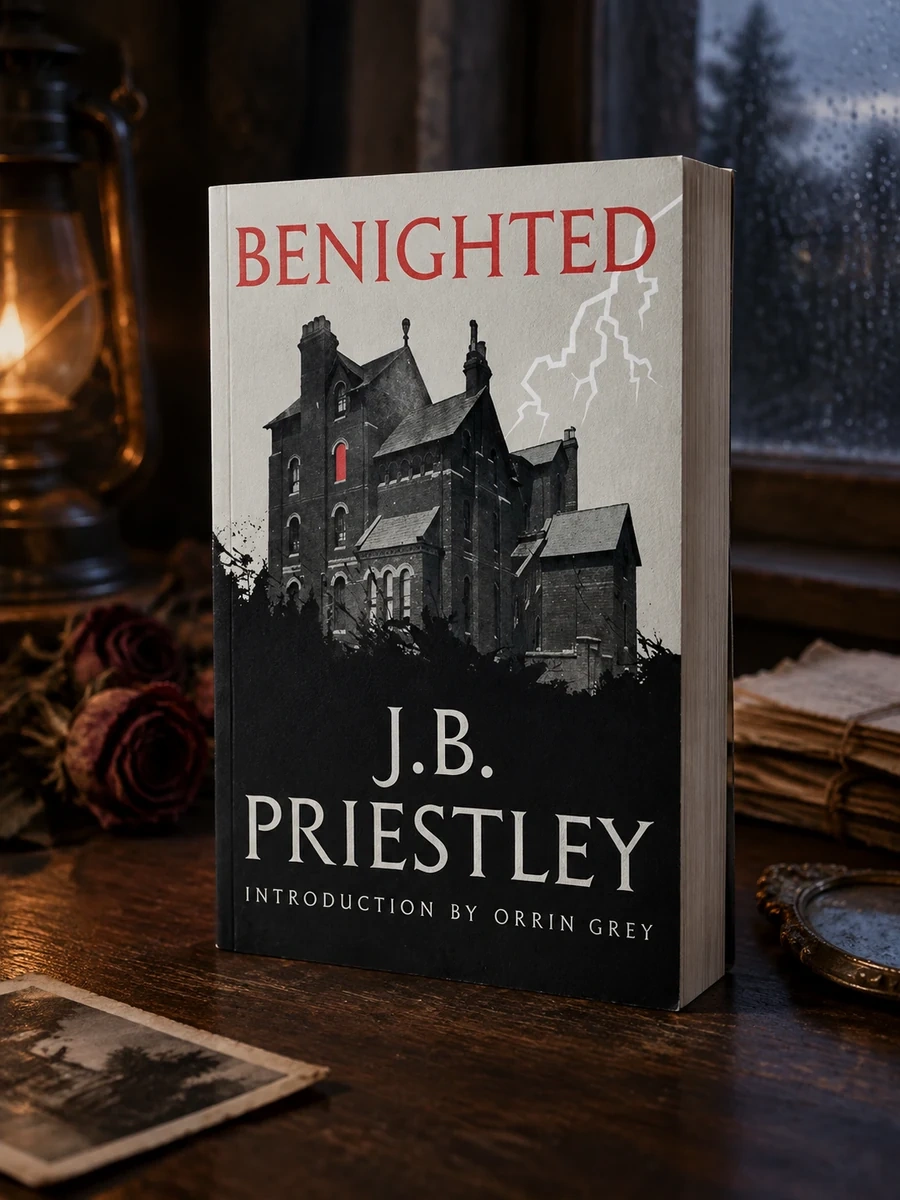
Benighted
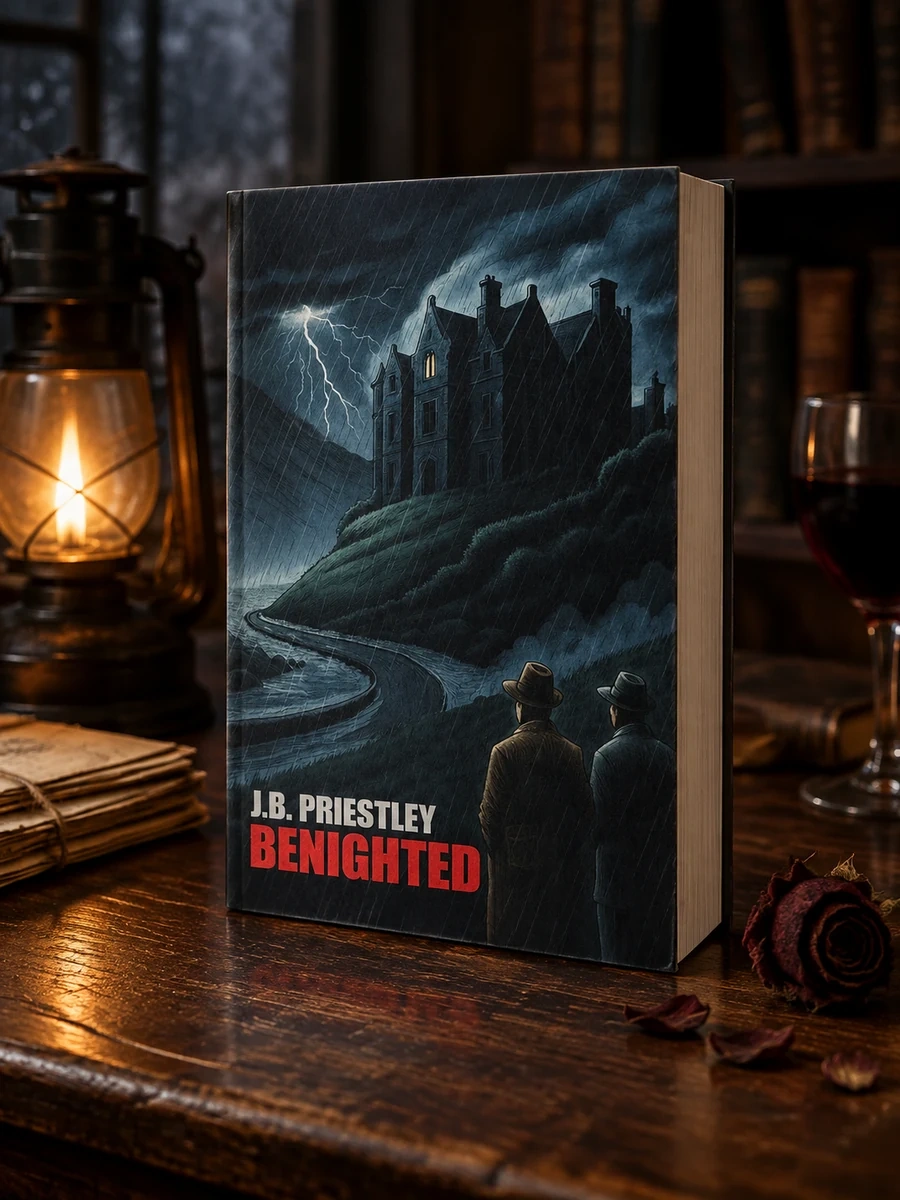
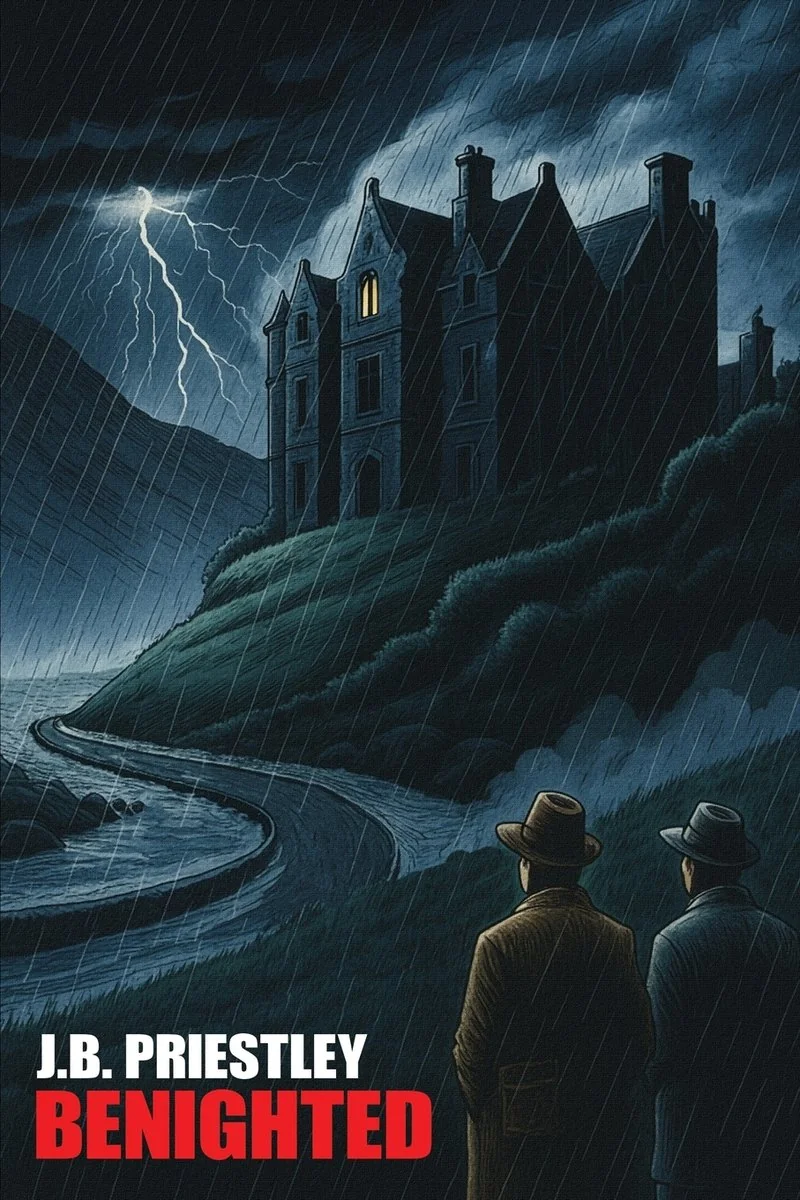
Three travelers seek shelter in a decaying manor during a storm, only to encounter a family unraveling from within.
The narrative centers on an isolated estate where a severe storm cuts off communication with the outside world. Inside, the Femm household operates under strict, unspoken rules that keep their patriarch hidden and their servant mute. The presence of the weary guests disrupts this fragile equilibrium. Tension rises as the boundary between host and guest blurs, and the secrets kept behind closed doors begin to leak into the open. The story does not rely on jump scares but on the gradual erosion of mental stability. It portrays a microcosm of society where power dynamics shift unpredictably. The horror stems from what is withheld rather than what is revealed.
This early twentieth-century novel emerges from the gothic tradition, focusing on the decline of the upper class and the psychological impact of isolation. It reflects a period interested in the frayed edges of civilization and the hidden repressions within domestic spaces.


📝 Description: Benighted
💎 Our verdict on Benighted
📖 Why choose it
Why this book is worth reading
Readers who enjoy atmospheric tension and slow-burn psychological horror will find much to appreciate here. The narrative relies on the gradual erosion of mental stability rather than overt violence, making it ideal for those who prefer cerebral unease over physical thrills. It offers a compelling microcosm of society where power dynamics shift unpredictably, exploring how isolation amplifies human weakness. Those seeking fast-paced action or supernatural monsters may find the pace too deliberate, but enthusiasts of claustrophobic dread will value the subtle shifts in mood and character interaction that define this unsettling experience.
⭐ Reader reviews
Reader rating
Priestley traps three exhausted travelers in a remote manor during a relentless storm, creating an atmosphere heavy with fear and repression. The horror stems from what is withheld rather than revealed, as long-held secrets surface to threaten the sanity of every occupant. This early twentieth-century work effectively blends gothic traditions with social commentary, examining the decay of aristocracy when faced with primal terror. It suits readers who appreciate atmospheric tension and slow-burn psychological horror over fast-paced action. The narrative demands attention to subtle shifts in mood, offering a profound study of repression and the breakdown of social order under extreme pressure.