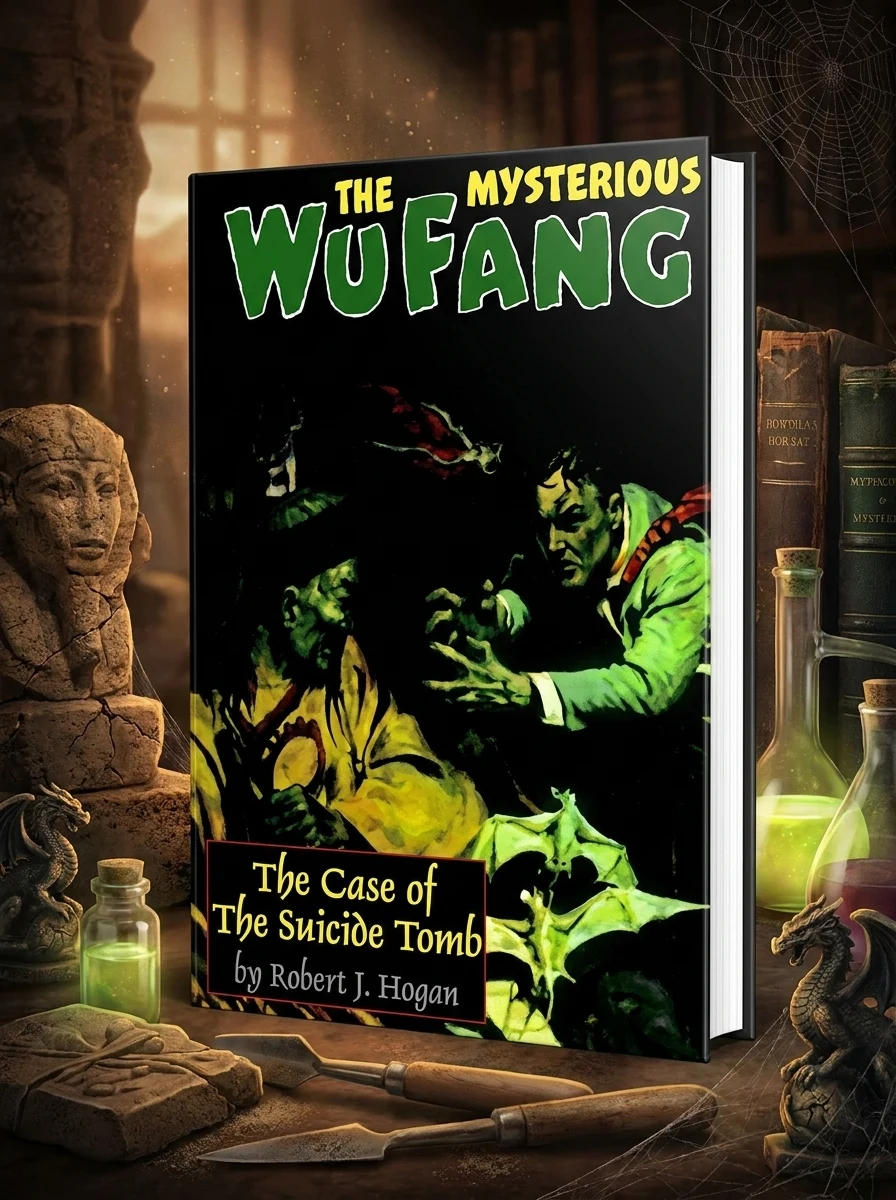

The Mysterious Wu Fang: The Case of the Suicide Tomb
A 1935 pulp reprint featuring Wu Fang seeking plague germs in an ancient tomb.
This volume captures a specific moment in pulp magazine history by reproducing the December 1935 issue of The Mysterious Wu Fang. Robert J Hogan curates this text to preserve the original artistic and narrative integrity of the period. The plot involves a fiendish character attempting to steal death germs from a sealed Indian tomb. The work highlights the intersection of archaeological discovery and supernatural threat common in early horror fiction. It stands as a primary source for understanding the visual and textual conventions of 1930s genre magazines.
This text originates from the December 1935 issue of The Mysterious Wu Fang magazine. It reflects the pulp fiction tradition of the mid-1930s, combining archaeological adventure with supernatural horror elements typical of that era's popular entertainment.


📝 Description: The Mysterious Wu Fang: The Case of the Suicide Tomb
💎 Our verdict on The Mysterious Wu Fang: The Case of the Suicide Tomb
📖 Why choose it
Why this book is worth reading
Readers interested in the historical evolution of horror and gothic traditions will find value in this direct window into 1930s genre storytelling. The book appeals to collectors of vintage horror magazines and those studying the visual culture of early pulp fiction. By retaining original cover and interior artwork, it offers a complete experience of the period’s aesthetic without alteration. It is particularly suitable for scholars examining the themes of ancient curses, biological warfare, and exotic locations within mystical settings. Those seeking modern psychological horror or contemporary literary analysis may find less utility here, but enthusiasts of early twentieth-century supernatural fiction will appreciate the unadulterated presentation of these classic villainous schemes and forbidden knowledge narratives.
⭐ Reader reviews
Reader rating
This book succeeds as a faithful reproduction of a specific moment in pulp magazine history, prioritizing the preservation of original artistic and narrative integrity. It effectively captures the tone of early horror fiction through its depiction of fiendish characters and ancient tombs. The inclusion of period artwork enhances the authenticity for collectors and historians. While it may lack the nuance demanded by modern literary analysis, it excels as a primary source document. Readers who appreciate the raw, exotic adventure style of 1930s genre magazines will find this work engaging. It stands as an important artifact for understanding the development of cosmic and psychological horror tropes during the interwar period, offering a glimpse into the fears and fascinations of that specific cultural moment.
📖 Read on the blog
🏛 Books from this publisher Wildside Press



You might also like
See more →




Have a question about this item?
Ask about the edition, condition, delivery or anything else — we reply by email or phone, usually within a day.
