🩸Horror Tradition
Michigan Dogman
A bipedal, canine-like cryptid originating from the deep timberlands and rural folklore of Michigan, particularly gaining widespread modern notoriety in the late twentieth century.
Etymology & Origin
Where the word comes from
Derived from its geographic association with Michigan combined with 'dogman,' a descriptive term for a bipedal, dog-headed cryptid.
Full Definition
In depth
Origins The legend of the Michigan Dogman is rooted in regional folklore and frontier tall tales from the deep northern forests of Michigan, drawing inspiration from older European werewolf archetypes and Native American oral traditions regarding shape-shifters and woodland spirits. While sporadic localized sightings stretch back deep into the logging era of the nineteenth century, the modern legend exploded into public consciousness in 1987 when radio DJ Steve Cook recorded a novelty song titled The Legend. Intended as an April Fool's joke or a clever piece of seasonal folklore programming, the broadcast instead triggered an overwhelming wave of genuine listener call-ins detailing similar uncanny encounters across the Lower Peninsula.
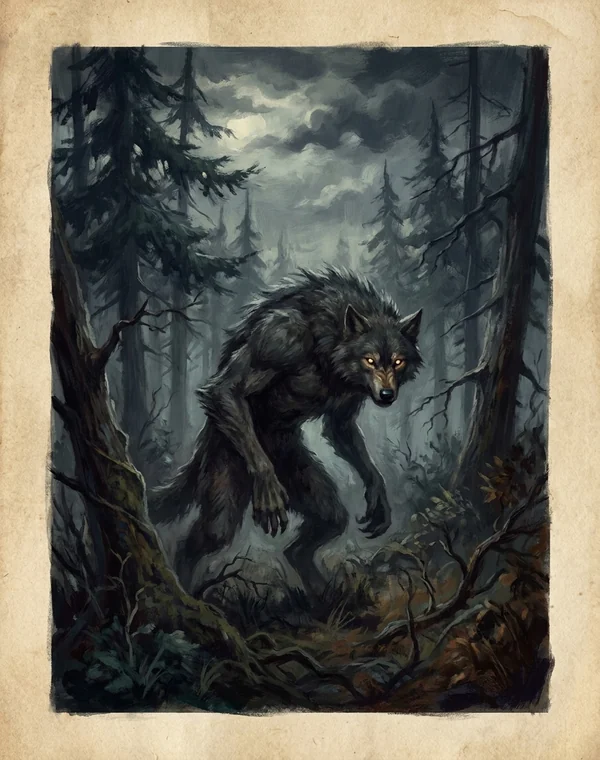
What It Is Said to Do According to regional accounts, the creature is typically described as a bipedal, six-foot-tall beast possessing the muscular body of a man combined with the sharp-fanged, canine head of a wolf or large dog, often gleaming with piercing blue or amber eyes. Witnesses claim it emits a terrifying, human-like scream or a chilling growl that strikes immediate panic into anyone roaming isolated backroads or hunting camps after dark. Folklore holds that the beast appears cyclically every decade ending in the number seven, stalking unwary travelers, tearing through livestock enclosures, and vanishing into the impenetrable cedar swamps without leaving a trace.
In Horror Fiction In horror fiction and regional weird tales, the Dogman functions as a potent symbol of untamed wilderness and the terror of isolation, tapping into deep-seated anxieties about what lurks just beyond the glow of a campfire. Unlike traditional shapeshifters bound by lunar phases, fictional treatments of the Michigan Dogman often emphasize its feral, ancient hostility toward human encroachment on pristine timberland. While it frequently populates indie horror anthologies and regional monster-hunting thrillers, writers use its formidable silhouette to evoke the claustrophobia of endless pine forests and the dread of being hunted by an apex predator that refuses to be classified by science.
Why It Still Frightens The creature endures as a terrifying icon because it bridges the gap between cozy campfire folklore and modern urban legends, turning every dark stretch of northern highway into a potential threshold for the unknown.
Connected Concepts
Related horror terms
Further Study