🩸Horror Tradition
Kitsune
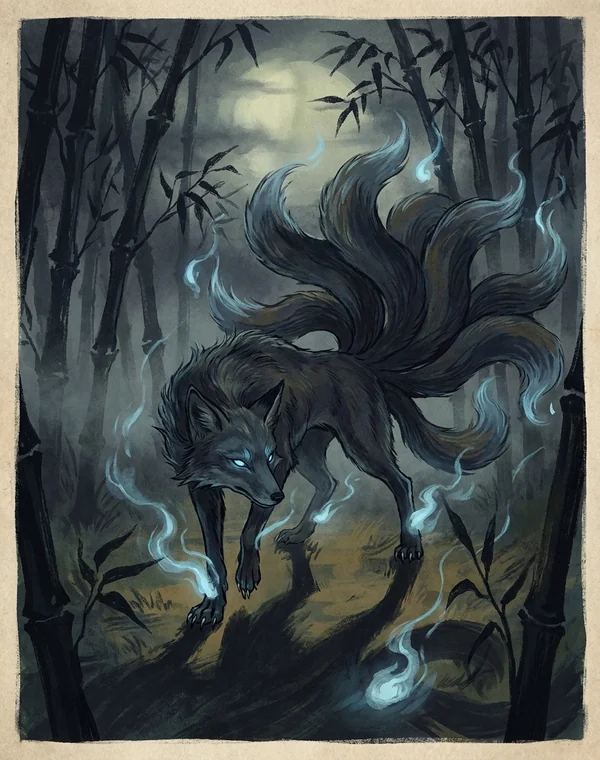
Kitsune are shape-shifting fox spirits originating from Japanese folklore, deeply embedded in East Asian mythology and known for their cunning intelligence, magical prowess, and ambiguous morality.
Etymology & Origin
Where the word comes from
The word kitsune is of Japanese origin, traditionally thought to be an onomatopoeia for the yipping sound made by a fox.
Full Definition
In depth
Origins The legend of the kitsune traces back centuries into Japanese folklore and Shinto tradition, where foxes were viewed as sacred messengers of Inari, the deity of fertility, agriculture, and industry. Over time, continental influences from Chinese mythology—specifically tales of multi-tailed fox spirits possessing human souls—blended with native Japanese beliefs. In early folklore, these creatures were not uniformly malevolent; they served as protective guardians or intermediaries between the divine and human realms. However, as oral traditions evolved across medieval and Edo-period Japan, the perception of the kitsune shifted, increasingly emphasizing their mischievous trickery, capacity for deception, and potential for dark malevolence.
What It Is Said to Do According to traditional lore, kitsune are endowed with powerful supernatural abilities, most notably the power of shape-shifting. They frequently assume human form—often appearing as alluring young women or wise old men—to deceive, test, or seduce unsuspecting mortals. A kitsune is said to grow wiser, more powerful, and acquire additional tails—up to a maximum of nine—as it ages and accumulates spiritual energy. Their presence is sometimes betrayed by a shadow that retains a fox shape or by reflections in water. They can generate fox-fire, known as kitsunebi, to lead travelers astray. Protection against malicious kitsune traditionally involves spiritual wards, sacred talismans, and maintaining strict vigilance against sudden, unexplainable misfortune or behavioral shifts in strangers.
In Horror Fiction In modern horror fiction, writers utilize the kitsune to tap into the uncanny dread of the mask falling away, exploring the terrifying vulnerability of mortals who cannot trust their own senses. The creature embodies the psychological horror of manipulation, where a seemingly loving partner or trusted companion harbors a predatory, alien hunger. Rather than relying solely on visceral gore, horror narratives featuring kitsune focus on creeping paranoia, psychological possession, and the inescapable consequences of breaking pacts with ancient spiritual forces. Authors draw heavily on the eerie duality of the creature, contrasting serene traditional settings with sudden, predatory violence.
Why It Still Frightens These spirits endure as sources of dread because they weaponize intimacy, reminding us that the most terrifying monsters are those capable of wearing a human face.
Connected Concepts
Related horror terms
Further Study