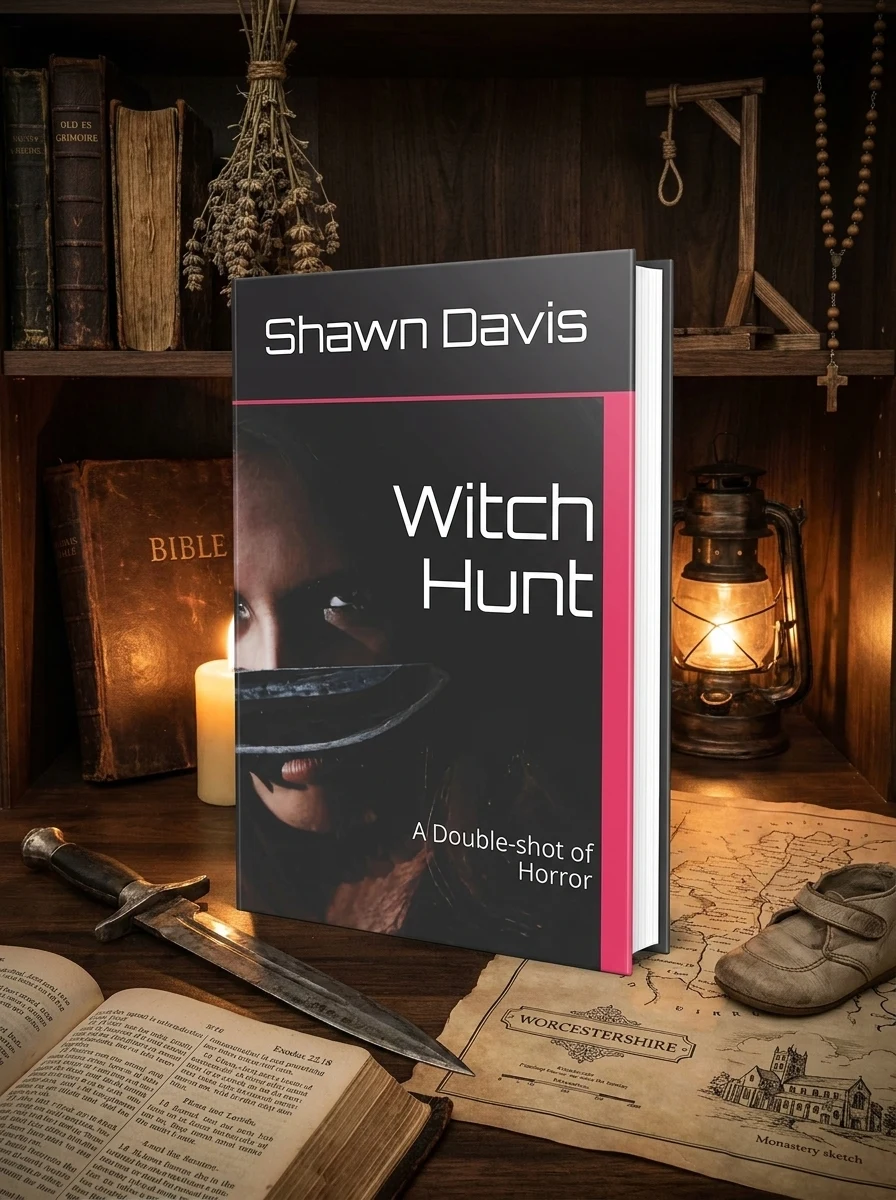
Witch Hunt: A Double-shot of Horror
A horror collection questioning the morality of burning witches through two historical tales.
Davis examines the consequences of religious zealotry by placing characters in situations where their faith conflicts with observed reality. The monk in Worcestershire witnesses disappearances that challenge his understanding of divine protection. Meanwhile, the Inquisitor faces a direct confrontation with the accused, forcing him to weigh the validity of Exodus 22:18 against the immediate evidence before him. Both stories converge on the theme of judgment and its aftermath. The author avoids simple binaries, instead showing how the pursuit of justice can lead to personal ruin. The structure allows for a comparative look at institutional power versus individual doubt. Readers will find the exploration of blood sacrifice and diabolical influence presented through a lens of psychological dread rather than mere spectacle.
The work engages with medieval Christian theology and the historical practices of the Holy Inquisition. It references specific locations like Chesterton Abbey and Worcestershire, grounding the supernatural elements in a recognizable European past. The narrative relies on the biblical context of Exodus 22:18 to establish the stakes for the characters' actions.


📝 Description: Witch Hunt: A Double-shot of Horror
💎 Our verdict on Witch Hunt: A Double-shot of Horror
📖 Why choose it
Why this book is worth reading
Readers drawn to moral ambiguity and psychological horror will find this collection compelling for its nuanced exploration of religious zealotry. It appeals to those interested in how faith conflicts with observed reality, offering a comparative look at institutional power versus personal doubt. The book is ideal for audiences who prefer theological dread over simple spectacle, providing a deep dive into the consequences of judgment without resorting to binary moralities.
⭐ Reader reviews
Reader rating
Davis successfully constructs a tense atmosphere where religious dogma clashes with human conscience, creating a profound sense of psychological unease rather than relying on gore. The juxtaposition of the monk’s doubt and the Inquisitor’s burden effectively highlights the corrosive nature of absolute certainty. This volume best suits enthusiasts of gothic fiction who appreciate complex ethical inquiries within supernatural settings. It avoids easy answers, instead forcing the audience to confront the terrifying weight of executing perceived evil. The narrative structure enhances the thematic resonance, making it a thoughtful addition for those weary of one-dimensional horror tropes.
📖 Read on the blog
🏛 Books from this publisher Createspace Independent Publishing Platform



You might also like
See more →

Have a question about this item?
Ask about the edition, condition, delivery or anything else — we reply by email or phone, usually within a day.
