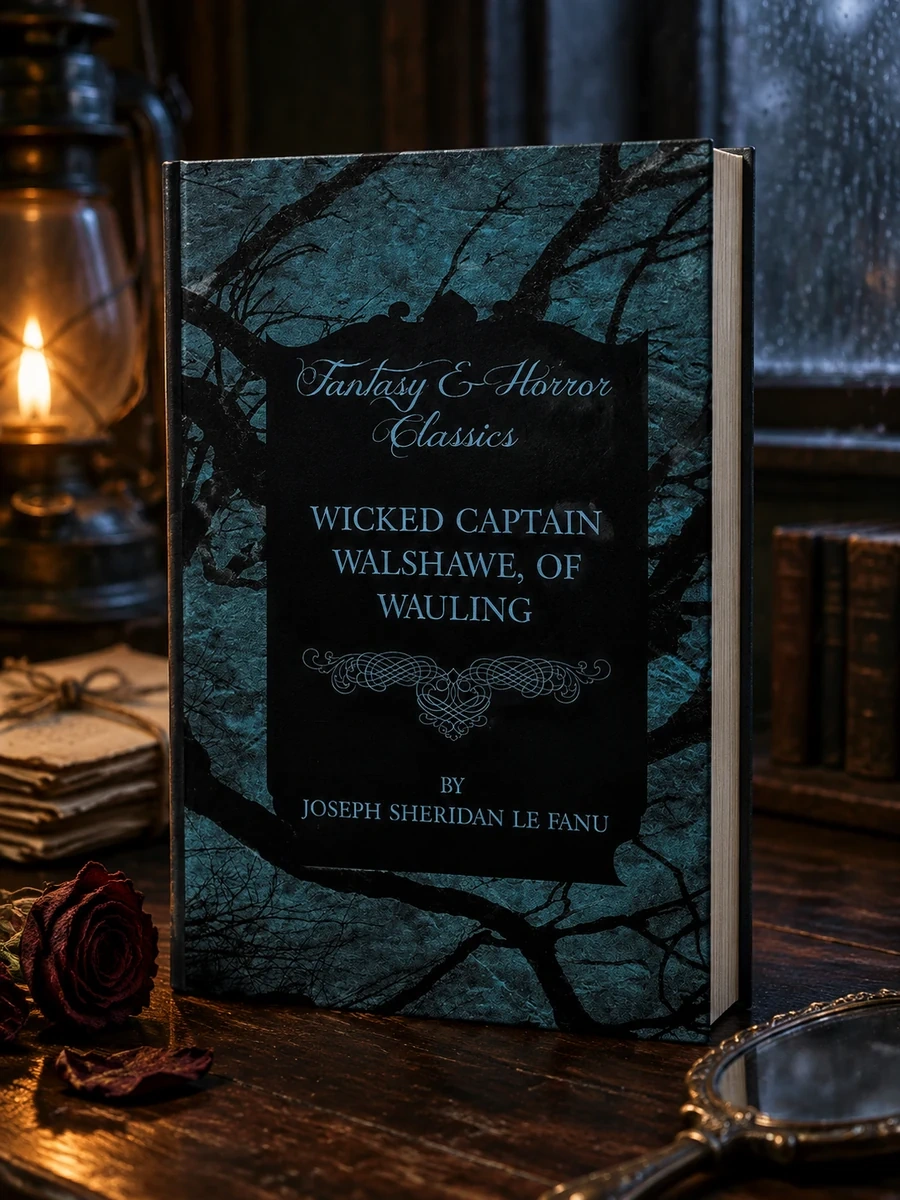
Wicked Captain Walshawe, of Wauling
A 1864 gothic tale by Irish author Joseph Sheridan Le Fanu.
This volume collects an early narrative by Joseph Sheridan Le Fanu, published in 1864. The story follows Captain Walshawe through a series of events involving supernatural consequences for his past actions. Le Fanu uses the character to explore moral decay and the persistence of memory. The text relies on atmospheric description rather than action. It reflects the author's Huguenot heritage and his family's dramatic legacy. Readers interested in the evolution of Irish gothic fiction will find this work significant. It offers insight into the author's pre-famous period.
Le Fanu was born in Dublin in 1814 to a family of Huguenot origin. His grandmother Alicia and great-uncle Richard Brinsley Sheridan were playwrights. This work emerged from that literary environment before his later fame.


📝 Description: Wicked Captain Walshawe, of Wauling
💎 Our verdict on Wicked Captain Walshawe, of Wauling
📖 Why choose it
Why this book is worth reading
Scholars and enthusiasts of 19th-century literary history will find significant value in this text as a primary source for understanding Le Fanu's development prior to his more famous works. It offers readers a glimpse into the evolution of Irish Gothic fiction, highlighting the author's exploration of moral decay and the persistence of memory through atmospheric description rather than action. While modern horror fans might find the style dated, those interested in the intersection of psychological horror and Victorian moral allegory will appreciate this insight into the author's pre-famous period and his family's dramatic legacy.
⭐ Reader reviews
Reader rating
Le Fanu’s early narrative excels in establishing the atmospheric tension characteristic of Irish Gothic literature. By focusing on guilt and supernatural retribution, the text demonstrates how the author utilized his theatrical background to craft compelling moral allegories. The reliance on descriptive prose over plot-driven action creates a slow-burning dread suitable for patient readers. Although the style may feel archaic to contemporary audiences accustomed to fast-paced horror, it remains a vital artifact for tracing the genre's evolution. It is best suited for academic readers and classic literature aficionados who appreciate the nuances of Victorian psychological horror and its cultural underpinnings.
📖 Read on the blog
✍️ More books by this author Joseph Sheridan Le Fanu




🏛 Books from this publisher Obscure Press
You might also like
See more →

Have a question about this item?
Ask about the edition, condition, delivery or anything else — we reply by email or phone, usually within a day.
