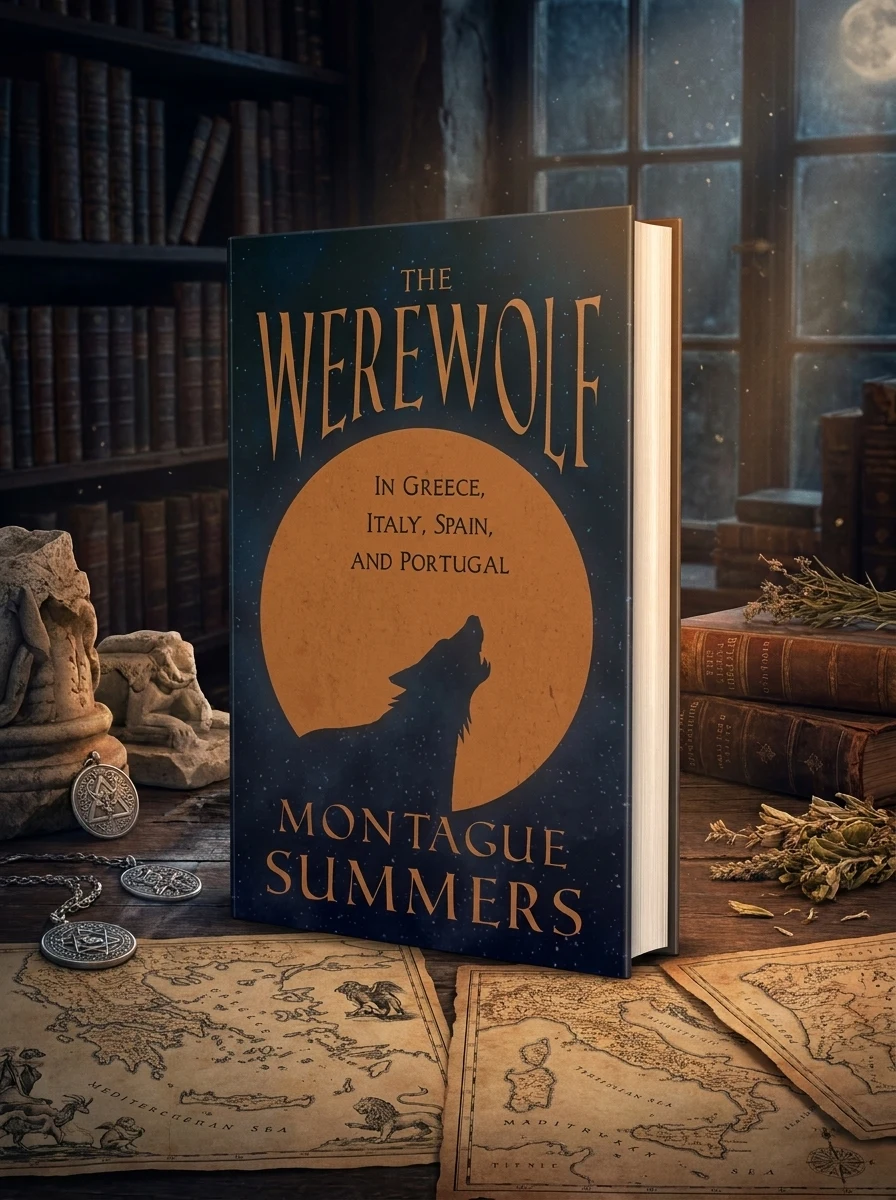
The Werewolf - In Greece, Italy, Spain, and Portugal
A 1933 study by Montague Summers on southern European werewolf traditions.
Summers investigates the persistence of lycanthropy in regions where sunlight is fierce. He connects ancient Arcadian myths with contemporary peasant reports from Greece, Italy, Spain, and Portugal. The text treats these figures as real entities within their cultural context. Stewart’s essay complements this by exploring the superstition's roots. The work relies on chronicle and folk report rather than modern psychology.
This volume derives from Montague Summers' 1933 study, published by Obscure Press in 2011. It reflects the early twentieth-century interest in European folklore and the work of an English clergyman who believed witches and werewolves were real.


📝 Description: The Werewolf - In Greece, Italy, Spain, and Portugal
💎 Our verdict on The Werewolf - In Greece, Italy, Spain, and Portugal
📖 Why choose it
Why this book is worth reading
This volume is essential for readers who appreciate historical perspectives on supernatural beliefs and the intersection of folk tradition with classical history. It offers a unique window into how lycanthropy was perceived in Greece, Italy, Spain, and Portugal during the period of study. By treating these figures as real entities within their cultural context, the text provides an immersive look at the blurred lines between werewolf and vampire lore in southern traditions. Readers interested in the roots of superstition and the earnest conviction of early twentieth-century occult scholars will find value in its rigorous examination of chronicles and folk reports rather than modern psychological debunking.
⭐ Reader reviews
Reader rating
Summers surveys southern European beast lore with an unwavering commitment to treating lycanthropy as literal reality. The work effectively traces beliefs from ancient Arcadia through Spanish and Portuguese villages, utilizing a wide range of sources from classical literature to local folklore. It particularly excels in highlighting the complex relationship between werewolf and vampire figures in these regions. While not suitable for those seeking modern fictional narratives or skeptical analysis, it serves as a vital resource for enthusiasts of historical demonology. The inclusion of Stewart’s essay further enriches the understanding of these fears, making it a compelling study for those interested in the serious academic exploration of gothic and supernatural traditions.
📖 Read on the blog
✍️ More books by this author Montague Summers


🏛 Books from this publisher Obscure Press

You might also like
See more →
Have a question about this item?
Ask about the edition, condition, delivery or anything else — we reply by email or phone, usually within a day.
