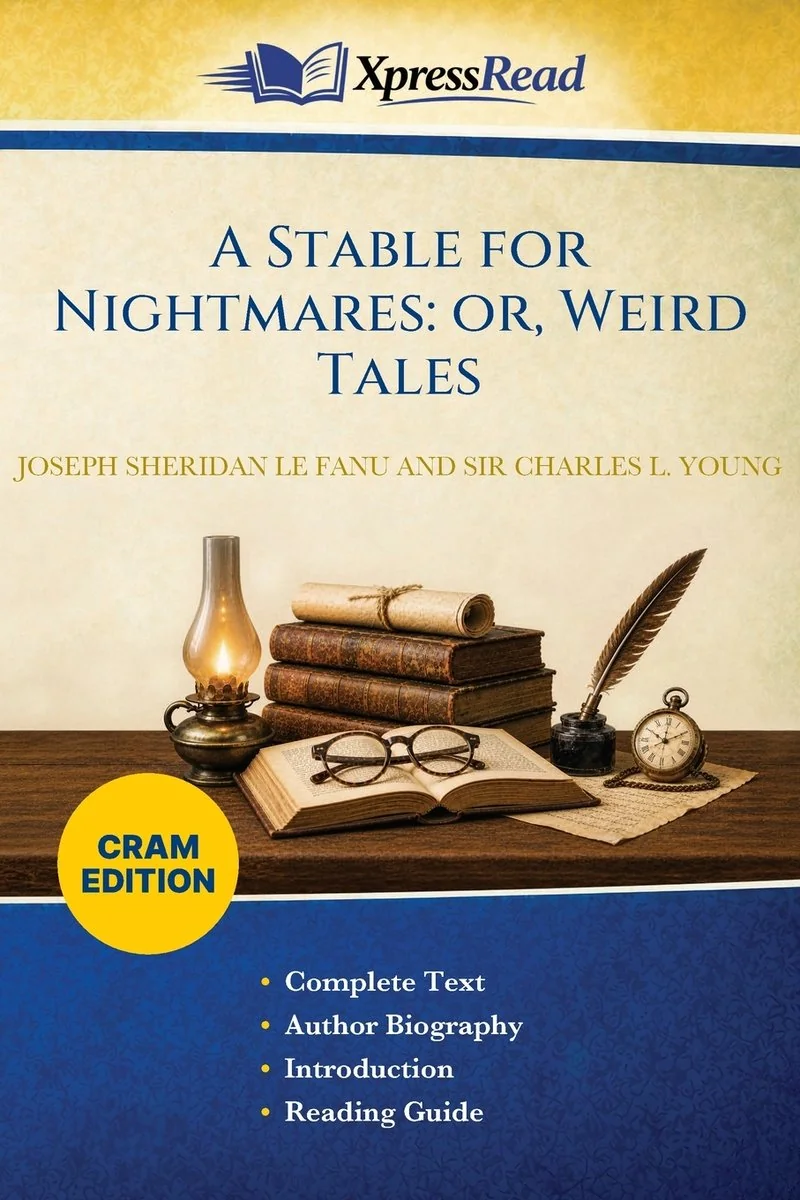
A Stable for Nightmares: or, Weird Tales (Cram Edition)
A curated collection of gothic weird tales with study guides for deeper analysis.
The text combines original narratives with academic support tools. Le Fanu and Young provide stories that examine psychological unease. The edition targets students and scholars of horror history. It avoids modern sensationalism in favor of historical atmosphere. The structure aids in understanding nineteenth-century anxieties through literary analysis rather than plot summary alone.
This 2026 Cram Edition by Xpresspress revives late nineteenth-century gothic and weird fiction traditions. It positions Le Fanu and Young within the context of historical supernatural storytelling, offering modern readers a structured entry point into the anxieties of that specific literary period.


📝 Description: A Stable for Nightmares: or, Weird Tales (Cram Edition)
💎 Our verdict on A Stable for Nightmares: or, Weird Tales (Cram Edition)
📖 Why choose it
Why this book is worth reading
This volume is essential for students and scholars seeking to understand the evolution of supernatural fiction through primary texts paired with structured analysis. It appeals to enthusiasts of gothic literature who desire deeper engagement with period-specific fears rather than mere plot consumption. Readers interested in the psychological unease characteristic of nineteenth-century anxieties will find value in the academic tools provided. It serves those analyzing horror history, offering a framework to dissect the uncanny and surreal without modern sensationalism. For readers committed to historical literary contexts, this collection provides a rigorous yet accessible entry point into classic weird tales.
⭐ Reader reviews
Reader rating
The book successfully merges original gothic narratives with scholarly support, creating a resource that prioritizes understanding over simple entertainment. It excels in presenting Le Fanu’s authority within dark fantasy while avoiding modern plot-driven sensationalism. The inclusion of study materials aids significantly in decoding nineteenth-century anxieties embedded in the text. This edition best suits academic readers and serious horror enthusiasts who value historical context and literary analysis. It may disappoint those seeking quick thrills or contemporary psychological thrillers, as it demands patience for deeper engagement with classic weird fiction and its enduring legacy in the genre.