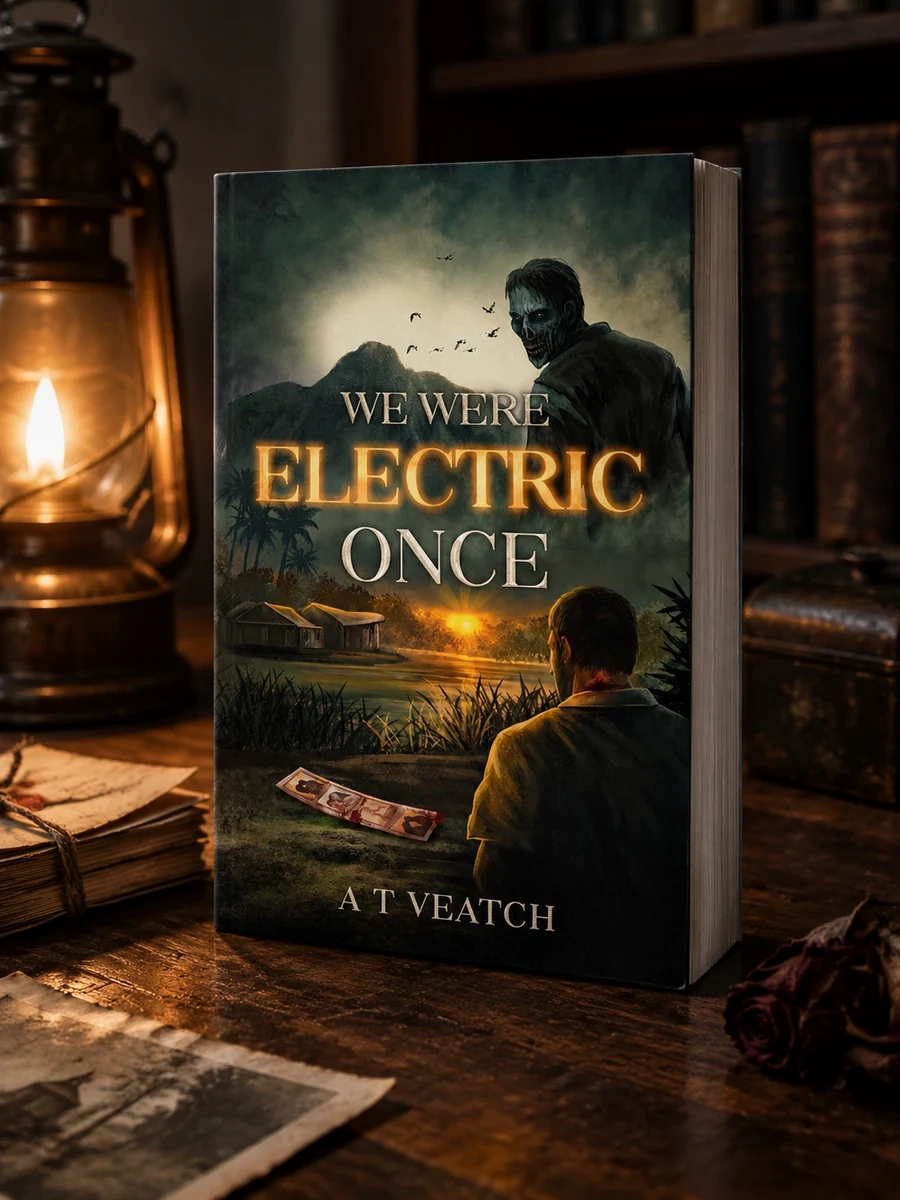
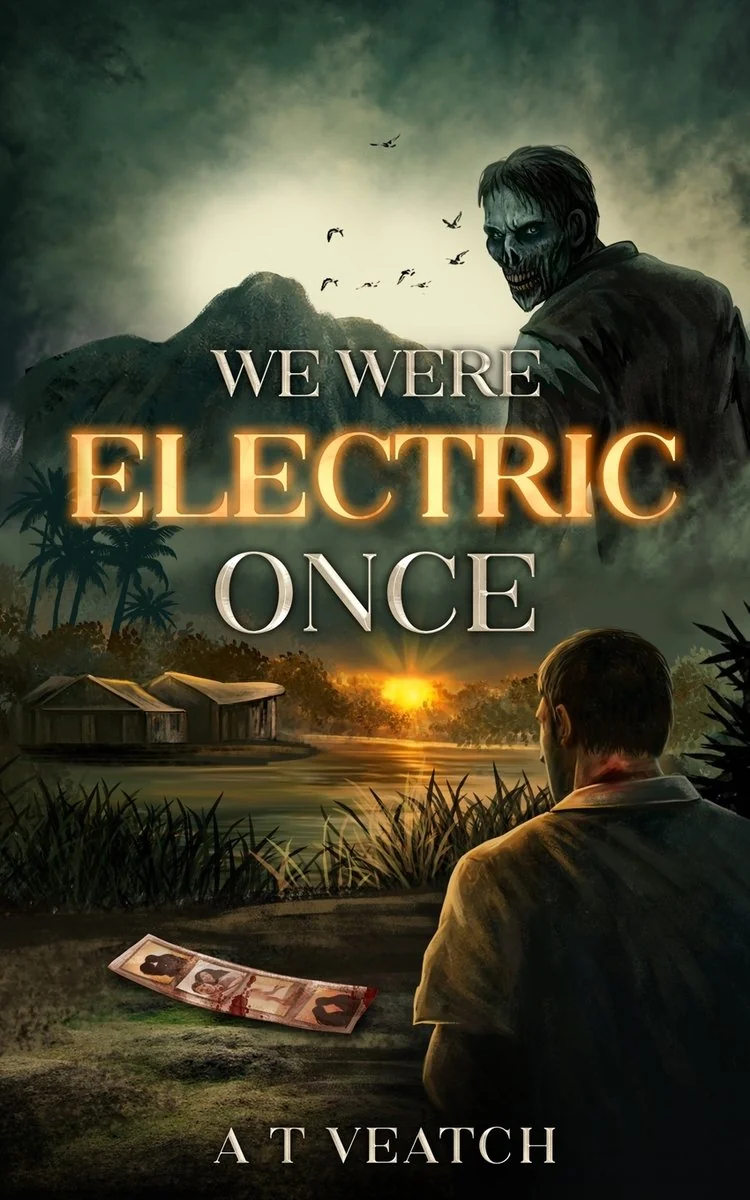
We Were Electric Once
A reverse-chronological horror novel about a man losing his humanity in Kaua'i.
The narrative structure moves backward from decay to origin. Ian confronts the consequences of a brutal betrayal and a neglected upbringing while fighting a hunger that overrides his senses. The setting of Glass Beach and surrounding sugarcane fields provides a stark contrast to the internal rot spreading through the island. Roman uses this reverse timeline to show how love and loss create the conditions for monstrosity. The story does not offer easy answers but rather examines the lingering effects of trauma. It positions the protagonist as both victim and perpetrator of his own downfall. The text invites readers to consider how past actions define present horrors without offering redemption.
The book sits within the tradition of American horror fiction that reinterprets classic monsters. It draws on the emotional weight of post-apocalyptic literature like The Road and the atmospheric dread of Station Eleven. Set in Kaua'i, it uses the specific geography of Glass Beach to ground its supernatural elements in a tangible reality.


📝 Description: We Were Electric Once
💎 Our verdict on We Were Electric Once
📖 Why choose it
Why this book is worth reading
Readers seeking supernatural fiction that prioritizes internal decay over external action will find this book compelling. It appeals to those interested in gothic traditions where monsters reflect human failings rather than serving as mere external threats. The reverse-chronological structure demands attention to detail, rewarding those who enjoy examining how past actions define present horrors without offering easy redemption or salvation. This is not for fans of linear plots or traditional jump scares, but for audiences willing to engage with a meditation on love, loss, and the terrifying beauty that remains when humanity fades.
⭐ Reader reviews
Reader rating
D E Roman delivers a sophisticated exploration of monstrosity by inverting the typical zombie narrative. The reverse-chronological structure effectively highlights how neglect and betrayal create the conditions for horror, positioning the protagonist as both victim and perpetrator. While the lack of redemption may alienate some, it serves the text’s thematic goal of examining trauma’s lingering effects. The setting provides a stark contrast to the internal rot, enhancing the gothic atmosphere. This work suits readers who appreciate character-driven drama and psychological unraveling over survival mechanics, offering a unique, albeit demanding, perspective on the erosion of self.
📖 Read on the blog
🏛 Books from this publisher Independently Published








You might also like
See more →

Have a question about this item?
Ask about the edition, condition, delivery or anything else — we reply by email or phone, usually within a day.
