
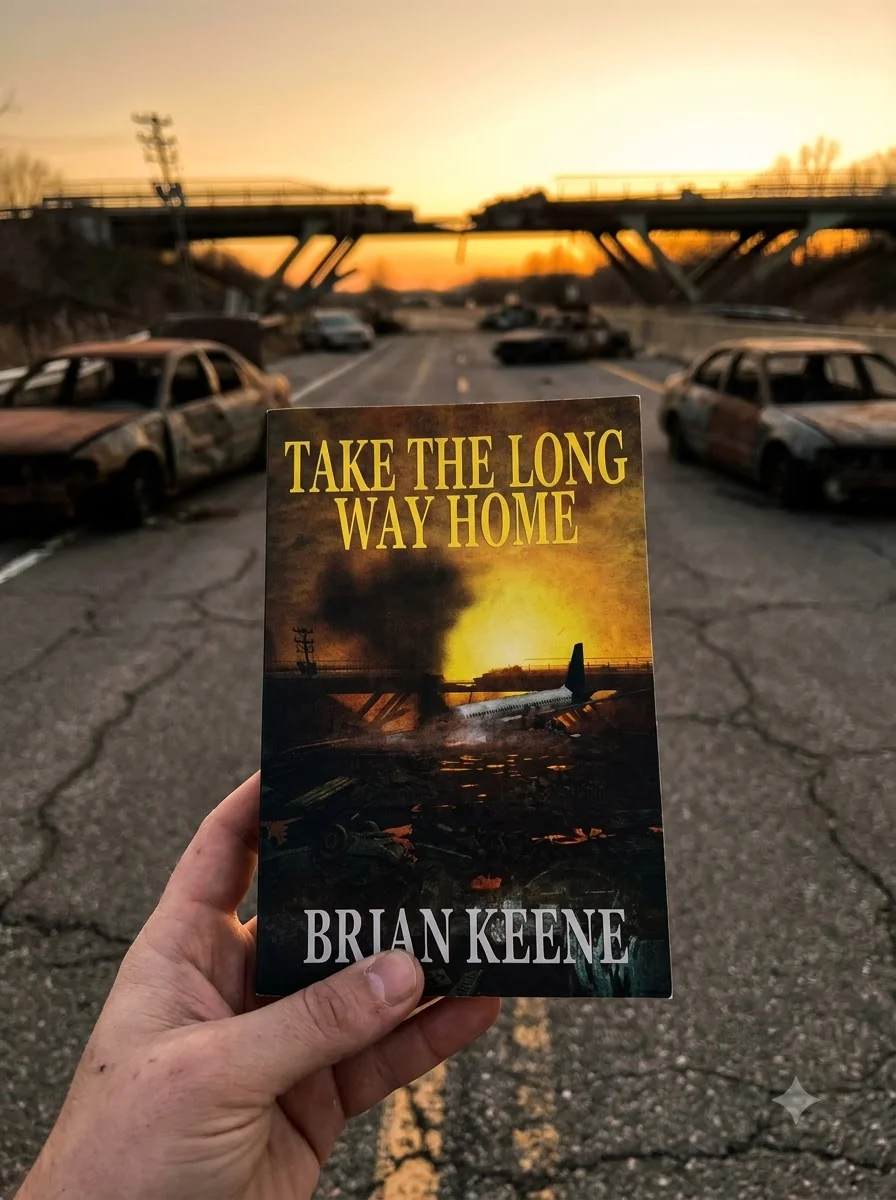
Take The Long Way Home
A novella about three men left behind during a global rapture.
Keene focuses on the mundane horror of being excluded from salvation. The protagonists do not fight demons or monsters. They confront the silence of an empty world and the failure of infrastructure. The narrative structure moves from the immediate shock of the event to the long, arduous trek toward understanding. The inclusion of a new afterword provides context on the novella's development. This addition helps readers appreciate the work as a specific cultural artifact rather than just a standalone thriller. The text avoids religious dogma in favor of human reaction to divine absence.
This 2026 release marks the twentieth anniversary of Keene's original novella. It sits within the tradition of secular biblical horror, reimagining the rapture as a logistical nightmare rather than a spiritual triumph. The work reflects on how ordinary people cope when religious promises fail to materialize for them.


📝 Description: Take The Long Way Home
💎 Our verdict on Take The Long Way Home
📖 Why choose it
Why this book is worth reading
Readers seeking a grounded exploration of existential dread will find this novella compelling. It offers a unique perspective on the Rapture by focusing on those left behind, examining the mundane horror of infrastructure failure and social silence. The narrative avoids religious dogma, making it accessible to secular audiences who appreciate psychological depth over supernatural action. Those interested in the cultural artifact aspect of horror may also value the context provided by the author's reflections. It is ideal for fans of cosmic or psychological horror who prefer character-driven narratives that confront the weight of divine absence without offering easy redemption or traditional monster-fighting resolutions.
⭐ Reader reviews
Reader rating
Keene delivers a chilling meditation on abandonment and survival in this secular take on biblical apocalypse. By stripping away religious dogma, he highlights the terrifying reality of being excluded from salvation. The focus on mundane horror—silence, empty malls, and crumbling infrastructure—creates a palpable sense of isolation. The narrative structure effectively moves from shock to arduous trekking, emphasizing psychological weight over supernatural spectacle. This edition provides valuable context through its afterword, enhancing the reader's appreciation of the work as a cultural artifact. It suits those who enjoy theological horror but prefer human reaction to divine intervention. Readers seeking traditional redemption arcs may find the approach jarring, but others will appreciate this grounded look at survival without rescue.
📖 Read on the blog
✍️ More books by this author Brian Keene







🏛 Books from this publisher Independently Published






You might also like
See more →





Have a question about this item?
Ask about the edition, condition, delivery or anything else — we reply by email or phone, usually within a day.
