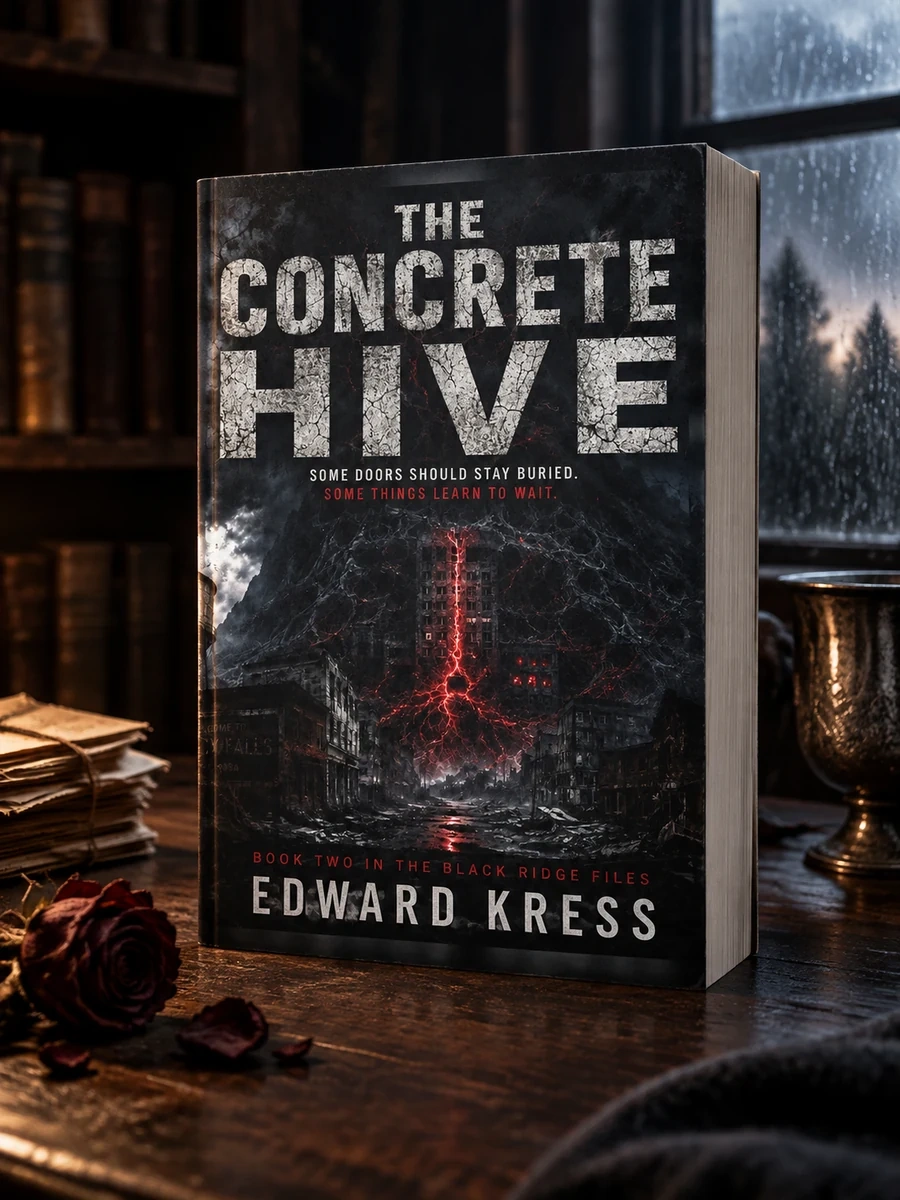
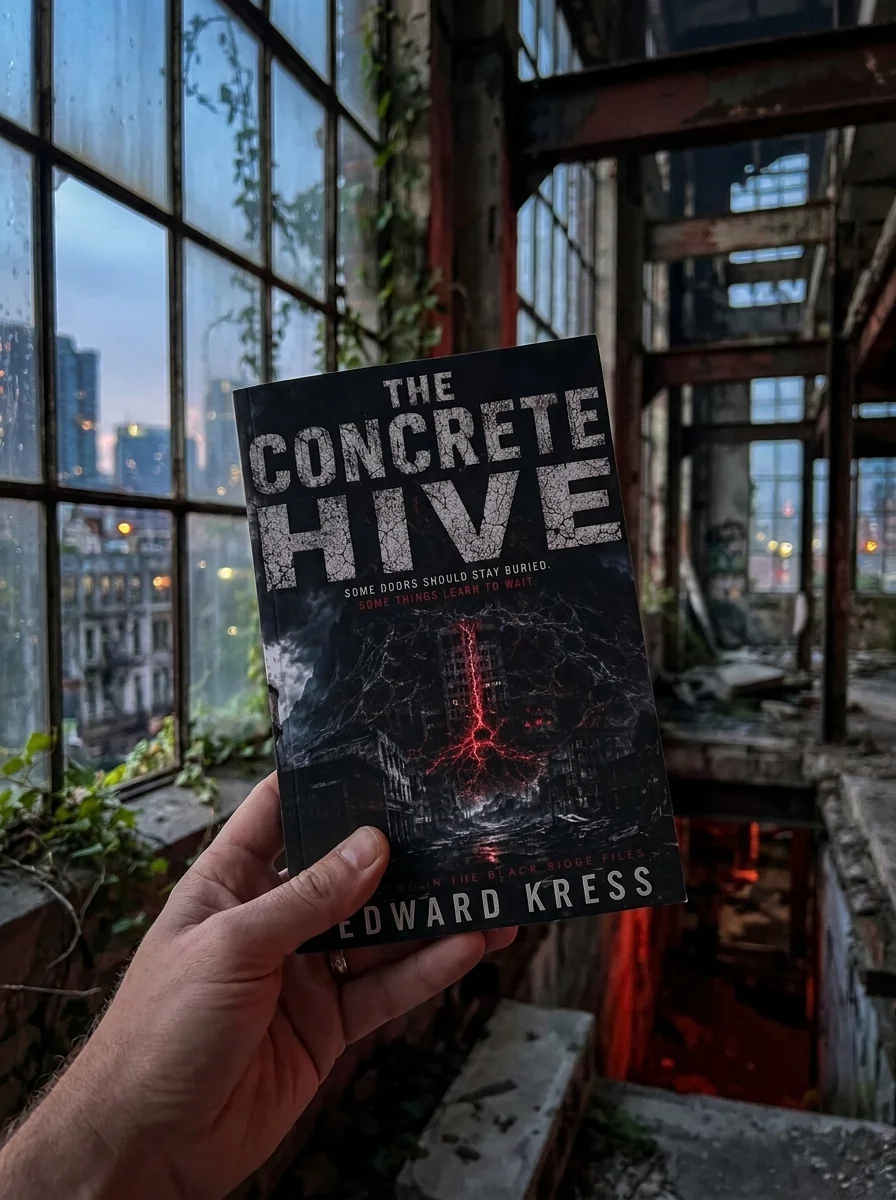
Concrete Hive: A Bio-Industrial Horror Novel
A novel about a town where concrete and flesh merge into a hostile living system.
Kress explores the concept of a sealed horror that refuses to die. The story moves beyond simple survival to examine how a community adapts when its physical surroundings become predatory. The narrative does not offer hope but rather documents the inevitable spread of the hive mind through the town's infrastructure. This approach creates a sense of inescapable dread as the characters realize they are fighting an environment that is actively hunting them.
This work sits within the contemporary American independent publishing scene, released in September 2026. It engages with modern anxieties about urban decay and the loss of control over our built environments. The novel reflects a period where industrial infrastructure is viewed not as stable but as potentially alive and hostile.


📝 Description: Concrete Hive: A Bio-Industrial Horror Novel
💎 Our verdict on Concrete Hive: A Bio-Industrial Horror Novel
📖 Why choose it
Why this book is worth reading
Readers seeking an unrelenting atmosphere of inescapable dread will find this book compelling. It appeals to those who enjoy body horror and environmental terror, specifically fans of narratives where infrastructure turns against its inhabitants. The novel offers a stark examination of how a community adapts when its physical surroundings become predatory, moving beyond simple survival to document the inevitable spread of a hive mind through town infrastructure. Those who appreciate brutal, visceral prose that avoids sentimentality will gain from this exploration of the terrifying cost of waking something that should have remained sealed. It is ideal for audiences willing to endure an oppressive tone without the comfort of clear resolutions or traditional jump scares.
⭐ Reader reviews
Reader rating
Edward Kress constructs a masterclass in environmental terror by making the setting itself the primary antagonist. The narrative effectively dissolves the boundary between the built environment and biological life, creating a hostile living system that breathes, remembers, and hunts. Kress avoids sentimentality, opting instead for visceral dread that emphasizes the slow realization of an evolving, learning entity. This approach suits readers who enjoy cosmic horror and industrial themes where technology fuses with nature into something monstrous. While it lacks traditional resolution or hope, its strength lies in documenting the inevitable spread of a hive mind through infrastructure. It is a dense, oppressive read for those who prefer atmospheric dread over action.
📖 Read on the blog
📖 From the series “The Black Ridge Files”



✍️ More books by this author Edward Kress






🏛 Books from this publisher Independently Published






You might also like
See more →





Have a question about this item?
Ask about the edition, condition, delivery or anything else — we reply by email or phone, usually within a day.
