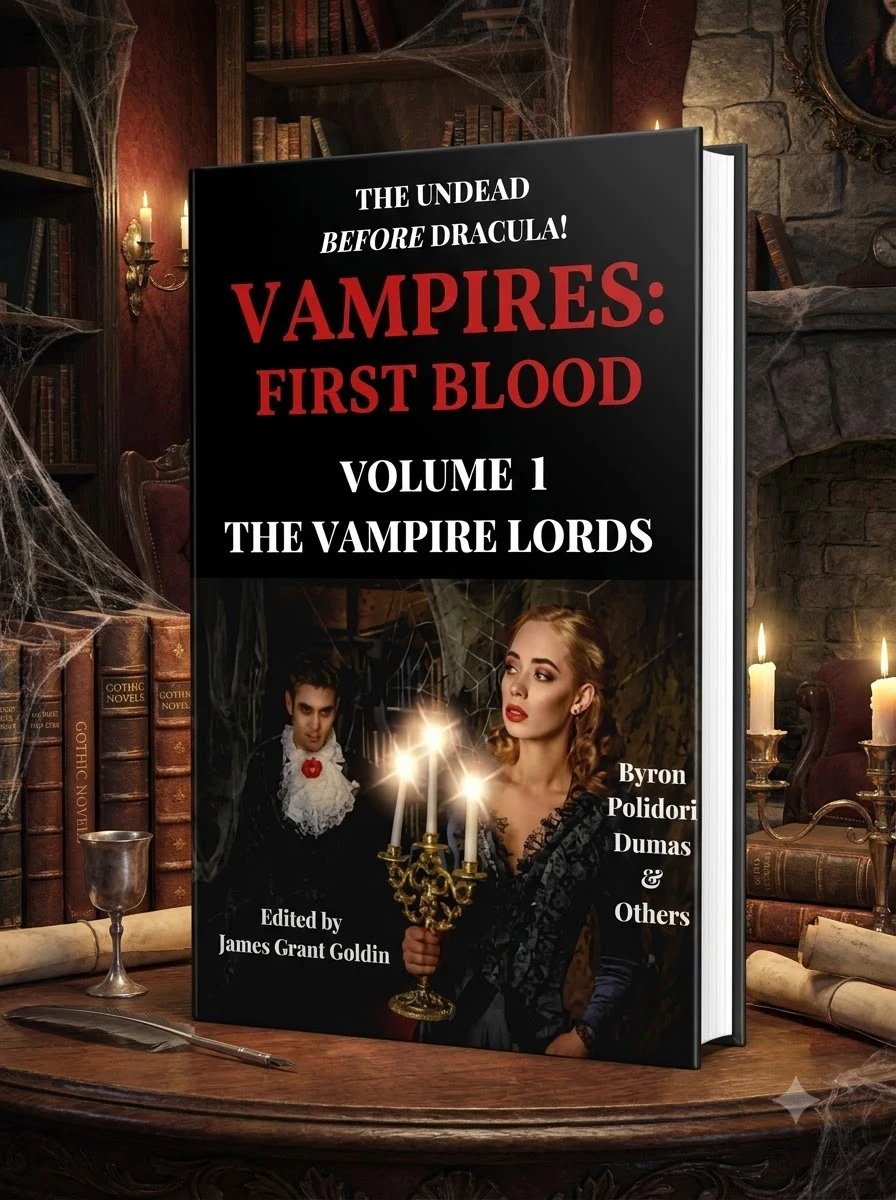
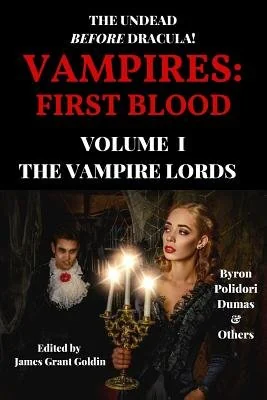
Vampires: First Blood Volume I: The Vampire Lords
A curated collection of early vampire tales tracing the archetype's evolution to the aristocratic lord.
The volume examines how the vampire transformed from a bloodsucking peasant in eighteenth-century reports to an elegant, immortal nobleman. It highlights the role of poets in adding sexual undercurrents to the myth before Byron and Polidori cemented the aristocratic template. The anthology features excerpts from Varney the Vampyre and stories set in Moscow and the Carpathians. These texts demonstrate the metamorphosis that occurred before Bram Stoker’s famous novel, offering a direct look at the sources of modern gothic horror.
The book situates the vampire myth within eighteenth-century Austro-Hungarian reports and nineteenth-century English literature. It traces the shift from peasant monsters to aristocratic lords during this period, influencing later works like Dracula.


📝 Description: Vampires: First Blood Volume I: The Vampire Lords
💎 Our verdict on Vampires: First Blood Volume I: The Vampire Lords
📖 Why choose it
Why this book is worth reading
Scholars and enthusiasts of gothic history will find immense value in this curated anthology, which offers a rare glimpse into the metamorphosis of the vampire mythos before Bram Stoker’s Dracula defined the modern iteration. Readers who appreciate historical context gain access to original texts that trace the archetype's evolution from Austro-Hungarian newspaper accounts to the sexualized experiments of Romantic poets. This collection is essential for those seeking to understand how the brooding, immortal nobleman emerged from rougher, bloodsucking peasant origins. It provides the necessary background for appreciating later gothic horror by revealing the sources that cemented the aristocratic template, making it a vital resource for understanding the intellectual and cultural underpinnings of modern vampire fiction.
⭐ Reader reviews
Reader rating
This anthology excels in its scholarly curation, effectively tracing the literary evolution of the vampire from peasant monster to aristocratic lord. By juxtaposing early newspaper accounts with the poetic experiments of Byron and Polidori, the volume vividly demonstrates how sexual undertones and aristocratic status were layered onto the myth. The inclusion of diverse texts, from Varney the Vampyre to Tolstoy’s family tales, offers a comprehensive view of this transformative period. It is best suited for readers interested in the historical roots of gothic horror rather than those seeking straightforward entertainment. While the earlier iterations may seem unsettlingly rough to modern sensibilities, they provide crucial insight into the development of the genre's most enduring icon.