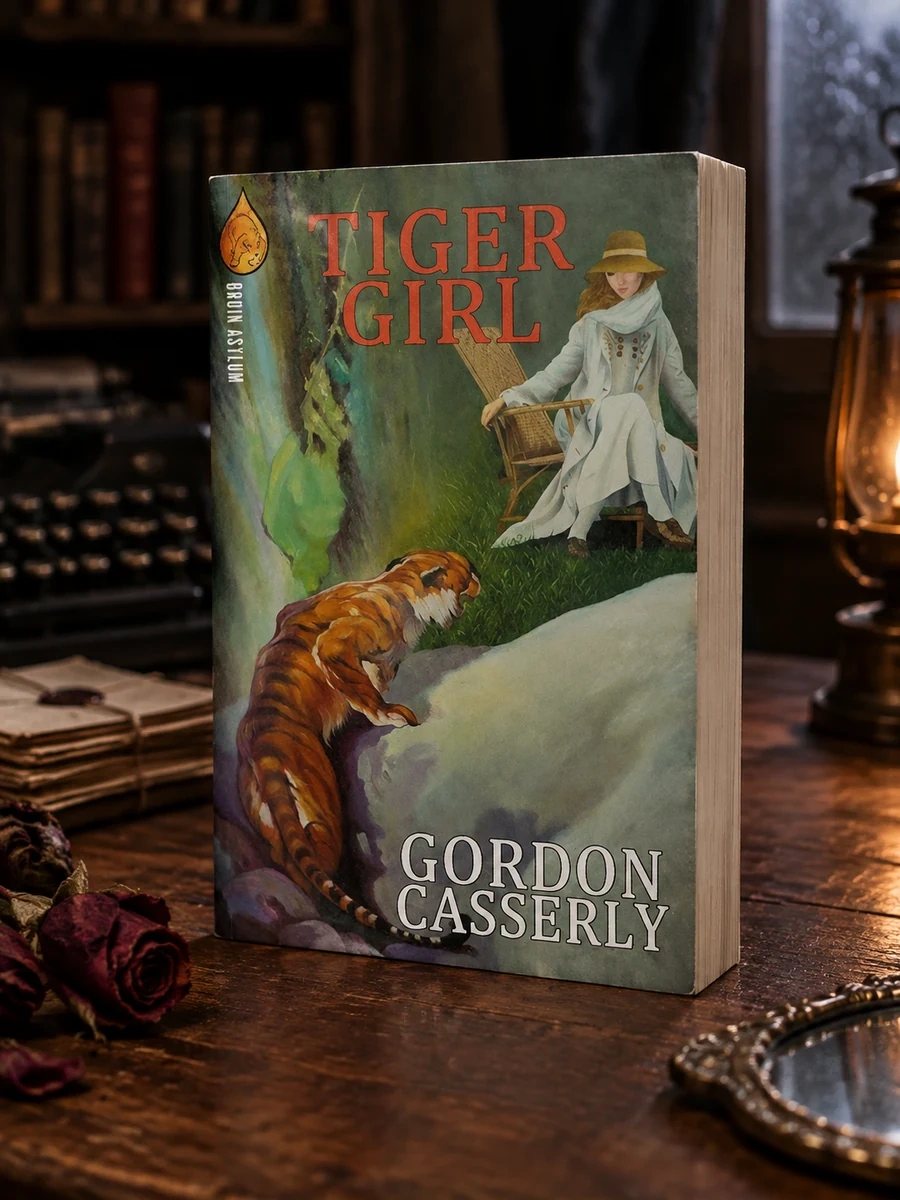

Tiger Girl
A rare 1934 supernatural novel blending Hindu mysticism with were-tiger mythology.
Casserly utilizes his background as a post commandant to create an authentic setting for this tale. The narrative integrates local folklore with European gothic tropes, creating a unique hybrid genre experience. The story focuses on the tension between the colonizers and the ancient traditions of the land. This approach distinguishes it from standard adventure novels of the era by emphasizing supernatural dread over military action.
Published in 1934, this work extends the Creeps series by Philip Allan. It reflects the colonial perspective of a British post commandant serving in the Indian Jungles during that specific historical period.


📝 Description: Tiger Girl
💎 Our verdict on Tiger Girl
📖 Why choose it
Why this book is worth reading
This volume offers a rare glimpse into the intersection of colonial history and mythological horror, appealing specifically to collectors of obscure British Empire literature. Readers fascinated by the tension between European gothic tropes and Hindu mysticism will find unique value here. It is ideal for those seeking atmospheric dread over modern pacing or extensive structural aids. The book serves as a significant release for fans of gothic fiction who appreciate authentic settings grounded in lived experience rather than mere fantasy. Those interested in the historical context of supernatural tales set against an exotic backdrop will discover a compelling narrative that avoids contemporary sensibilities in favor of period-specific tone.
⭐ Reader reviews
Reader rating
Casserly successfully merges Hindu mysticism with were-tiger mythology to create a distinct hybrid genre experience. The text excels in establishing authentic atmospheric dread through its grounding in specific regional experiences rather than generic adventure tropes. While the structure may lack modern conveniences like extensive chapter lists, this suits readers who prioritize mood and historical authenticity over fast-paced plotting. The novel stands out for its unique blend of vampirism, folklore, and colonial tension. It is best suited for collectors and enthusiasts of early twentieth-century supernatural fiction who appreciate the nuance of period writing. Those seeking conventional pacing may find it less engaging, but devotees of gothic horror will find rich rewards in its obscure and atmospheric narrative approach.