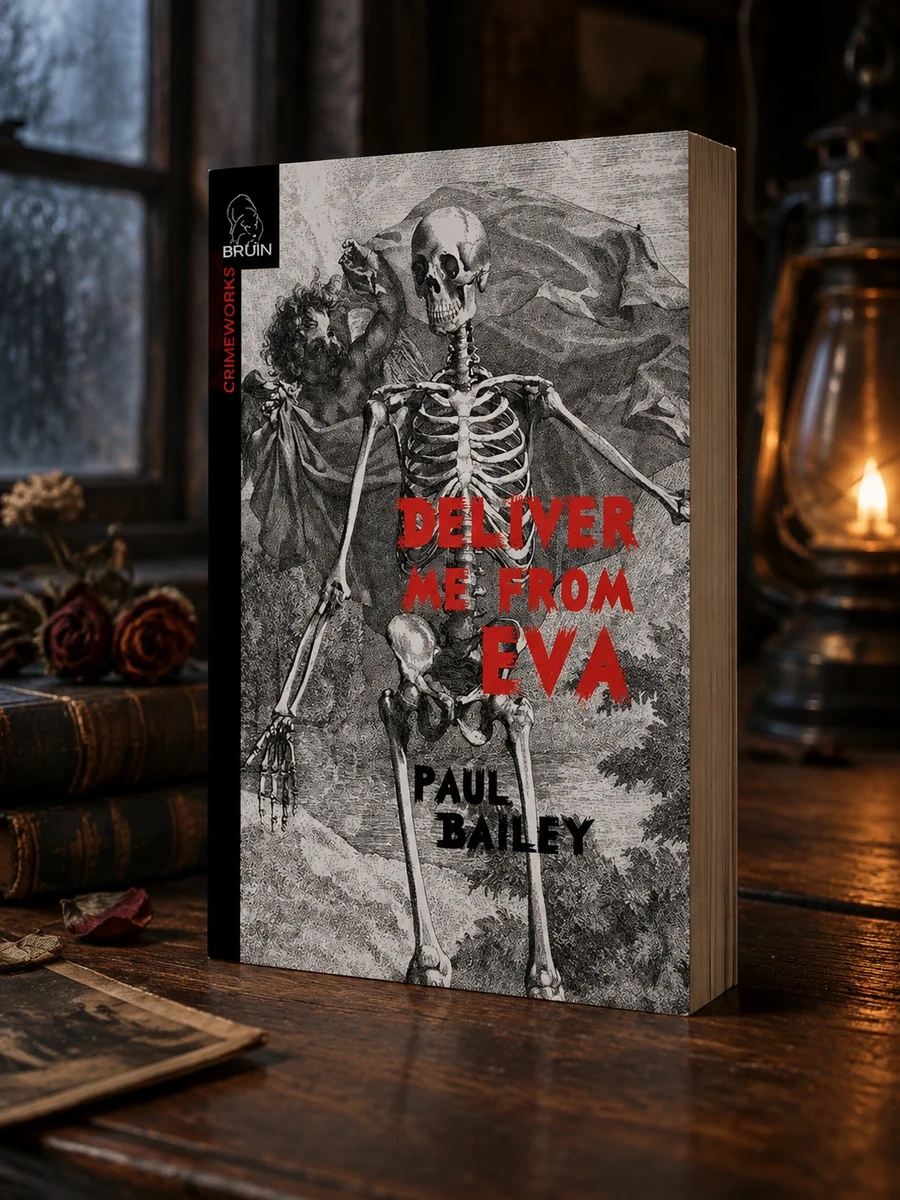

Deliver Me From Eva
A lawyer marries into a Pasadena family obsessed with chiropractic enlightenment.
Bailey writes a story that starts as a standard romantic comedy for the 1930s and 40s. The protagonist, Mark Allard, enters a marriage he barely understands. His journey to Pasadena reveals a hidden world controlled by his in-laws. They are not typical relatives but practitioners of a bizarre spiritual path. The plot relies on the contrast between Mark’s initial optimism and his subsequent terror. Bailey uses the setting of Thalamus to create a claustrophobic atmosphere. The narrative does not offer escape, only deeper entanglement with the clan’s rituals. This structure forces the reader to confront the absurdity of the situation alongside Mark. The book is organized as a descent from normalcy into a nightmare of physical and mental control.
The text draws on the mystery and romance traditions of the 1930s and 40s. It subverts these genres by introducing elements of madness and depravity. The setting moves from San Francisco to a Pasadena estate, grounding the supernatural in American suburban life.


📝 Description: Deliver Me From Eva
💎 Our verdict on Deliver Me From Eva
📖 Why choose it
Why this book is worth reading
Readers who enjoy crime fiction that descends into psychological horror will find this novel compelling. It appeals to those interested in the intersection of legal drama and supernatural depravity, offering a unique blend of dark humor and grotesque unpredictability. The book suits audiences seeking a narrative that forces confrontation with absurdity alongside its protagonist. Those who appreciate the subversion of traditional mystery plots and the claustrophobic atmosphere of gothic horror will gain from its relentless pace. It is not for readers seeking straightforward romance, but rather for those ready to experience a descent from normalcy into a nightmare of physical and mental control.
⭐ Reader reviews
Reader rating
Paul Bailey constructs a tale that masterfully uses the genre’s breeziness as a trap for both protagonist and reader. The narrative begins with a light tone before shifting into madness, creating a claustrophobic atmosphere in Thalamus. Bailey excels in blending dark humor with depravity, forcing the audience to confront the absurdity of the clan’s rituals. This approach makes the book a notable entry in 20th-century horror literature. It suits readers who appreciate shocking turns and relentless pacing over traditional mystery plots. The subversion of mid-century expectations creates a unique, unsettling experience that lingers long after the final page.